Introduction
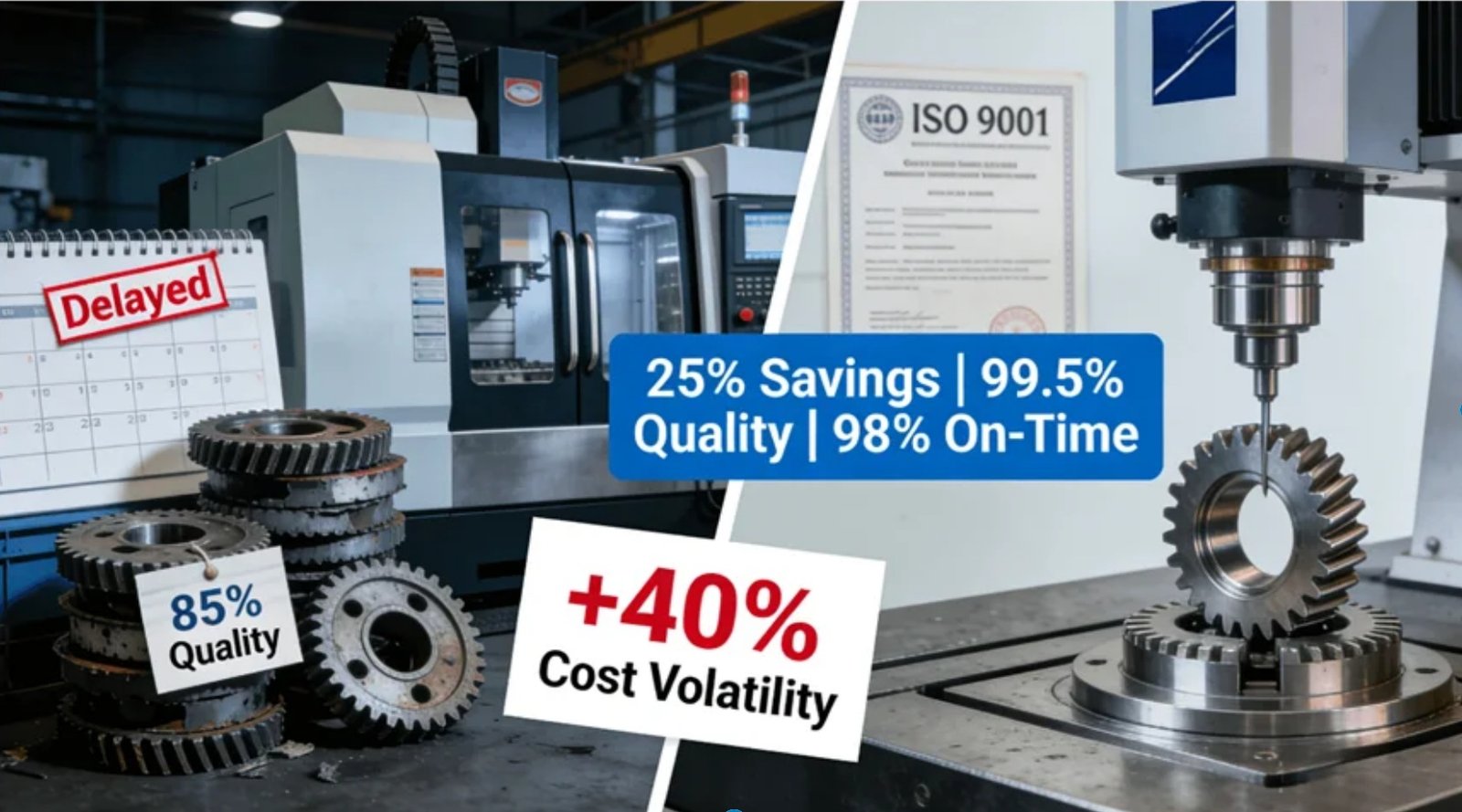
What is the core dilemmafacing manufacturing engineers in custom gear procurement? Projects are frequently derailed by price fluctuations of up to 40%, quality acceptance rates languishing around 85%, and frequent delivery delays. These issues lead directly to budget overruns and disruptive production stoppages. The root causelies in traditional selection methods that lack a systematic framework, overemphasizing unit price while neglecting the comprehensive Total Cost of Ownership (TCO), and failing to quantitatively assess a supplier’s technical capabilities.
This article provides a systematic solutionbased on a scientific evaluation framework, incorporating international standards like ISO 9001 and IATF 16949. This data-driven methodology empowers readers to achieve significant improvements: 25% cost savings, 99.5% quality acceptance rates, and 98% on-time delivery. The following sections will deconstruct this framework step-by-step, from analyzing core challenges to implementing actionable selection steps.
What Are the Key Challenges in Selecting Custom Gear Machining Suppliers?
Selecting the right gear machining partner is fraught with risks that can compromise an entire project. A superficial approach often leads to three critical pitfalls.
1. Unpredictable Price Volatility and Hidden Costs
Focusing solely on the initial unit price is a common but costly mistake. Suppliers may offer attractive entry-level quotesthat mask hidden expenses, leading to unexpected cost escalationsduring production. These can stem from material surcharges, expedited freight fees for reworks, or additional charges for engineering changes. This volatility, which can reach up to 40%, makes accurate project budgeting nearly impossible and erodes profit margins.
2. Inconsistent Quality and Compliance Gaps
Quality failures are perhaps the most expensive challenge. An acceptance rate of only 85% signifies a high volume of non-conforming parts, resulting in scrap, rework, and potential line-down situations. The absence of a robust Quality Management System (QMS), such as one certified to ISO 9001:2015, often underpins this inconsistency. Without a framework for process control and continuous improvement, suppliers struggle to maintain the tight tolerances and surface finishes required for high-performance gears, leading to premature failure in the field.
3. Delivery Inefficiencies and Supply Chain Disruptions
Frequent delivery delays create a domino effect, disrupting production schedules and delaying product launches. These inefficiencies often originate from poor production planning, inadequate capacity, or a lack of proactive risk managementwithin the supplier’s operations. When a supplier lacks real-time production monitoring and effective communication protocols, they cannot anticipate or mitigate disruptions, leaving their customers in the dark and vulnerable to supply chain bottlenecks.
How Can a Scientific Evaluation Framework Improve Supplier Selection?
Moving beyond a price-centric model requires a structured, multi-dimensional framework. This approach transforms supplier selection from a guessing game into a data-driven decision-making process.Through a scientific framework, companies can systematically screen suppliers by referencing the custom gear machining services guide.
Establishing a Multi-Factor Evaluation Scorecard: The foundation of a scientific approach is a comprehensive scorecardthat evaluates suppliers across several critical dimensions. Key factors include technical capability (e.g., 5-axis CNC machining for complex geometries), quality systems (certifications and process control data), production capacity, and financial stability. By assigning weighted scores to each factor, companies can objectively compare potential partners. For instance, a supplier’s ability to machine to the geometric dimensioning and tolerancing principles of ASME Y14.5can be a significant differentiator for precision.
The Critical Role of On-Site Audit Verification: A desktop review of certificates is insufficient. Comprehensive on-site auditsare essential to verify claims and observe the supplier’s operational reality. Audits should assess the effectiveness of the QMS, the calibration and maintenance of machinery, the skill level of operators, and the cleanliness and organization of the facility. Observing processes like gear grinding or honing firsthand provides tangible proof of capability that brochures cannot. This hands-on verification is a cornerstone of reliable supplier evaluation.
Quantifying Capabilities with Data-Driven Metrics: The framework must be grounded in quantifiable data. Request evidence such as Statistical Process Control (SPC) charts for critical gear characteristics (e.g., tooth profile, pitch), historical on-time delivery (OTD) rates, and first-pass yield (FPY) data. A supplier demonstrating a Cpk value of ≥1.67for key dimensions provides statistical evidence of a capable and controlled process. This shift from qualitative promises to quantitative performance metricsis what separates top-tier suppliers from the rest.
What Role Does Total Cost of Ownership Play in Cost Optimization?
Achieving true cost savings requires looking beyond the price tag. Total Cost of Ownership (TCO) provides a holistic view of all costs associated with a supplier throughout the product lifecycle.
1. Moving Beyond Unit Price to Lifecycle Analysis
TCO analysiscalculates all direct and indirect costs. This includes the unit price, but also tooling amortization, fixture costs, material utilization efficiency, quality inspection costs, and even administrative overhead for order management. A supplier with a slightly higher unit price but superior material yield and zero defect rateswill often deliver a significantly lower TCO. This analysis reveals the true financial impact of the partnership.
2. Leveraging Engineering Support for Value Engineering
The best suppliers act as engineering partners. Their value engineering expertisecan lead to substantial savings by suggesting design for manufacturability (DFM) improvements. This might involve recommending a more readily available material grade, optimizing a gear tooth design for easier machining, or standardizing tooling. These collaborative efforts, which are part of a proactive engineering supportoffering, can reduce machining time and cost without compromising performance.
3. Factoring in Scrap, Rework, and Delay Costs
The cost of poor quality is a massive component of TCO. Every rejected gear incurs scrap material costs and requires rework or replacement, consuming additional capacity and delaying schedules. Furthermore, the cost of a production line stoppage due to a lack of conforming parts can be astronomical. Selecting a supplier with a proven track record of high quality is not just about the part; it’s about safeguarding your production continuity.
How to Ensure Quality Assurance in Precision Gear Machining?
Quality cannot be inspected into a part; it must be built into the process. A rigorous quality assurance system is non-negotiable for precision gears.
1. The Foundation of Certifications and Standards: Certifications like ISO 9001provide a baseline assurance of a systematic approach to quality. For high-stakes industries, more stringent standards become critical. AS9100Dfor aerospace and IATF 16949for automotive mandate stricter controls for risk management, traceability, and continuous improvement. These certifications, often overseen by bodies like the IAQG, demonstrate a supplier’s commitment to the highest industry benchmarks.
2. In-Process Monitoring and Final Validation: The realization of high quality depends onprecision gear machining technology, combined with real-time monitoring. Suppliers should employ in-process monitoring techniques, such as post-process gauging or on-machine probes, to detect deviations immediately after a critical operation. This is followed by a comprehensive final inspection using Coordinate Measuring Machines (CMMs) and gear inspection systems to validate the entire geometry against the CAD model. This two-tiered approach ensures that quality assuranceis proactive, not just reactive.
3. Data Traceability and Continuous Improvement: For regulated industries, full data traceabilityis mandatory. Every gear batch should be accompanied by inspection reports and material certifications, all traceable to a unique heat or batch number. Furthermore, a culture of continuous improvement, evidenced by regular quality management reviews and corrective action processes, ensures that the supplier is not just maintaining standards but actively seeking to elevate them.
What Are the Best Practices for Managing Supply Chain Risks in Gear Manufacturing?
A resilient supply chain is a competitive advantage. Proactive risk management ensures consistent gear supply even amidst external disruptions.
1. Proactive Capacity and Capability Mapping
Avoid over-reliance on a single source by thoroughly mapping a supplier’s true production capacityand technical capabilities. This involves understanding their machine shop load, lead time trends, and ability to handle demand surges. Developing a vetted approved supplier list (ASL)with pre-qualified alternatives provides flexibility and mitigates the risk of single-source dependency.
2. Implementing Robust Contingency and Communication Plans
Effective partners have clear contingency plansfor scenarios like machine breakdowns, raw material shortages, or logistics delays. Equally important is their communication protocol. A supplier that provides regular production status updates and immediately flags potential issues allows for collaborative problem-solving, turning potential crises into manageable situations. This transparency is a key element of supply chain resilience.
3. Strategic Partnerships for Long-Term Stability
Shifting from a transactional relationship to a strategic partnershipfosters stability. Long-term agreements can incentivize suppliers to invest in specialized equipment or dedicated capacity. This collaborative approach, aligned with models like the SCOR framework, builds trust and encourages joint investment in process improvements, benefiting both parties through increased efficiency and shared success.
Conclusion
Navigating the complexities of custom gear machining supplier selection requires a disciplined, systematic approach. By abandoning outdated price-centric models and adopting a scientific evaluation framework, manufacturers can achieve transformative results. This methodology, grounded in Total Cost of Ownershipand rigorous validation of quality and capability, unlocks the potential for 25% cost savings, 99.5% quality levels, and 98% delivery reliability. In today’s competitive landscape, this strategic approach to supplier selection is not just an option—it’s a necessity for securing a resilient, high-performance supply chain.
FAQs
Q1: What are the three most critical factors when evaluating a gear machining supplier?
A: The key factors include a robust quality system certification(e.g., ISO 9001), demonstrated process control capabilities (Cpk ≥1.67 for critical features), and a proactive continuous improvement framework. These ensure consistent performance, as validated by supplier audits that reduce risks by 30% in precision applications.
Q2: How can manufacturers verify the true machining accuracy of a gear supplier?
A: Verification requires reviewing real-time inspection reports for gear profiles and leads, often using coordinate measuring machines (CMMs). On-site audits to witness processes like gear grinding, with data showing tolerances within ±0.002mm, provide tangible proof beyond certifications.
Q3: What strategies can reduce costs without compromising quality in small-batch gear machining?
A: Adopting value engineering approaches—such as material optimization (e.g., powder metallurgy steels saving 15%) and tooling standardization—can cut costs by 25% while maintaining AGMA grade 10 accuracy. Leveraging supplier partnerships for scalable solutions also minimizes waste.
Q4: How does total cost of ownership differ from unit price in supplier selection?
A: TCO includes hidden expenses like tooling amortization, engineering support, and scrap rates, whereas unit price alone can mask inefficiencies. A TCO analysis typically reveals 20-30% savings opportunitiesby optimizing lifecycle costs, as seen in case studies with predictive maintenance.
Q5: What certifications are essential for high-risk industries like aerospace or medical gear machining?
A: Beyond ISO 9001, certifications like AS9100D for aerospaceand ISO 13485 for medical devicesare critical. These ensure traceability, risk management, and adherence to standards like NADCAP for heat treatment, reducing defects by over 99% in critical applications.
Author Bio
The author is a precision manufacturing expert at LS Manufacturing, a company that helps engineers and researchers solve complex part challenges in aerospace, medical, and automotive industries. With certifications such as IATF 16949 and AS9100D, the team ensures high-quality solutions through advanced technologies. For more insights, Contact them Todayfor a free, no-obligation project review and DFM analysis. Turn your concept into a cost-effective reality.