There’s a curious phenomenon that occurs whenever one mentions “tartan.” For many, it conjures an immediate, almost cartoonish image: a burly Highlander in a kilt, perhaps playing the pipes, surrounded by heather and misty glens. It’s a powerful, enduring brand, instantly recognizable as Scottish. Yet, this vivid picture, while charming, obscures a far richer, more complex, and often rebellious truth. Tartan is not merely a pattern; it is a meticulously woven narrative, a defiant thread connecting ancient landscapes to punk rock stages, a testament to an identity forged in both fierce loyalty and audacious adaptability.
The friction lies in this very simplification. We see the cheerful criss-crosses, assume a neat lineage back to some immutable past, and miss the turbulent, often contested history simmering beneath the surface of every sett. To truly appreciate clan tartans of Scotland is to embark on a journey that challenges preconceived notions, revealing a heritage that is as much *invented* as it is inherited, as modern as it is ancient.
More Than Threads: The Unspoken Language of the Loom
Before it became a global icon, tartan was simply cloth. Practical, hard-wearing, and dyed with whatever nature offered locally – berries, roots, lichens – the early patterns were likely regional, a natural consequence of local weavers and available resources. Think of it as a subtle dialect of the loom, where the specific arrangement of colours and threads, known as the ‘sett,’ spoke of a particular glen, a specific community. The earliest evidence of tartan in Scotland dates back to the 3rd century AD, a fragment found near Falkirk, now residing in the National Museum of Scotland. This wasn’t about clan identity as we understand it today; it was about utility and geographical markers.
Origins Shrouded in Mist: From Utilitarian Cloth to Emblem
For centuries, tartan, or *breacan* as it was known in Gaelic, was the everyday garb of the Highlanders. The great kilt, or *feileadh-mhor*, was a vast length of tartan cloth, belted at the waist, serving as both clothing and blanket. It was a functional garment perfectly suited to the rugged Highland environment. It wasn’t until the 16th century that tartan began to gain prominence and, by the 17th and 18th centuries, became synonymous with the Scottish Highlands.
The idea of specific patterns representing distinct clans is, in fact, a relatively recent invention, largely solidified in the 19th century. Before this romanticisation, while regional patterns existed, the strict association of a unique tartan with each clan was not a historical reality. This distinction is crucial to understanding tartan’s evolution: it moved from being a general Highland identifier to a symbol of specific kinship.
The Proscription Era: When Identity Became Rebellion
Tartan’s journey from humble cloth to potent symbol took a sharp, dramatic turn in the wake of the Jacobite Risings. These attempts to restore the Stuart monarchy to the British throne saw Highland warriors, often clad in their distinctive tartans, become a formidable, rebellious force. After the decisive defeat at the Battle of Culloden in 1746, the British government sought to crush Highland culture, which they viewed as a threat.
This led to the infamous Act of Proscription of 1746, sometimes called the Dress Act or Disclothing Act. While often misremembered as a blanket ban on all tartan, the Act specifically targeted “Highland Clothes” worn by men and boys, including the plaid, philabeg (little kilt), and indeed any “Tartan, or Party-coloured Plaid or Stuff” used for certain garments. The intention was clear: dismantle the symbols of Highland martial identity. For decades, wearing tartan became an act of defiance, a quiet rebellion stitched into the very fabric of Scottish resistance. The ban was eventually repealed in 1782, but not before many patterns were lost and a significant cultural void created.
The Great Reclamation: Forging Identity in the Aftermath
The repeal of the Dress Act didn’t immediately resurrect tartan’s ubiquity. In fact, many Highlanders had moved on, adopting Lowland dress. The great tartan revival truly kicked off in the 19th century, driven by a potent mix of romanticism, royal endorsement, and a national desire to reclaim a lost identity.
Invented Tradition? The Romantic Revival and Sir Walter Scott
The 1822 visit of King George IV to Edinburgh, orchestrated by Sir Walter Scott, was a pivotal moment. The King, somewhat controversially, donned a full Highland outfit, complete with tartan. This royal seal of approval, combined with Scott’s romanticized depictions of Highland life, propelled tartan from a regional dress to a national symbol. Clan tartans were eagerly codified, sometimes based on scant historical evidence, leading to the “discovery” or even creation of patterns for clans that may not have had a distinct one historically. This period saw the formalization of many clan tartans, becoming the heritage we recognize today. While some historians debate the “authenticity” of certain patterns, the cultural impact of this revival is undeniable. It cemented tartan as the enduring visual shorthand for Scottish identity.
The Keeper of the Colours: Understanding the Authority of Registration
Today, the world of Scottish tartans is meticulously documented. The Scottish Register of Tartans (SRT), established by the Scottish Register of Tartans Act 2008, serves as Scotland’s official government database for recording and preserving tartan designs. It’s a comprehensive resource, accessible to anyone, and allows for the registration of new designs, ensuring a definitive record of thread counts and historical details. This body absorbed thousands of historical tartans from previous registries, and as of April 2025, the database surpassed 10,000 entries.
For anyone seeking to delve into their heritage, understanding the clan tartans of Scotland is made significantly easier by such resources. They provide a vital link between historical claims and contemporary accuracy, ensuring that the legacy of these patterns is preserved responsibly.
Beyond the Kilt: Tartan’s Modern Metamorphosis
The journey of tartan didn’t end with its 19th-century revival. Far from it. This resilient fabric has consistently reinvented itself, moving beyond strict tradition to become a truly global fashion icon.
From Highland Games to High Fashion: Tartan’s Global Reach
Tartan, once the uniform of rebellion and later of romanticized heritage, has seamlessly transitioned into the realm of high fashion and mainstream culture. Vivienne Westwood famously incorporated it into her punk aesthetic in the 1970s, transforming it into a symbol of anti-establishment cool. Designers like Alexander McQueen and houses like Burberry, Miu Miu, and Loewe continue to reimagine tartan, proving its enduring versatility on international runways.
It’s seen in everything from tailored suits and dresses to casual streetwear and accessories. This adaptability speaks to tartan’s inherent power: a pattern that can be both stately and edgy, traditional and avant-garde. It’s a bold statement that transcends its Scottish origins, yet always carries that whisper of the glens and the clatter of the clans.
The Everyday Wearer: How Tartan Clothing Scotland Defines a Look
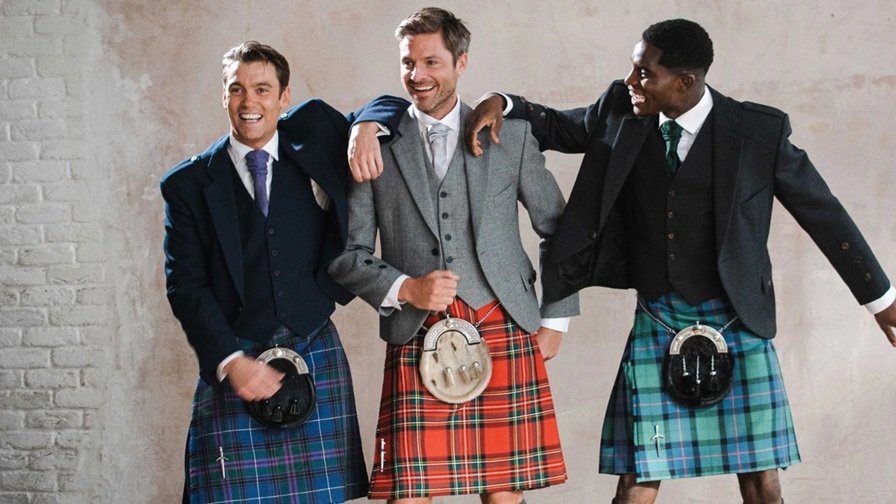
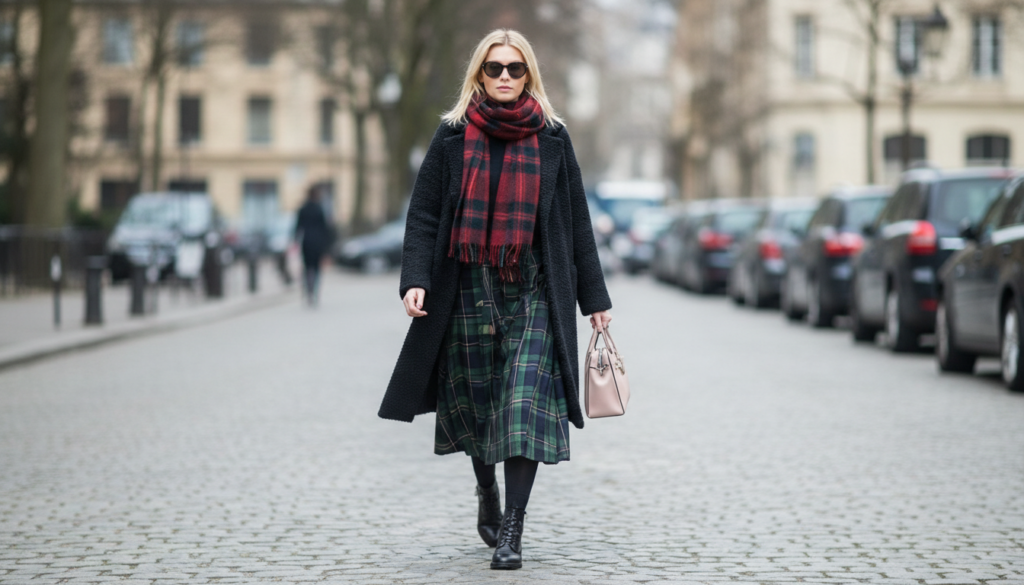
While the full Highland dress remains a powerful statement for formal occasions, the accessibility of tartan clothing Scotland for everyday wear has broadened dramatically. No longer confined to the ceremonial, tartan appears in blazers, scarves, trousers, skirts, and even unexpected items like bikinis or bomber jackets. This democratization allows individuals to express a connection to Scottish heritage, or simply an appreciation for the aesthetic, without committing to a kilt.
Modern tartan clothing blends traditional patterns with contemporary cuts and materials, offering options for every style and occasion. From light, airy summer tartans to robust woolens for winter, the fabric continuously adapts. It’s a testament to its timeless appeal and its ability to integrate into diverse wardrobes, offering a splash of heritage or a bold fashion statement.
The Challenge of Authenticity in a Fast-Fashion World
This widespread popularity, however, comes with its own set of challenges. In a world saturated with fast fashion, the distinction between genuine Scottish tartan and generic “plaid” can blur. While “plaid” is often used interchangeably with tartan, especially in American English, true tartan refers to the specific criss-cross patterns with repeating symmetrical *setts*, deeply rooted in Scottish heritage.
Authenticity, for many, lies not just in the pattern but in the provenance – the quality of the wool, the weaving techniques, and the respect for the historical and cultural significance. Choosing genuine tartan supports the continuation of traditional craftsmanship and ensures a connection to the living heritage of Scotland.
The Enduring Allure: Why We Still Cling to the Weave
Why does tartan continue to captivate? Why, amidst constantly shifting trends, does this particular patterned cloth hold such an unshakeable grip on our collective imagination, particularly when it comes to clan tartans of Scotland?
A Personal Tapestry: Finding Your Place in the Pattern
For those with Scottish ancestry, wearing a clan tartan is a profound personal statement. It’s a tangible link to forebears, a visible acknowledgment of one’s place in a centuries-old lineage. Even if a specific surname doesn’t have its own clan tartan, individuals can often find connections through septs (associated families), district tartans, or simply a pattern they admire. There are no strict “tartan police” governing who can wear what, with the exception of certain restricted or royal tartans. The prevailing sentiment is that if you have a connection, or even just an admiration, you are welcome to embrace it. This inclusivity is part of tartan’s modern strength.
But beyond direct lineage, tartan offers a sense of belonging to a broader narrative – a story of resilience, passion, and an enduring spirit. It’s a connection to the wild beauty of Scotland, to its complex history, and to a culture that values tradition while embracing change.
The Future of Fibre: Innovation Meets Legacy
The tartan industry itself is not static. With new designs constantly being registered (over 10,000 in the Scottish Register of Tartans as of April 2025), and a growing focus on sustainability and organic materials, tartan continues to evolve. Weavers and designers are finding innovative ways to produce tartan, combining traditional methods with modern technology and ecological awareness.
This blend of old and new ensures that tartan remains relevant, not merely a relic. It is a living, breathing textile, adaptable to changing tastes, social contexts, and environmental considerations. It’s this innate resilience and continuous reinterpretation that truly embody the rebel spirit of the weave. From ancient battlefields to the contemporary street, the clan tartans of Scotland, and the tartan clothing they inspire, continue to tell a story of defiant beauty.
Frequently Asked Questions about Clan Tartans & Tartan Clothing
1. What is the difference between a clan tartan and a district tartan?
A clan tartan is traditionally associated with a specific Scottish clan or family surname, symbolizing membership and allegiance to that clan. A district tartan, on the other hand, is linked to a particular geographical area or region of Scotland, allowing individuals who may not have a specific clan connection, but whose ancestors lived or worked in that area, to wear a tartan associated with their heritage. There are also universal or generic tartans that anyone can wear, regardless of Scottish ancestry.
2. Can anyone wear a Scottish clan tartan, or do you need to be part of the clan?
Generally, there are no strict rules prohibiting someone from wearing a clan tartan, even if they don’t share the clan name. While traditionally, wearing a specific clan tartan indicates allegiance to its chief, modern interpretation is more flexible. Many people choose to wear a tartan based on their ancestral connections (even if not a direct surname), regional ties, or simply because they appreciate the pattern. However, it’s considered good form to understand the history behind the tartan you choose. Some corporate or royal tartans may be restricted.
3. How do you find your ancestral clan tartan?
To find your ancestral clan tartan, start by researching your family tree and looking for connections to Scottish surnames or regions. You can consult online resources like the Scottish Register of Tartans, which is the official government database for tartan designs. Clan websites and specialized tartan finder tools (such as the one at scottishkiltshop.com/collections/tartan-finder) can also help you search by surname, regional connection, or even septs (family names associated with a larger clan). Don’t be discouraged if your surname doesn’t yield an immediate match; many names are associated with larger clans as septs, or you may choose a district tartan.
4. What are the rules for wearing a kilt and tartan clothing?
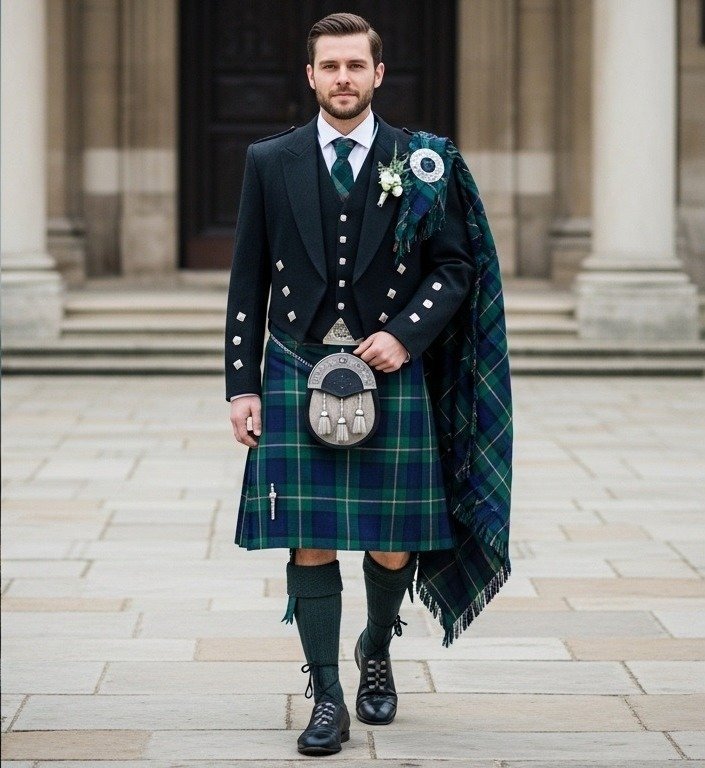
While formal Highland dress has specific etiquette (e.g., Prince Charlie jacket for black-tie events, dress sporran, ghillie brogues), modern tartan clothing offers much more flexibility. For casual wear, a kilt can be paired with a simple shirt and more relaxed footwear. The key is to match the formality of your tartan attire to the occasion. Always ensure your kilt is worn at the natural waist and falls to the middle of the knee. Regardless of formality, wearing a kilt and tartan with pride and respect for Scottish culture is paramount.
5. Is tartan still evolving, or are all patterns established?
Tartan is a living tradition that continues to evolve. While many historical clan tartans are well-established and preserved, new designs are regularly created and registered with the Scottish Register of Tartans. These new tartans can be for individuals, families, organizations, or to commemorate specific events. The development of new dyes and weaving techniques also allows for modern interpretations and broader applications in fashion and design, ensuring that tartan remains a dynamic and relevant part of Scottish culture.