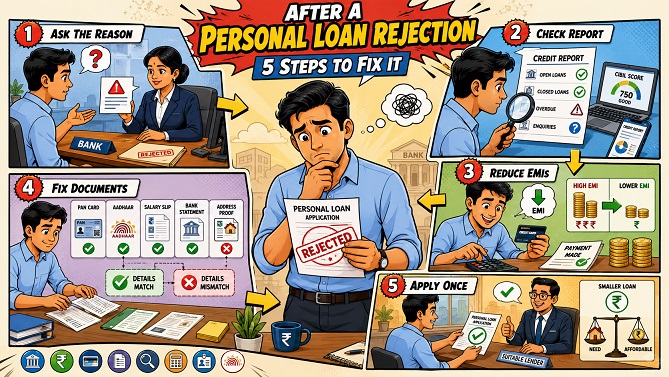
When funds are needed for planned expenses, emergencies, travel, education, home renovation, debt consolidation or any other financial requirements, getting a personal loan can become useful. But there might be chances that your application can be rejected, even when you meet the basic eligibility criteria.
While the rejection of a loan application from the lender does not always mean that your financial profile is poor, there are several factors that they consider. Before approving the loan application, lenders evaluate various things about the borrower, which may not be immediately obvious to them. This article will help you understand the possible reasons, identify the gaps, and improve your chances before making a personal loan application.
Reasons for Personal Loan Rejection
Here are some of the reasons why your loan application gets rejected and how you can fix it:
1. Credit History Has Issues
One of the most important parts of lending assessment, a credit score is used by a lender to know the creditworthiness and repayment capacity of the borrower. Your broader credit history may also be evaluated by the lender, including missed payments, high credit utilisation and even frequent applications. It is always advised to maintain a good credit score (more than 700) for better and favourable loan opportunities.
How to fix it:
- Pay all your EMIs and credit card bill dues on time.
- The outstanding balances must be kept under control.
- Avoid making too many personal loan applications within a short period.
- Regularly review and monitor your credit report.
- Pay attention to any of the incorrect information and fix it.
2. Income Does Not Match the Lender’s Criteria
Even if you have a regular income source, it does not guarantee a loan approval. There are specific income requirements that personal loan app consider based on their lending policies and the applicant’s profile.
How to fix it:
- Check your income before making an application.
- The salary and income records must remain updated.
- Ensure you provide accurate information.
- The loan amount must align with your repayment capacity.
3. Existing Debt Is Too High
Whether you can comfortably manage another EMI without straining the budget, lenders assess your existing financial obligations. It may reduce your eligibility if you have high outstanding debt or multiple ongoing repayments.
How to fix it:
- Review and monitor your existing personal loan EMIs.
- Try reducing unnecessary debt wherever it is possible.
- Make sure to manage your credit card balance.
- Borrow only an amount that fits your budget.
4. Employment History Appears Unstable
The lender’s assessment is greatly influenced by employment stability, as regular income is where you make repayments. It may negatively affect how your loan application is evaluated if there are frequent job changes, a recent job switch or even a short employment history. Self-employed applicants may also face additional assessment from personal loan apps if their income varies significantly.
How to fix it:
- Ensure you maintain consistent employment.
- The employment document must remain updated.
- Clear income records must be maintained.
- The applicant must provide accurate information related to employment.
5. Application Contains Incorrect Information
There must not be even small inconsistencies between your application and the documents you have submitted, as it can create verification issues. The loan application may be delayed or affected if there is incorrect personal, employment, income or banking information.
How to fix it:
Always verify and double-check the following details:
- Name and personal details
- Employment information
- Income details
- Residential address
- Bank account information
- Identity documents
6. Too Many Credit Applications
Submitting multiple applications in a short timeframe can lead to several hard inquiries on your credit report, which might influence lenders’ perception of your credit-seeking behaviour. Borrowers must apply only after assessing their eligibility, even if they are using personal loan apps for loan applications.
How to fix it:
- Check the eligibility requirements of a lender.
- Compare different lenders and apply selectively.
- Don’t submit multiple applications simultaneously.
7. Credit Report Contains Errors
There is a possibility that your credit report may contain inaccurate or outdated information. A closed account could appear active, or a correctly paid instalment could be incorrectly reported as overdue. Make sure you correct all the genuine errors so lenders can receive a more accurate picture of your credit profile.
How to fix it:
- Get your latest credit report.
- Carefully check all the account details.
- Review the repayment records.
- Verify your outstanding balances.
- Fix the inaccurate information.
8. Loan Amount Does Not Match Your Financial Profile
Even if you meet the basic eligibility criteria, requesting an amount that appears high compared with your income and existing obligations may affect the lender’s decision. A personal loan should align with your actual financial needs and repayment capacity.
How to fix it:
- Calculate an EMI that you can afford.
- Consider your previous financial commitments.
- Avoid overborrowing or underborrowing.
- Choose a repayment tenure that suits your current situation.
- Don’t stretch your finances for a high-value loan.
Final Thoughts
A rejected personal loan application can stem from various factors such as credit history, income, existing debt, employment stability, incorrect information, or an inappropriate loan amount. Understanding the root cause before reapplying can enable you to make better-informed borrowing choices.
For eligible borrowers, Bajaj Finserv app offers a convenient borrowing experience with no collateral, transparent terms and conditions, quick approval, competitive rates of interest, and flexible tenures. Its user-friendly process and no external charges can also make the borrowing journey easier to understand. Ultimately, borrowers should review their financial profile, compare applicable terms, and choose a personal loan app that aligns with their repayment capacity.