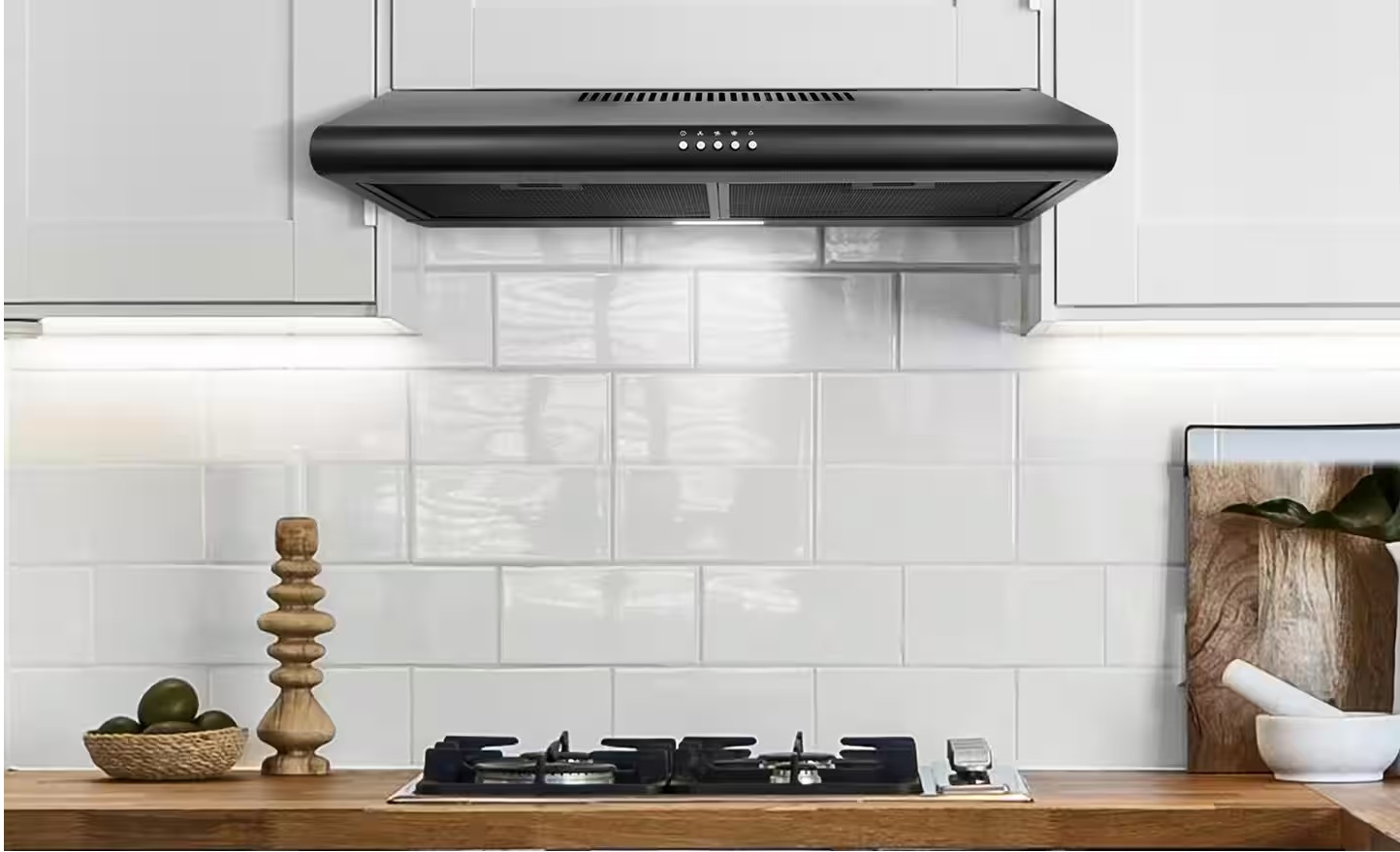
Extractor hoods attract more complaints than almost any other kitchen appliance, and a large proportion of them come from a single misunderstanding: many hoods are not extracting anything at all. They are filtering air and returning it to the room, which is a different job with different limitations.
This guide explains the two configurations, the maintenance each needs, and what to check when performance drops.
Filter types, duct requirements and replacement intervals vary by hood — manualmachine.com/siemens/ carries the documentation per model.
Ducted or recirculating: establish which you have
This determines everything else.
- A ducted hood pushes air through a duct to an outside vent. It removes heat, steam, grease and odour from the building entirely. It is substantially more effective.
- A recirculating hood passes air through a grease filter and a carbon filter, then returns it to the kitchen. It removes grease and some odour. It does not remove heat or moisture.
To tell which you have, look at the top of the hood. A duct running to an external wall or through the ceiling means ducted. A short stub venting back into the cupboard, or vents on the front of the chimney, means recirculating.
Many hoods are sold as convertible and are installed in recirculating mode because ducting was never run. If your kitchen still steams up with the hood on full, this is almost certainly why, and it is not a fault.
Grease filters
The metal mesh filters under the hood are the primary maintenance item and the most neglected part of any kitchen.
- Remove them — most release with a catch or a sprung clip — and wash them. A dishwasher on a hot cycle works well, though repeated cycles can discolour aluminium mesh.
- For heavy build-up, soak in hot water with a degreasing detergent before washing.
- Dry fully before refitting.
- Clean monthly with regular cooking, more often with frequent frying.
A saturated grease filter is both a performance problem and a fire risk. Grease accumulation above the filter, in the housing and duct, is what turns a pan fire into a serious one.
Carbon filters, only on recirculating hoods
Carbon filters absorb odour and are consumable. They cannot be washed, and washing one destroys it.
- Replace at the documented interval, typically every three to six months depending on use.
- A recirculating hood with an exhausted carbon filter moves air and removes nothing you can smell, which is exactly the complaint most people report.
- Check the filters are actually fitted. Hoods converted to recirculating mode after installation sometimes never had them added.
Ducting problems on ducted hoods
Extraction performance is dominated by the duct, not by the motor rating.
- Duct diameter should match the hood outlet. Reducing it, which installers do to fit an existing hole, cuts airflow disproportionately.
- Keep the run short and bends few. Every bend costs airflow, and flexible ducting costs more than rigid.
- Check the external vent flap opens. Flaps seize shut, and birds and insects nest behind them.
- Check for crushed flexible ducting inside the cabinet or ceiling void.
- Flexible foil ducting accumulates grease in its ridges and gradually restricts. Rigid ducting performs better and stays cleaner.
A quick test: hold a sheet of kitchen paper against the filters with the hood on maximum. It should be held firmly. Weak suction with clean filters points at the duct.
Make-up air
A powerful hood removes a large volume of air, and that air has to be replaced from somewhere. In a well-sealed modern kitchen with the doors and windows closed, the hood can effectively be fighting a vacuum.
The symptom is a hood that performs noticeably better with a window open. If that is what you observe, the hood is fine and the room needs a source of replacement air.
This matters beyond performance in any room with an open-flued gas or solid fuel appliance, where a powerful extractor can affect the appliance’s draught. That is a case for professional advice rather than experimentation.
Noise
- Noise rises steeply with fan speed. Running on a lower setting for longer, starting before you begin cooking, is both quieter and more effective than running flat out at the end.
- A rattle usually means a loose filter or a panel not clipped home.
- A rising whine or grinding suggests the motor bearings.
- A hood that is louder than it was, with clean filters, often has grease built up on the fan impeller.
Lighting
Hood lights are frequently a specific bulb type with an unusual fitting, and on many recent hoods the LED module is not user-replaceable. Check the documentation before buying anything, and isolate the hood at the supply before attempting a change.
Extraction ratings and duct specifications are published for every hood, so read the documentation here before assuming the motor is at fault.
Using it effectively
- Switch on a few minutes before you start cooking so the hood establishes airflow.
- Leave it running for ten to fifteen minutes after finishing.
- Use rear burners where possible — the capture area is better.
- Keep lids on pans, which does more for steam than any hood setting.
- Do not flambé or leave a pan unattended under a hood with a loaded grease filter.
Frequently asked questions
Can I convert a recirculating hood to ducted?
Often yes if the hood is convertible and a duct route exists. It is the single biggest improvement available for most kitchens.
How long should grease filters last?
They are washable and reusable for years. It is the carbon filters that are consumable.
Is a higher extraction rating always better?
Not without ducting to match and a source of replacement air. A high-rated hood on restricted ducting underperforms a modest one installed well.