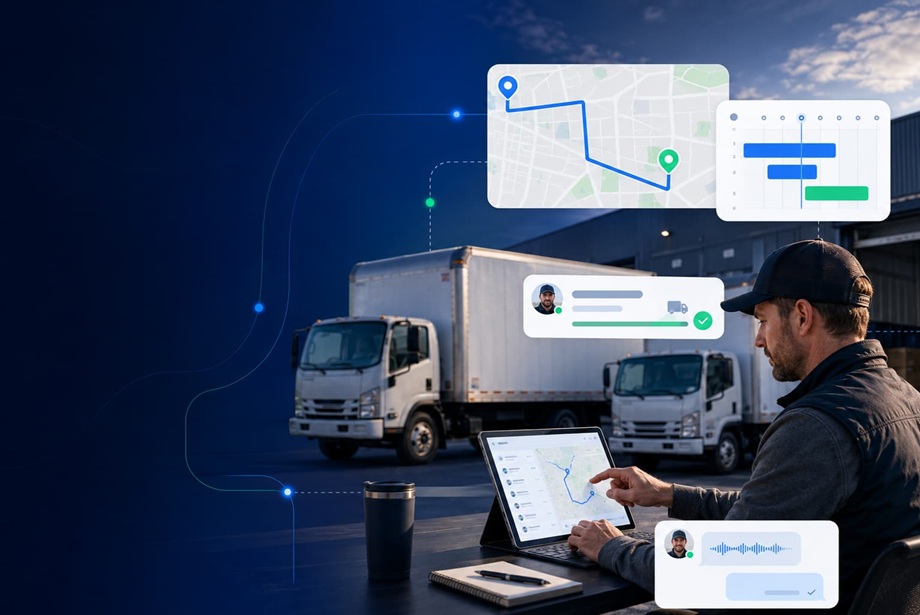
Fleet operations can become complicated when dispatch teams rely on several systems to manage daily work. One platform may handle route planning, another may manage driver assignments, and a separate system may track deliveries, vehicles, or customer information.
Each system may work well on its own. The problem appears when these platforms do not communicate effectively with one another. Dispatchers may need to enter the same information multiple times. Managers may switch between different dashboards to find basic updates. Drivers may receive information through different channels, while customers may face delays when shipment data doesn’t reach them on time.
Custom logistics software can bring these disconnected processes together. A well-designed solution can connect existing dispatch systems, centralize important information, and give fleet teams a clearer view of daily operations without forcing them to replace every tool they already use. This guide explains how custom logistics software can connect multiple dispatch systems, reduce manual work, improve data visibility, and simplify fleet management.
Why Multiple Dispatch Systems Create Problems
Many fleets adopt different software platforms as their operations grow. A company may begin with one dispatch system and later introduce specialized tools for route optimization, GPS tracking, fleet maintenance, warehouse management, or customer communication. The result can be a technology environment with several systems serving different purposes.
1. Data Becomes Scattered
Important information may sit in separate databases or applications. A dispatcher might find driver information in one system and delivery details in another.
This fragmented setup makes it harder to get a complete picture of fleet activity.
2. Manual Data Entry Increases
When systems cannot exchange information automatically, employees may need to copy data from one platform to another.
Manual entry takes time and creates opportunities for mistakes. A small error in a delivery address, driver assignment, or shipment status can create larger operational problems.
3. Dispatchers Lose Time
Dispatch teams need quick access to accurate information. Constantly switching between platforms can slow down decision-making, particularly when the fleet is dealing with delays, cancellations, vehicle issues, or last-minute changes.
4. Reporting Becomes More Difficult
Management teams need reliable data to understand fleet performance. Multiple systems can make reporting difficult when each platform uses different formats, terminology, or data structures.
A centralized software layer can make that information much easier to analyze.
What Is Custom Logistics Software?
Custom logistics software is a solution developed around the specific processes and requirements of a logistics business. Instead of forcing a fleet to change its operations to match an off-the-shelf product, custom software can be designed to work with existing systems and workflows.
A fleet may use custom software as a central platform that connects dispatch systems, tracking tools, driver applications, customer portals, and other operational technologies.
The exact features depend on the business. Some companies may need advanced dispatch management, while others may prioritize integrations, real-time tracking, reporting, or automated notifications.
How Custom Software Connects Multiple Dispatch Systems
Integration is one of the biggest advantages of custom development for fleets with complex technology environments.
A custom platform can connect different systems through APIs, data connectors, webhooks, or other integration methods. The software can then transfer relevant information between platforms according to predefined rules. For example, a new delivery assignment could move through the following process:
- A customer places an order.
- The order enters the central logistics platform.
- The system sends the required information to the appropriate dispatch system.
- A dispatcher assigns the delivery to a driver.
- Driver and vehicle information returns to the central platform.
- GPS data provides location updates.
- The customer receives delivery status notifications.
- Completed delivery information becomes available for reporting.
This type of workflow reduces unnecessary manual intervention and keeps important systems synchronized.
6 Key Features of Custom Logistics Software for Fleets
A custom platform can include many different features. The right combination depends on fleet size, operational complexity, and existing technology. This is where a reliable logistics software development company can help you integrate these features.
1. Unified Dispatch Dashboard
A centralized dashboard can give dispatchers access to information from multiple systems in one place. Instead of opening several applications, a dispatcher can view active jobs, driver assignments, vehicle status, delivery progress, and exceptions from a single interface.
2. Real-Time Fleet Tracking
GPS integration can provide live information about vehicle locations and delivery progress. Managers can use this information to identify delays, monitor routes, and communicate more accurate arrival times to customers.
3. Automated Data Synchronization
Automatic synchronization reduces the need for employees to move information manually between platforms. Updates from one system can trigger changes in another, helping keep records consistent across the technology environment.
4. Route and Dispatch Management
Custom software can support route planning and dispatch decisions based on factors such as vehicle availability, driver schedules, delivery windows, locations, and fleet capacity. Businesses can also integrate specialized route optimization tools rather than rebuilding every feature from scratch.
5. Driver Applications
A mobile application can give drivers access to assigned jobs, navigation, delivery instructions, customer details, proof of delivery, and status updates. The application can send completed delivery information back to the central platform without requiring dispatchers to enter it manually.
6. Automated Notifications
Customers and internal teams can receive automatic updates when important events occur. Notifications may cover dispatch confirmation, driver assignment, route changes, delays, arrival, and completed delivery.
Benefits of Custom Logistics Software Development
The value of custom logistics software development extends beyond having another software platform. The main benefit comes from creating a system that fits the way the fleet already operates.
1. Better Operational Visibility
A unified system can give managers a clearer view of fleet activity. Centralized information makes it easier to identify delays, bottlenecks, inactive vehicles, and other operational issues.
2. Less Manual Work
Automation can reduce repetitive administrative tasks. Employees can spend less time copying information between systems and more time handling exceptions and customer needs.
3. Fewer Data Errors
Automated data transfers can reduce mistakes associated with manual entry. Consistent information across systems can also improve reporting and decision-making.
4. Easier Scalability
Fleet operations often change as businesses grow. A custom solution can be expanded with new integrations, users, vehicles, locations, workflows, and features as requirements evolve.
When Should a Fleet Consider Custom Development?
Custom software can be particularly valuable when existing systems create more limitations than benefits. Consider custom development if your fleet:
- Uses several dispatch platforms.
- Relies heavily on manual data entry.
- Has difficulty consolidating operational data.
- Needs integrations that standard software does not support.
- Has complex dispatch or delivery workflows.
- Requires specialized reporting.
- Plans to expand its fleet or service area.
- Needs greater control over its technology infrastructure.
A logistics business does not necessarily need to replace every existing system. In many cases, an integration-focused solution can connect the tools that already work well.
How to Choose a Logistics Software Development Partner
The development partner can have a significant impact on the success of the project. Logistics software involves more than standard application development because it often needs to coordinate real-time data, external systems, mobile users, and time-sensitive operations.
A reliable logistics software development company should understand both software engineering and the operational challenges faced by fleets.
1. Look for Integration Experience
Ask whether the company has experience connecting third-party platforms through APIs and other integration technologies.
2. Review Relevant Projects
A portfolio can provide insight into the team’s ability to handle complex applications, dashboards, mobile solutions, and data-driven systems.
3. Discuss Security
Logistics platforms can contain customer information, driver data, vehicle details, business records, and other sensitive information. Security should therefore be considered from the beginning of the project.
4. Ask About Long-Term Support
Software integrations may require updates when third-party platforms change their APIs or technical requirements. Make sure the development partner can provide ongoing maintenance and support.
How Custom Software Can Improve an Existing Technology Stack
One common misconception is that custom software requires a fleet to abandon its existing tools. That is not always necessary.
A well-planned custom logistics software development project can work as a central integration layer around existing platforms. The business can continue using systems that already provide value while adding a new layer that connects their data and workflows.
This approach can protect previous technology investments while addressing gaps between different applications.
For example, a fleet may continue using its preferred GPS provider, dispatch platform, accounting software, and driver application. Custom software can connect these systems and present relevant information through a unified operational interface.
What to Consider Before Starting Development
A successful project starts with a clear understanding of the fleet’s existing processes. Before development begins, document:
- Every system currently used by the fleet.
- The information each system stores.
- Which systems need to exchange data.
- Current manual processes.
- Common operational bottlenecks.
- User roles and access requirements.
- Security and compliance requirements.
- Future integration and scalability needs.
This assessment can help define the right scope and prevent unnecessary features from increasing development costs.
The Future of Connected Fleet Operations
Modern fleet management increasingly depends on connected systems. Dispatch, tracking, driver communication, customer service, maintenance, and reporting all generate valuable operational data. A connected software environment allows businesses to make better use of that information.
Custom development can provide the foundation for future capabilities such as predictive analytics, automated dispatch decisions, advanced route optimization, vehicle maintenance alerts, and more detailed performance reporting.
Here, the goal is to make the entire technology environment work together more effectively.
Final Thoughts
Multiple dispatch systems can create operational challenges when they fail to share information effectively. Custom logistics software can connect these platforms, reduce manual work, improve visibility, and simplify everyday fleet management. The right solution can also support future growth without forcing businesses to replace their existing technology. Unique Software Development helps logistics businesses create practical software solutions that fit their workflows, connect essential systems, and support more efficient fleet operations.