Teams building digital products inevitably hit a wall when expanding their interfaces. A standard open source pack easily covers the basics like home, user, and settings. Then the product team requests a graphic for a highly specific feature. The design team has to draw it from scratch to match the exact stroke weight, corner radius, and padding of the existing system. Doing this for hundreds of assets across multiple platforms drains resources rapidly.
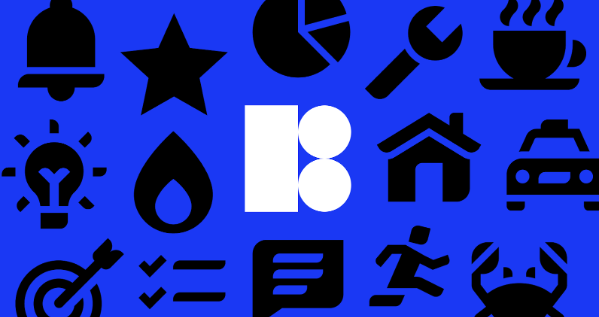
Icons8 Icons solves this scaling issue by offering over 1.4 million icons categorized into more than 45 strict visual styles. With style packs containing over 10,000 icons each, a team can adopt a single visual language, like Material Outlined or Windows 11 Color, and trust that almost any niche concept already exists in that exact style.
A Day in the Life: Sourcing Assets for a Sprint
Consider a typical morning for Kiran, a product designer wrapping up a two-week sprint. He opens his Figma file to finalize a new analytics dashboard. The product manager just added a requirement for three new tooltips that require specific conceptual graphics to explain data export features.
Rather than spending two hours sketching vector paths to match the company’s iOS 17 Glyph style, Kiran launches the Icons8 Figma plugin. He types his concepts into the search bar, filters the results by the iOS 17 Glyph style, and drags the matching SVGs directly onto his canvas. He recolors them using his saved Figma styles, scales them to fit his 24-pixel grid, and moves on to his next task. The entire interruption takes three minutes, and the new assets perfectly match the 50 other icons already on the screen.
Workflow Scenarios: From Wireframes to Production
Different roles interact with asset libraries in completely different ways. Here is how two distinct disciplines utilize the platform from start to finish.
Scenario 1: The Front-End Developer Building a Dashboard
A front-end developer needs to implement a massive new settings panel with dozens of categories. Searching and downloading individual files from a website is terribly inefficient. Instead, she opens Pichon, the dedicated Mac app. She creates a new Collection called “Settings Panel” and drags every required icon into this folder.
She needs all the assets to match the brand’s exact shade of navy blue. Using the bulk recolor tool, she applies her specific HEX code to the entire collection at once. Because she wants to minimize HTTP requests, she exports the whole collection as a single SVG sprite. She embeds this sprite directly into her HTML, ensuring fast load times and perfectly crisp rendering across all screen sizes. For a few standalone graphics, she copies the Base64 HTML fragments directly from the app to embed the images right into the code.
Scenario 2: The Content Manager Assembling a Pitch Deck
A content manager is building a high-stakes presentation for investors. He needs the slides to feel dynamic but lacks motion design skills. He navigates to the Icons8 web library and searches for concepts like “growth” and “security”. He uses the interface filters to isolate animated icons.
He finds exactly what he needs in the 3D Fluency style. Since he is building a web-based presentation, he downloads the Lottie JSON files. These files provide smooth, lightweight animations that look infinitely better than choppy GIFs. He drops the JSON files into his presentation tool, instantly elevating the production value of the pitch without ever opening After Effects.
Organizing and Customizing the Library
The browser-based editor eliminates the need to route every small asset change through a design program. Clicking on any icon opens an interface where you can alter the background color, adjust the padding to scale the asset within its frame, or rotate it.
You can even layer elements by adding a smaller subicon overlay, which remains resizable and movable. If a marketing layout requires a highly specific graphical reaction, you can pull a 3D Fluency asset or a flat emoji directly into the browser editor to adjust its background color before downloading. You can also add text using the Roboto or PT font families and apply an adjustable stroke to outline the shape.
When collaborating with another designer or developer, you can generate a share link that automatically clones your entire custom collection into their workspace, keeping the whole team synchronized.
Comparing the Alternatives
Choosing an asset library requires understanding the trade-offs of different approaches.
- In-house icon sets: Building your own set guarantees a perfect brand match. It also requires a dedicated designer to maintain the library, create new assets on demand, and ensure strict adherence to grid systems. This is an immense burden for most startups and mid-sized teams.
- Open source packs: Libraries like Feather or Heroicons are excellent for early-stage projects. They are completely free and beautifully crafted. Their fatal flaw is their size. With only a few hundred assets, you will inevitably need a specific concept they do not cover, forcing you to mix and match clashing styles.
- Other massive libraries: Services like Noun Project or Flaticon offer millions of assets. Because they rely on thousands of independent contributors, finding twenty icons in the exact same style is incredibly frustrating. Icons8 avoids this by utilizing an in-house team to build massive, unified style packs.
Limitations and when this tool is not the best choice
Icons8 Icons is a powerful utility, but it is not the right fit for every situation. The free plan is highly restrictive. You are limited to PNG files at a maximum size of 100px. You also must include a visible attribution link back to Icons8 on your project. The only exceptions are the Popular, Logos, and Characters categories, which unlock all formats for free. If you are building a professional product, you will absolutely need the paid Icons plan at $13.25 per month to unlock scalable SVG files and remove the attribution requirement.
This tool is not the best choice if your brand requires a highly distinctive, proprietary illustrative style that serves as a core part of your brand identity. The styles provided are clean and professional, but they are ultimately stock assets used by thousands of other companies. If your product’s primary differentiator is its unique aesthetic, you still need to hire an illustrator.
Practical Tips for Getting the Most Out of Icons8
Working with this library daily reveals a few workflows that save significant time.
- Uncheck the simplified SVG setting: By default, the system simplifies vector paths upon download. If you plan to open the file in Lunacy or Illustrator to modify the anchor points, uncheck this box to get the fully editable paths.
- Use the image search for matching: If you have an existing icon and need to find more in the exact same style, upload your current file into the search bar. The AI-powered search will locate visually similar assets across the library.
- Leverage the light and dark toggle: Always preview your assets against both light and dark backgrounds using the built-in toggle before downloading, especially when working with Liquid Glass or colored styles.
- Submit icon requests: If a specific concept is missing from your chosen style pack, submit a request. Once a request hits eight community votes, the in-house team will design it and add it to the library.