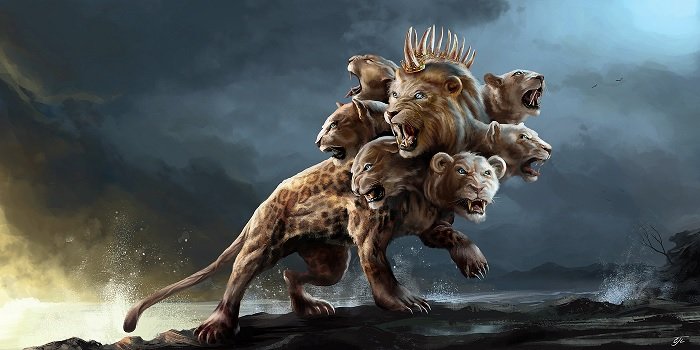
Apocalyptic literature doesn’t whisper. It roars. Revelation’s visions are crowded with blazing colors, fractured empires, and cryptic symbols, but none pull the eye like the beast. It rises from the pages as a grotesque hybrid, tempting the interpreter to pin it down. Scholars argue. Theologians spar. Artists and conspiracy theorists alike feed on its mystery. The imagery is so overloaded it becomes a hall of mirrors, reflecting fears across time. In its seven heads and ten horns, some read Rome. Others see an eternal archetype of corrupted authority. The First Century audience, surrounded by persecution and fragile hope, knew this figure’s weight. The beast refuses domestication. It keeps clawing back into conversation, into political critique, into pulp entertainment. What hides under its grotesque composite? Historical power? Spiritual treachery? Both? That question, loaded and relentless, keeps the pages of Revelation smoldering after two millennia.
Examining the Beast’s Symbolic Anatomy
John’s vision is anything but subtle. Seven heads, ten horns, crowns gleaming. Leopard skin, bear’s feet, a lion’s mouth. The creature reads like a nightmare stitched together from every predator in the ancient imagination. For a First Century audience under imperial rule, each element shouts danger. Crowns meant dominion. Horns meant aggressive might. Heads meant multifaceted threat. To focus solely on the monster misses the point. The anatomy isn’t zoological. It’s political. It’s spiritual. Monsters were the visual shorthand of domination, a way of sketching tyranny without naming names.
Tracing Early Church Views on the Apocalyptic Beast
Irenaeus saw Rome’s emperors in the beast’s grin. Hippolytus connected it to antichrist expectation, building a theological scaffold others would climb for centuries. They argued from lived danger. Imperial persecution was no abstraction to the early church. Those links between emperors and the beast froze into tradition, pushing later interpreters toward political readings even when contexts shifted. Ancient debates didn’t die. They mutated. Every time a ruler looks too large, too cruel, the echoes return in modern commentary. The patristic view remains stubbornly lodged in the conversation.
The Beast as Political Power Personified
The parallels to imperial Rome are hard to miss. Crowns signal rule. Horns scream force. In Revelation’s image, power doesn’t come clean. It comes snarling, composite, prepared to devour. Readers have watched that same shape reappear in modern regimes bloated with self-importance and unrestrained control. The connection between John’s ancient vision and contemporary power dynamics isn’t forced. Tyranny recycles itself. The beast becomes shorthand for the intoxicating arrogance of authority turned predator.
Cultural Reverberations of John’s Vision
Painters rendered it. Novelists mined it. Filmmakers amplified it with CGI and thunderclaps. Popular culture doesn’t simply retell Revelation’s beast. It mutates it into what the audience will buy: either spectacle or critique. In some hands, the fear gets smoothed into entertainment. In others, the terror is sharpened into warning. The persistence of this figure in creative work proves how deeply embedded the motif is. Even stripped of its scriptural casing, the beast still prowls.
Contemporary Scholarship on Revelation’s Beast
Literary-critical approaches dissect the vision as allegory. Theological readings dig into prophecy and eschatology. Historians track imperial politics as the skeleton beneath the symbol. Secular analysts dismiss divine revelation but still value the political critique embedded in the text. Faith-based scholars insist spiritual dimensions cannot be excised. Consensus remains elusive. Agreement flickers in recognizing the beast as a multi-layered construct. Debates burn hotter on exactly which layer matters most.
Resource Link for Deeper Study
Specialists have built entire frameworks around decoding the beast’s identity. For a focused exploration into this question, see who is the beast of revelation. The rabbit hole awaits those willing to trace the imagery through history and interpretation.
Opening Pathways Beyond the Vision
The beast endures because it refuses resolution. Every culture, every era finds fresh ways to weaponize or domesticate its image. Attempts to nail down a single meaning end up skewing toward personal bias or historical moment. The ambiguity is its strongest armor. It keeps thriving in pulpits, lecture halls, studio sets, and protest banners. Watching how the beast morphs in public imagination might be more telling than chasing its “true” identity. Keep your eyes open. Symbols like this never sleep.