If you have scrolled through an interior design blog or flipped through an architectural magazine at any point in the last ten years, you have been sold a very specific vision of the ideal kitchen. It is a vision defined by bright subway tile, massive marble islands, and—most notably—walls completely devoid of upper cabinetry.
In their place sat thick, floating wooden planks. This was the era of “open shelving.”
The design logic was highly seductive. Open shelves promised to strip away the heavy, oppressive feeling of traditional wooden boxes. They were supposed to make a kitchen feel airy, casual, and effortlessly curated, like a chic Parisian bistro.
But a decade later, the architectural tide is aggressively turning. Designers, architects, and exhausted homeowners are collectively realizing that open shelving was a beautiful concept that failed miserably in practice. We are witnessing a massive return to enclosed storage, but the industry isn’t just going back to heavy wooden doors. They have found a middle ground that solves the psychological and hygienic failures of the open shelf.
The Hygienic Reality of the Sauté Pan
The primary enemy of the open shelf is the reality of cooking.
Kitchens are not static museums; they are active, volatile workspaces. Every time you sear a steak, boil pasta, or blend a smoothie, microscopic particles of grease, moisture, and food are propelled into the air. In a kitchen with open shelving, these airborne particles eventually settle on everything.
Within a few weeks, that beautifully curated stack of artisanal ceramic bowls develops a sticky, invisible film. Dust binds to the aerosolized grease, creating a stubborn grime. Suddenly, every time you want to use a plate or a wine glass, you have to wash it before you use it, completely defeating the purpose of convenient storage.
Enclosing your dishes is not just a stylistic choice; it is a fundamental hygienic necessity. It provides a physical barrier between your clean dishware and the chaotic thermodynamics of the stovetop.
The Psychological Toll of “Performative” Storage
Beyond the grease, open shelving exacts a hidden psychological toll: visual clutter.
A kitchen inherently holds a lot of mismatched, utilitarian items—plastic leftover containers, heavily branded boxes of cereal, chipped coffee mugs, and bulky appliances. Open shelving demands that you either banish these ugly items to lower drawers or subject yourself to seeing them constantly.
When everything is exposed, the kitchen demands constant, exhausting curation. You are no longer just putting away dishes; you are “styling” a vignette. If a single stack of bowls is slightly askew, the entire wall looks messy. This constant low-level visual noise spikes cortisol and prevents the kitchen from feeling like a calm, restorative space.
The Transparent Compromise
However, the original critique of traditional upper cabinetry was entirely valid. Wrapping the upper half of a small kitchen in solid, dark wood does make the room feel heavy, boxed-in, and significantly smaller.
To solve this, modern interior architecture is heavily leaning into transparent and semi-transparent barriers. When homeowners opt to install glass cabinet doors in place of solid wood fronts, they are performing a brilliant trick of spatial geometry.
By allowing the eye to travel through the front plane of the cabinet and hit the back wall of the box, you instantly add 12 to 15 inches of perceived depth to the room. The physical footprint of the heavy cabinet remains, but the visual weight is entirely erased.
The Rise of the “Soft Boundary”
But what about the clutter? If you use perfectly clear glass, aren’t you just putting your mismatched Tupperware in a display case?
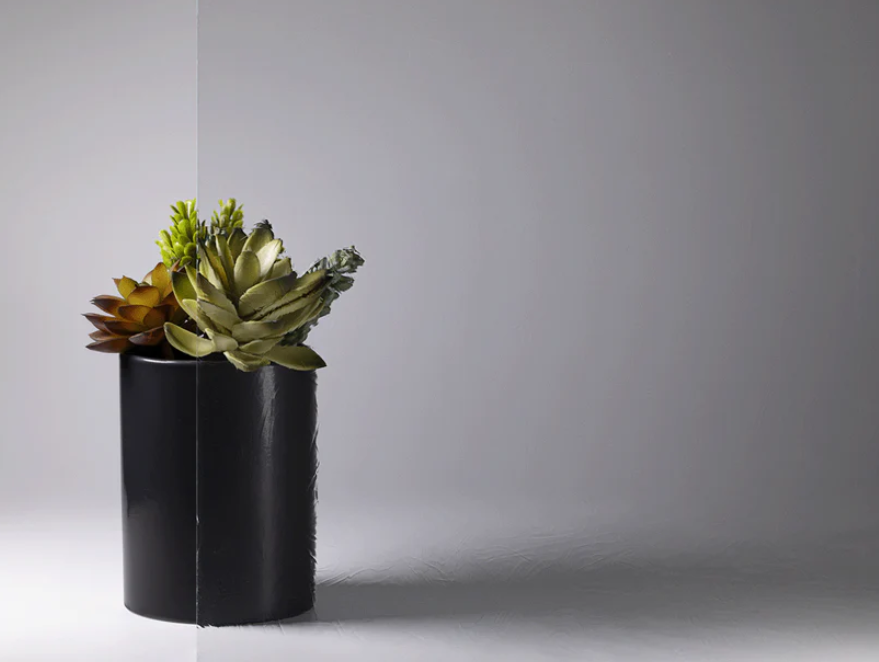
This is where material science and texture come into play. The most sophisticated kitchens today are avoiding crystal-clear panes in favor of obscured, textured alternatives like fluted, reeded, seeded, or acid-etched finishes.
The Physics of Fluted Glass: > When light hits a reeded or fluted surface, the vertical ridges act as tiny, continuous lenses. They mechanically scatter and bend the light waves (diffraction). This allows the light to pass through and bounce around the inside of the cabinet—maintaining that airy, deep spatial illusion—but it completely scrambles the image coming back to your eye.
The sharp, chaotic outlines of branded boxes and mismatched mugs are blurred into soft, abstract washes of color and shadow. You gain the psychological protection of a closed door and the visual expansion of a window, without ever having to worry if the labels on your soup cans are facing forward.
Conclusion
The era of the performative kitchen is ending. We are moving toward spaces that forgive our daily messes rather than putting them on display. By abandoning the dust-catching open shelves and embracing the strategic use of enclosed, textured transparency, we can finally design kitchens that are as functional to live in as they are beautiful to look at.