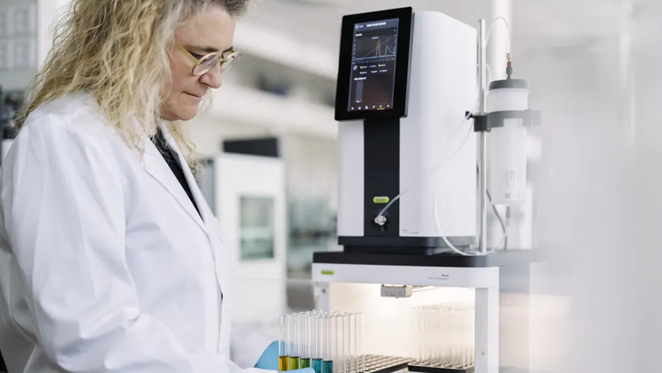
Flash chromatography is now a common method used in research laboratories. The application enables separation and purification of mixtures with minimal delay and high fidelity. This technique has become popular because it is efficient, reproducible, and amenable to most sample types. This method is increasingly used by research teams in many fields of science to improve the efficiency of their workflows while maintaining accuracy. This article discusses various reasons that have contributed to its popularity among research laboratories.
Rapid Separation Capabilities
People researching what is flash chromatography and why it is increasingly being used in academic and industrial environments need to look at its capability of providing fast separations. Time saving is one of the biggest challenges for scientists; they need things extracted as quickly as possible, and typical methods of purification can be slow. This method utilizes pressure to push solvents through columns filled with adsorbent, which provides an enormous decrease in process times.
High Purity and Recovery
Isolated compounds possessing high purity continue to play an invaluable role in research. The separation efficiency of the flash chromatography method is very high, which allows fractions to be collected with few impurities. Steady tuning of recovery rates prevents the loss of precious items during refinement. Purity and yield are crucial, especially in pharmaceutical and chemical research, where even a slight difference can alter the course of outcomes. Predictable performance gives confidence to research teams that their end products are up to the mark.
Versatility Across Applications
Flash chromatography can be used on larger scales, too, adding to its range of applications. This is a molecular technique used by scientists in organic synthesis, natural product isolation, and even in environmental analysis. The method is also flexible, and samples ranging from milligrams to a few grams can be processed. It fits a huge range of chemical mixtures by only replacing adsorbent materials or solvents. This versatility makes it easier to meet diverse project needs in research labs efficiently.
User-Friendly Operation
Flash chromatography is straightforward to use and, therefore, is accessible to both novice and veteran chromatographers. Many modern systems come with automation, making configuration and monitoring easier. Some new systems become very popular because they are simple, with clear instructions and features that make navigation easy even without extensive training. Ease of operation helps the teams to maintain productivity and focus on the important experiments that need to be performed.
Cost-Effectiveness
In research settings, budget considerations ultimately dictate decisions. Flash chromatography is cheaper compared to other purification techniques. This is ideal even for small-scale labs that work on tight budgets. It is time-saving, cost-effective, and uses low-cost materials, thereby cutting overall costs. Long-term benefits come from lower maintenance costs. Rational use of resources enables lab leaders to assign their budget to other critical tasks that are aligned with wider research objectives.
Scalability for Different Research Needs
Sample volume or complexity can change due to the evolving nature of research projects. Flash chromatography is suitable for both small and batch preparations. This scalability allows labs to react to project requirements without having to spend on new hardware. Consistent scaling through flexible-system configuration also ensures reproducibility.
Improved Reproducibility
Repeatable results are the foundation of credible research. Flash chromatography performs consistently over multiple runs. Standardization of software and calibration of equipment facilitates accurate reproduction of the experiment. It allows scientists to validate findings and share data with confidence with their peers. Consistent results enable continuous collaboration and review, which are essential to scientific progress.
Conclusion
Flash chromatography is a particularly impressive and valuable methodology within the world of research labs for a variety of reasons. It is becoming an essential tool for modern scientific work due to its versatility and scalability. It is widely accepted due to its high purity, simple operation, and low price. This technique caters to both routine and advanced research requirements and addresses safety and environmental concerns.