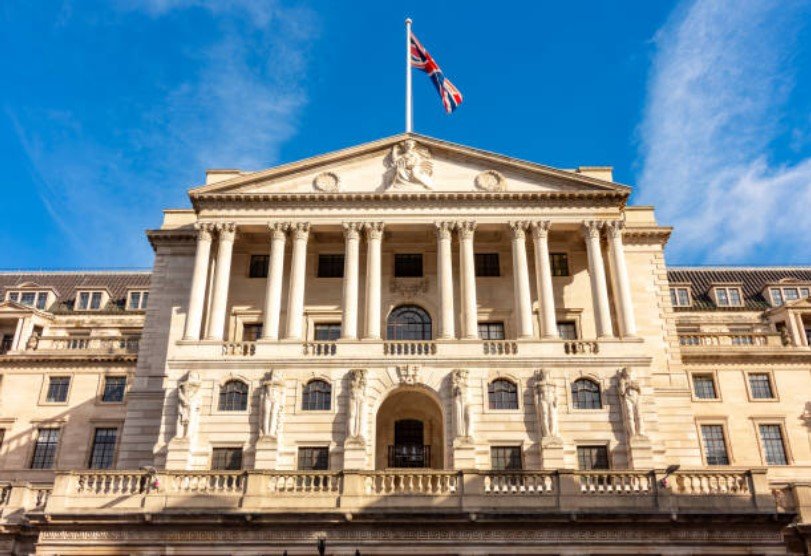
When a long-established UK bank starts experimenting with high-volatility assets, people inside the industry tend to notice before the public does. Not because it is flashy, but because it quietly breaks a pattern. British banks are built on caution. On predictability. On decades of doing things in roughly the same way. So when one of them steps slightly outside that comfort zone, it usually means the ground underneath has already shifted.
This is not about recklessness. It is about adaptation. Inflation cycles, compressed margins, and a generation of customers raised on faster financial feedback loops have changed expectations. Traditional products no longer hold attention on their own. Institutions feel that pressure, even if they rarely say it out loud.
Controlled Experimentation in Tightly Framed Digital Systems
In conversations about structured risk environments, the logic behind Casinolab login often comes up as a comparison point. With a clean, modern interface and a broad range of formats, the platform brings together digital machines, classic table options like blackjack and roulette, and live-play experiences. It operates under a licence, focuses on user safety, supports fast transactions, and offers multiple payment methods. Strong welcome incentives and a clear commitment to responsible play position it as a reliable choice for those looking for structured, secure online play.
The reason this matters in a banking context is not entertainment. It is containment. Risk exists, but it is framed. Movement is allowed, but within visible boundaries. For a traditional bank, testing volatile assets works the same way.
Why Volatility Suddenly Looks Useful
For decades, volatility was treated as something to smooth out or avoid entirely. Stability was the selling point. Now volatility is being re-examined as a tool. Not for the balance sheet as a whole, but for learning.
High-movement assets generate data quickly. They show how systems react under stress. They expose weaknesses faster than slow instruments ever could. For a bank trying to modernise its risk models, that information is valuable.
There are a few clear motivations behind this shift:
- Customer behaviour has accelerated, making old models less predictive
- Digital infrastructure can now monitor exposure in real time
- Younger clients expect optionality, not rigid product lines
This does not mean banks want chaos. It means they want better visibility.

Risk Appetite Has Become Layered
One mistake is assuming a single risk appetite across an institution. That is no longer true. Modern banks separate risk into layers. Core capital remains conservative. Peripheral experiments absorb controlled uncertainty.
This layered approach allows banks to test ideas without threatening trust. The public sees continuity. Internally, teams gather insight.
The process usually follows a clear sequence:
- Isolate exposure from core operations
- Apply strict limits and monitoring tools
- Review behavioural and technical responses
Nothing here is impulsive. If anything, it is almost clinical.
What This Says About Consumer Psychology
Banks do not act in isolation. They respond to how people think about money. Today’s consumers are more comfortable with fluctuation than previous generations. They track values daily. Sometimes hourly. Small swings no longer feel alarming.
This psychological shift matters. It means volatility does not automatically scare users away. In some cases, it signals opportunity or sophistication. Banks are testing whether controlled exposure can coexist with trust.
From what I have seen, users respond better when:
- Movement is transparent
- Limits are clearly communicated
- Outcomes feel contained rather than open-ended
This mirrors patterns seen in other digital financial environments.
Regulation Is Watching Closely
None of this happens without oversight. UK regulators remain cautious, especially where retail exposure is concerned. That is why most experiments stay small and heavily documented.
The regulatory angle actually pushes banks to be more disciplined. Every test must justify itself. Every outcome must be measurable. In that sense, regulation does not block innovation. It shapes it.
A Comparison of Old and New Thinking
To understand the shift more clearly, it helps to compare traditional banking logic with the emerging approach.
| Aspect | Traditional Model | Experimental Model |
| Risk exposure | Minimise at all costs | Contain and observe |
| Data feedback speed | Slow | Fast |
| Consumer engagement | Passive | Active but bounded |
| Learning cycle | Long | Short and iterative |
This table explains why even cautious institutions are curious.
What Comes Next
This does not signal a sudden transformation of British banking into something unrecognisable. Core values remain intact. Trust, stability, and compliance still dominate decision-making.
What is changing is tone. Banks are accepting that zero movement is not the same as zero risk. In a fast digital economy, ignorance can be more dangerous than controlled exposure.
Final Thoughts
When a traditional UK bank tests high-volatility assets, it is not chasing excitement. It is searching for information. For behavioural insight. For relevance in a market that no longer moves at a polite pace.
This shift tells us something important. Risk appetite has not exploded. It has become smarter. More contained. More intentional. And for institutions built on caution, that may be the most significant change of all.