Pull up Google right now and search almost anything – a product, a health question, a “best of” comparison. Chances are the first thing you see isn’t a list of blue links anymore. It’s a block of AI-generated text that answers your question before you’ve clicked a single result. That one change alone has quietly broken the SEO playbook that agencies spent 15 years perfecting.
This is the environment pushing brands toward a different kind of marketing partner. One that uses artificial intelligence not as a buzzword sewn onto a pitch deck, but as an actual working layer inside research, content strategy, and campaign optimization.
The Problem With How Most SEO Was Done
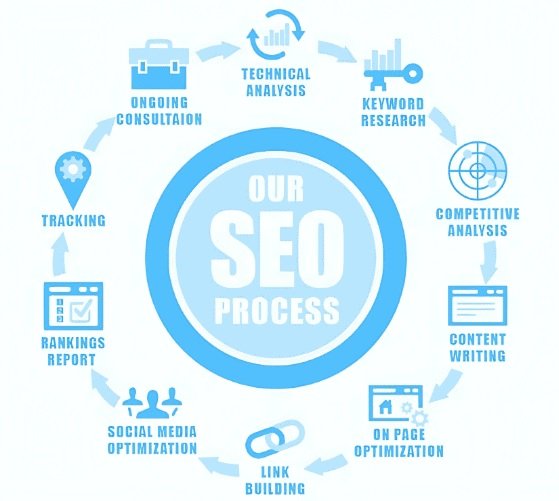
Traditional SEO had a clean, logical structure. Find what people search for. Put those words on a page. Earn links. Wait. Repeat. It worked – until search itself started changing faster than manual processes could track.
According to a 2025 HubSpot report, 75% of marketers are now using AI specifically to reduce time spent on manual tasks like keyword research. That statistic says something important – not just that AI is popular, but that the manual approach was eating enormous chunks of time that could’ve gone into actual strategy.
Many brands are now partnering with an ai digital marketing agency precisely for this reason: to stop spending budget on research overhead and start spending it on decisions that actually move rankings.
What AI Actually Does Differently – With Real Numbers
It Finds Keyword Opportunities Before They Peak
The difference between predictive keyword research and traditional keyword research is the difference between reading yesterday’s newspaper and checking a weather forecast. AI tools monitor emerging search patterns, news cycles, seasonal behaviour shifts, and query clusters in near real time.
Businesses using AI for SEO see up to 45% more organic traffic and 38% higher conversion rates, according to data published by Neil Patel. That kind of gap doesn’t come from better meta descriptions. It comes from finding the right opportunities earlier than competitors and having content live and indexed when demand arrives.
It Maps Intent With Precision
Not every person typing the same query wants the same thing. Someone searching “email marketing software” might be researching, comparing prices, ready to buy, or trying to cancel. AI Overviews now appear in over 13% of all Google searches – and the intent behind those queries shapes exactly what format and depth of content surfaces. Getting this wrong means publishing content that ranks but doesn’t convert, one of the most expensive quiet failures in digital marketing.
It Identifies Competitor Gaps at Scale
Manual competitor analysis is slow and always incomplete. AI-powered analysis pulls a full picture – which topic clusters a competitor dominates, where their authority is thinnest, and what high-value searches nobody in the space has answered properly. That last piece is almost always where the smartest content investment lives.
Real-World Examples Worth Looking At
Example : The Home Services Franchise With 5,500 Locations
A large US home services franchise group operating across 19 brands ran into a specific problem in 2025. AI-driven search tools – Google’s AI Overviews, ChatGPT, Perplexity – were pulling traffic away from their blog content that had previously ranked well through traditional SEO. They brought in the agency Ignite Visibility.
The strategy wasn’t to fight AI search. It was to optimize for it. Using a proprietary AI-powered system, the team reviewed over 5,000 blog posts, checking each for content quality, structured data, and formatting that AI systems could actually parse and cite. The insight driving this: brands cited inside AI Overviews earn 35% more organic clicks than those that aren’t, per Seer Interactive data. Getting cited became the new ranking goal – not just appearing in position one.
Content Optimisation Has Gotten More Technical
To strengthen content performance, many businesses now work with an ai seo services agency that handles the more technical side of modern search – topic clustering, semantic optimisation, and entity-based content architecture that signals genuine topical authority to search engines.
Semantic SEO Is No Longer a Nice-to-Have
Google reads pages for meaning, not just keyword presence. A page that demonstrates real expertise across a topic – connecting related entities, answering follow-up questions, structuring information clearly – consistently outperforms pages built around keyword density alone. Content optimized for Generative Engine Optimisation (GEO) sees a 30–40% visibility increase in AI search results, per Incremys 2026 data. That’s not a marginal improvement.
Topic Clusters Beat Standalone Posts
Individual blog posts rarely build lasting authority on their own anymore. Pillar pages supported by a web of tightly linked, semantically coherent content is what builds sustainable domain authority. AI makes the clustering more accurate by identifying genuine semantic relationships rather than rough keyword groupings.
The Challenges Nobody Talks About Enough
Honest agencies acknowledge this: AI in search marketing has real limitations.
Data quality determines output quality. Broken conversion tracking, patchy analytics history, or misconfigured GA4 properties produce unreliable AI insights. The classic principle applies without exception – garbage in, garbage out.
Human editorial judgement still wins the quality argument. 67% of businesses report improved content quality when using AI, per Semrush. But that improvement comes from AI-assisted content with proper human review, not from bulk publishing whatever a language model generates unchecked. The web is already full of that content. Search engines are actively demoting it.
AI doesn’t understand your brand. It can identify what to write about and how to structure it. It cannot replicate the voice, values, or industry-specific expertise that differentiates a brand from its competitors. That layer is irreplaceable.
Where Search Marketing Is Heading
AI search traffic is growing 165 times faster than organic search traffic, according to WebFX. That’s not a reason to panic – it’s a reason to position early. Conversational search is the clearest shift ahead. Users query AI tools the way they’d ask a knowledgeable colleague – with context, follow-ups, and refined questions. Content that addresses the full arc of a question, not just the opening keyword, is what gets cited and surfaced.
Structured data, topical depth, and consistent cross-platform authority signals are going to matter more than almost anything else in this new environment. The brands building AI-optimised content strategies now – while most competitors are still arguing about whether AI SEO is real – are the ones that will own the search landscape when that growth curve steepens.
Frequently Asked Questions
What does an AI digital marketing agency do differently from a regular agency?
The biggest practical difference is in research speed and depth. AI-driven agencies automate keyword analysis, competitor gap mapping, intent classification, and performance forecasting – work that takes traditional teams days or weeks. That frees strategists to focus on decisions, not data gathering.
Does AI SEO work for small businesses?
Yes, though the scope depends on budget. The most accessible applications for smaller businesses are keyword opportunity identification, content planning, and performance monitoring. Large-scale predictive modelling and personalisation infrastructure suit enterprise clients better.
How long before results show up?
SEO timelines don’t change because of the tools. Better decisions get made faster, but authority still compounds over months. Expect meaningful movement in three to six months, with stronger gains building from there.
What’s the biggest mistake businesses make with AI SEO?
Treating it as a volume play. Publishing hundreds of AI-generated posts without editorial review is one of the fastest ways to earn a penalty in the current search environment. AI should accelerate quality – not replace it.
What does being cited in an AI Overview actually do for a brand?
Even without a click, being cited in an AI-generated answer builds brand authority and awareness. When users do click through from an AI-cited result, data shows they convert at significantly higher rates than average organic visitors – some studies cite conversion rates 23x higher than standard organic search traffic.
Is traditional SEO dead?
No. Organic search traffic is down only about 2.5% since 2024, not the collapse some predicted. The skill set required has changed – but the fundamentals of authority, relevance, and user experience still drive visibility. AI just changes how you build those fundamentals, not whether they matter.