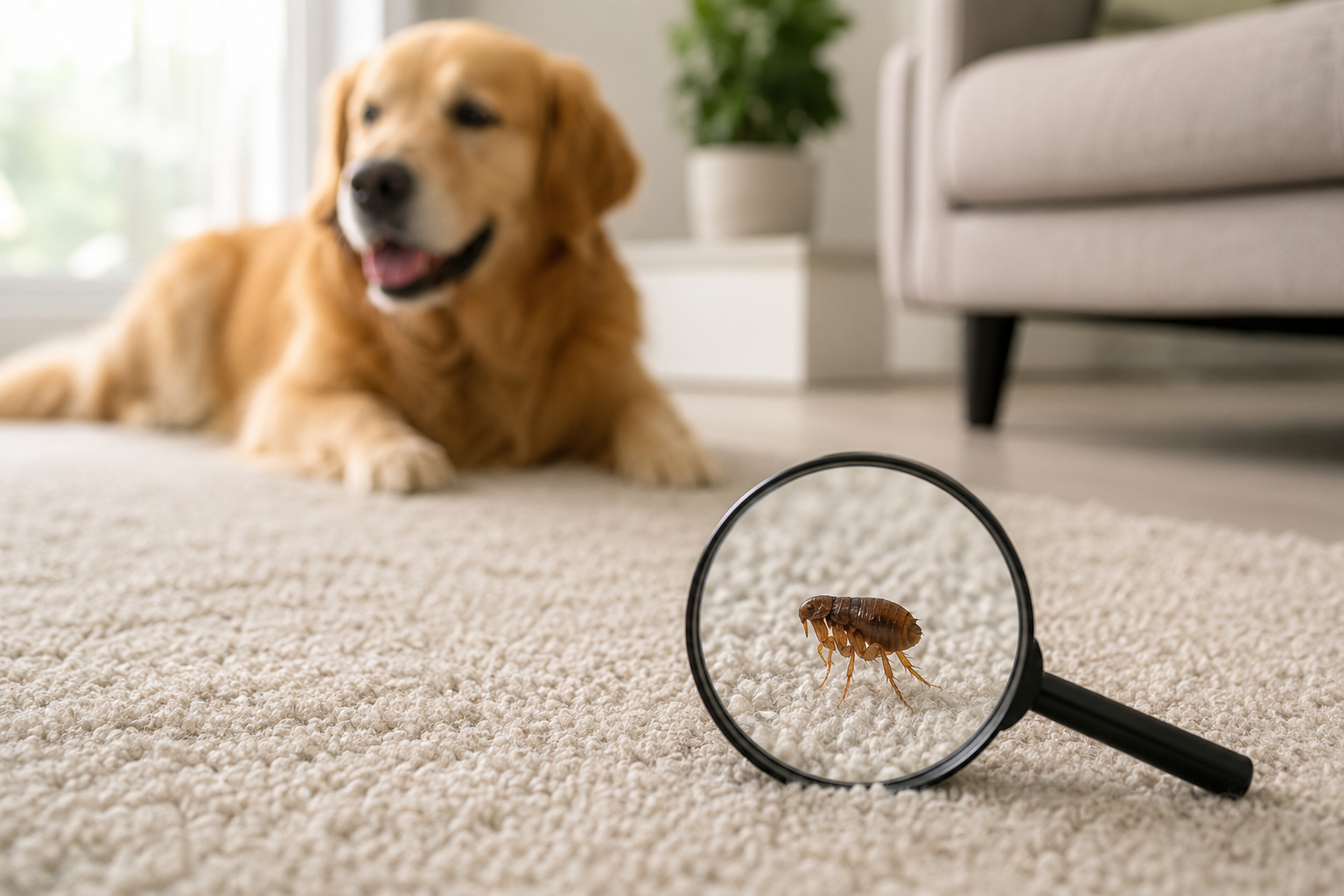
Last summer, a friend of mine spent three weeks vacuuming every day, washing every piece of fabric in the house, and bathing her dog twice a week. Still had fleas. Turns out she’d been treating the symptoms and not the actual problem.
That’s how most flea stories go.
You notice the scratching. You buy something from the pet shop. It seems to work. Then three weeks later, you’re back to square one and honestly more frustrated than when you started. If that sounds familiar – or if you’re just trying to get ahead of it before it happens – read this first.
1. What Are Fleas?
A Tiny Pest with a Big Attitude
Fleas are small. Like, really small. You’ll often feel the bites before you ever see the actual insect. They’re wingless, they live on blood, and the one you’re almost certainly dealing with is Ctenocephalides felis – the cat flea. Don’t let that name reassure you if you only have a dog. It’ll take what it can get.
The Flea Life Cycle: Why They’re So Hard to Kill
Nobody explains this part properly, and it’s honestly the most important thing to understand.
Fleas have four stages – egg, larva, pupa, adult. Adult fleas lay eggs on your pet. Those eggs fall off. They land on carpet, on sofa cushions, in bed sheets, in the gap between your skirting board and the floor. Larvae hatch from those eggs. They feed on whatever muck they find, then they spin a cocoon and become pupae.
And here’s the part that’ll make you groan – pupae can just sit there. Dormant. For months. Nothing kills them in that cocoon stage. They only come out when they detect heat and movement, which is basically whenever you walk past.
So you spray everything, see no fleas for two weeks, think you’ve nailed it – and then they hatch. Because they were never gone.
One female flea lays up to 50 eggs a day. So by the time you notice a problem, you’re not dealing with a few fleas. You’re dealing with hundreds.
2. How Do Fleas Enter Your Home?
Your Pets Are the Most Common Entry Point
Dogs and cats that go outside pick up fleas constantly – from grass, from soil, from other animals they meet. You don’t need a full interaction. A sniff, a brush past, a few minutes in the same garden as a fox – that’s enough.
And if you’re thinking “my cat never goes out, so we’re fine” – sorry, but no. Fleas travel on clothing. You can walk through an infested area and bring them home yourself without knowing.
Wildlife and the Great Outdoors
Foxes, squirrels, and hedgehogs are through residential gardens all the time. They shed flea eggs as they go. Your pet walks the same path an hour later. That’s all it takes.
Secondhand Furniture and Fabrics
This one catches people off guard. A second-hand sofa, a rug from a charity shop, even a car seat from someone who had pets – flea eggs survive in fabric for a long time. You bring the item home, the eggs hatch in the warmth, and suddenly you have fleas and no idea where they came from.
Outdoor Infestations Creeping Indoors
If your garden has fleas – and plenty do without homeowners realising – they’ll work their way inside eventually. Through the back door, through gaps in floors, on shoes. An untreated outdoor space will keep reinfesting the house, no matter how much you treat indoors.
3. Signs of a Flea Infestation
What to Watch For
- Your pet can’t stop scratching – not just a quick scratch here and there. Constant. Biting at their skin, licking the same spots over and over. Losing patches of fur in bad cases.
- Bites on your legs – usually ankles and shins. They’re small, red, and itch more intensely than a mosquito bite. If you’re getting bitten while sitting on the sofa or getting out of bed, fleas.
- Black specks in fur or on bedding – looks like pepper, but it’s flea droppings. If you’re not sure, put some on a damp white tissue. If it turns reddish-brown, that’s digested blood. That’s flea dirt.
- Seeing them move – small dark specks that jump. On the carpet, on your pet, on your socks.
The White Sock Test
Walk around the house in white socks, slowly, in the rooms your pet uses most. Watch the socks. If you see small dark dots jumping onto the fabric – confirmed. It’s a weirdly satisfying diagnostic until you remember what it means.
4. Risks Associated with Fleas
More Than Just an Itch
For most people, it’s just uncomfortable. But some people react badly – proper allergic reactions, swollen bites, hives. Kids, especially, can get quite distressed by flea bites, partly because they’re lower to the ground and partly because they’re more likely to scratch and break the skin.
Health Risks for Pets
Flea allergy dermatitis is genuinely miserable for pets. Their immune system reacts to the flea’s saliva, and even a couple of bites causes intense itching, raw skin, and sometimes infections. In younger or smaller animals, a serious infestation can cause anaemia – they’re losing more blood than they can replace.
Fleas also carry tapeworms. Your pet swallows an infected flea while grooming – which they do constantly – and that tapeworm takes up residence. Bacterial infections are possible, too, though less common.
Household Hygiene and Comfort
It sounds small, but living with an infestation is draining. You can’t sit on your own furniture without getting bitten. You’re washing bedding every other day. You feel like the house isn’t clean even when you’re cleaning it constantly. It affects people more than they expect.
5. DIY Flea Control Methods
What You Can Do at Home
If you’ve caught it early and the infestation isn’t widespread, these things genuinely help – but only if you do all of them at the same time:
- Vacuum every day without skipping – not just a quick once-over. Slow, thorough, every room. Get into edges, under furniture, sofa seams. Each pass removes eggs and larvae. Empty or bin the bag outside immediately.
- Wash everything on the hottest setting it can take – pet bedding, your bedding, blankets, cushion covers. If your pet’s touched it recently, wash it.
- Get proper flea treatment for your pets from a vet – not a supermarket. I cannot stress this enough. The stuff on supermarket shelves is often just not strong enough for an active infestation. Vets have access to better products.
- Flea traps overnight – bowl of water with a bit of washing-up liquid under a lamp. Attracts adult fleas, they drown. Not a full solution, but it helps reduce numbers while you’re doing everything else.
- Treat carpets and soft furniture with a spray – make sure the label says it covers eggs and larvae. Adult-only treatments are a waste of money.
Stay Consistent
Two to three weeks minimum. Even when it looks like it’s working. The pupae will hatch in waves – you need to still be treating when they do, or you’re back at the beginning.
6. When DIY Methods Aren’t Enough
Time to Call in the Professionals
There’s a point where DIY stops being sensible. If the infestation is across multiple rooms, if you keep treating and it keeps coming back, or if you suspect fleas are breeding somewhere inaccessible – under floorboards, inside wall cavities – home products won’t get there.
Two solid weeks of doing everything right, and you’re still waking up with bites? That’s when you call someone. There’s no shame in it. Some infestations are just too established to shift without a professional kit.
7. How Professional Residential Pest Control Helps
Thorough Inspection First
Residential pest control starts with someone who knows what they’re looking for, actually looking. Not guessing, not just spraying and hoping. A proper inspection identifies where fleas are breeding, how far it’s spread, and what’s actually driving it – including whether the outdoor space is part of the problem.
Treatment That Targets the Whole Life Cycle
Professional products reach the stages that household sprays don’t. That includes the dormant pupae in your flooring. Treatment covers the indoor areas you’d expect – carpets, furniture, skirting boards – but also outdoor spaces like lawns and garden beds that homeowners routinely overlook, and which keep feeding the infestation back into the house.
Ongoing Monitoring and Prevention
A follow-up visit isn’t optional – it’s part of doing the job properly. Pupae can still hatch weeks after the initial treatment. Good pest control companies build follow-ups because they know this.
8. Tips for Preventing Future Flea Infestations
Keep Fleas Out for Good
- Flea treatment on your pets every month, all year – not just summer. Heated homes mean fleas survive winter just fine indoors.
- Keep grass short, especially where pets go – long, damp grass holds flea populations. Mow it regularly.
- Vacuum as a normal habit – not a reaction to a problem. Regular vacuuming removes eggs before they hatch into anything.
- Book a seasonal pest control check-up, especially in spring. Flea populations surge as temperatures rise, and catching them early is genuinely much easier than dealing with a full infestation.
9. Choosing the Right Flea Exterminator
What to Look For
A flea exterminator who does this well is worth finding properly. Here’s what actually separates good ones from average ones:
- Certified and licensed – check they’re properly qualified. General pest control experience isn’t the same as specific flea expertise.
- They treat the full life cycle – ask them. If they can’t tell you how they’re handling eggs and pupae, that’s a problem.
- Independent reviews – Google, Trustpilot, local Facebook groups. Reviews on their own website are curated. External ones are more honest.
- They offer a guarantee – if fleas return within an agreed period, they come back. Any exterminator confident in their method will say yes to this without hesitation.
If they’re vague, can’t explain their process, or push back on a guarantee – move on.
Conclusion
Act Early, Act Smart
Fleas don’t sort themselves out, and they don’t stay contained. Every week you leave it, the infestation gets bigger, more embedded, and harder to shift.
Spot the signs early, treat everything at once, and keep it up for weeks, not days. If that’s not working, get a professional in. Residential pest control handles the parts you can’t – the dormant stages, the hidden breeding spots, the outdoor areas that keep feeding the problem back in.
A good flea exterminator doesn’t just reduce the infestation. They end it.
Life’s too short to spend it scratching.