You’ve got limited holiday days, a Himalaya-sized bucket list item, and about a dozen browser tabs open trying to figure out which trek actually fits your life. It’s a common spot to be in. The Everest Base Camp Trek and the 7 Days Annapurna Base Camp Trek both get thrown around in the same “top treks in Nepal” lists, but they’re honestly not solving the same problem for the same traveler.
Everest Base Camp is the trek most people picture when they hear “Nepal” — weeks in the Khumbu, Sherpa villages, prayer flags snapping in the wind, and that slow build toward the world’s highest mountain. The 7 Days Annapurna Base Camp Trek is a different animal altogether: a tighter, faster route into the Annapurna Sanctuary that’s built for people who can’t (or don’t want to) clear three weeks off work.
Neither one is objectively “better.” It really comes down to how much time you have, how your body handles altitude, what kind of scenery pulls at you, and honestly, what kind of trekking pace you enjoy. This guide walks through both routes honestly, compares them where it actually matters, and should leave you with a clearer answer than you had before you started reading.
Everest Base Camp Trek: What the Journey Is Really Like
Route Character and Overall Experience
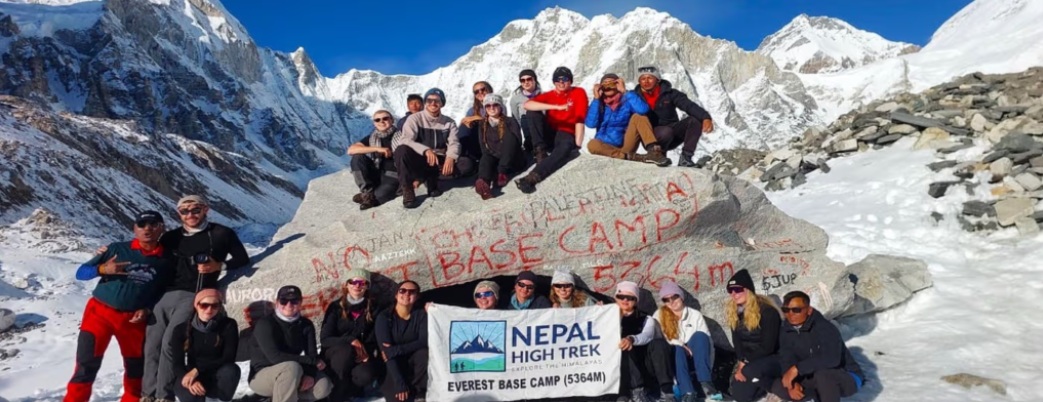
The trek typically kicks off with that white-knuckle flight into Lukla, and from there you’re walking — through pine forests, over the Dudh Kosi on swaying suspension bridges strung with prayer flags, and gradually up into thinner air. Namche Bazaar is where most people first feel like they’ve really arrived in the mountains: a bowl-shaped market town clinging to the hillside, full of bakeries, gear shops, and views that stop you mid-sentence. From there the trail pushes on through Tengboche, home to one of the region’s most important monasteries, then up through Dingboche before the final stretch to Gorakshep and Everest Base Camp itself.
What makes this trek what it is isn’t just the destination — it’s everything along the way. You’re moving through Sherpa communities that have shaped this landscape for generations, passing chortens and mani walls, watching yaks haul supplies up trails that have barely changed in decades. Most trekkers also add on Kala Patthar, a viewpoint that arguably gives better Everest views than Base Camp itself, though that’s a detail for another article.
Who Usually Enjoys EBC Most?
This route suits people who’ve built in the time — usually somewhere around two to three weeks including acclimatization. It’s a good fit if Everest itself is the draw, if you’re genuinely curious about Sherpa culture and Buddhist tradition, or if you’d rather ease into altitude gradually than rush the whole thing.
7 Days Annapurna Base Camp Trek: A Shorter Route Into the Mountains
What Makes the 7-Day Version Different?
The standard Annapurna Base Camp trek can stretch to ten or twelve days depending on the route taken, but the 7 Days Annapurna Base Camp Trek trims that down into something a working traveler can actually fit into a normal vacation. It still delivers the same core experience — climbing through terraced farmland and rhododendron forest, crossing waterfalls, passing through stone villages — just at a noticeably brisker pace.
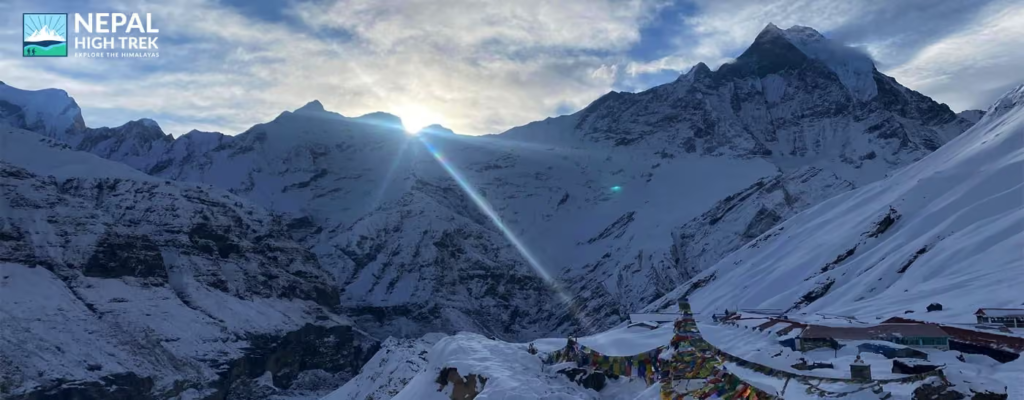
The scenery shifts fast on this route. You start low, in warm river valleys and farming terraces, then climb into forest, and within a few days you’re standing inside the Annapurna Sanctuary itself, ringed by a wall of 7,000 and 8,000-metre peaks. It’s a compressed version of the full Himalayan experience, which is exactly the appeal for travelers who simply don’t have the luxury of two or three weeks off.
Who Is It Best Suited To?
This is the trek for people juggling annual leave against a long list of travel goals. It also works well for first-timers who want a genuine taste of Himalayan trekking without the longer commitment, or for anyone who wants mountain scenery and real village life packed into roughly a week on the trail.
Everest Base Camp vs 7 Days Annapurna Base Camp Trek: The Key Differences
Rather than repeating what’s already been said above, here’s where the two routes actually pull apart in practice.
| Factor | Everest Base Camp Trek | 7 Days Annapurna Base Camp Trek |
| Main destination | Everest Base Camp | Annapurna Base Camp |
| Trek character | Longer high-altitude Himalayan journey | Shorter sanctuary trek |
| Typical duration | Longer itinerary | 7 days |
| Highest point | Higher overall altitude | Lower than EBC |
| Main attraction | Everest and Khumbu landscape | Annapurna Sanctuary and mountain amphitheater |
| Cultural character | Strong Sherpa and Tibetan Buddhist influence | Gurung/Magar and wider Annapurna cultural landscape |
| Time commitment | Greater | More compact |
| Physical challenge | Greater altitude exposure | Shorter but can involve demanding climbs and descents |
| Best suited to | Everest-focused travelers | Time-conscious mountain travelers |
The real dividing line isn’t scenery, since both routes are stunning in their own way — it’s time and altitude tolerance. Everest asks for more days and a slower relationship with elevation. Annapurna’s short version asks for stronger legs on a tighter clock.
Difficulty, Altitude and Physical Preparation
Which Trek Is More Difficult?
This question comes up constantly, and the honest answer is: it depends what kind of “hard” you mean. EBC climbs higher overall, and with that comes a real need to respect acclimatization days — rush the altitude and you’ll feel it fast. The 7 Days Annapurna Base Camp Trek doesn’t reach the same elevation, but because the schedule is so tight, you’re often covering more ground per day, with some genuinely steep climbs and knee-testing descents packed into a shorter window.
Neither route demands technical climbing skills. What matters more is general fitness, some prior hiking experience, and a willingness to pace yourself instead of racing up the trail.
For most trekkers, EBC presents the greater altitude challenge, while a seven-day ABC itinerary can feel demanding because of its compressed schedule.
Preparing Before Nepal
A few weeks of stair climbing and hill walking goes a long way, alongside regular cardio like running, cycling, or swimming. Break your boots in well before you land in Kathmandu — blisters on day two are miserable — and get used to carrying a loaded daypack on training walks. Above all, practice pacing. Slow and steady genuinely beats fast and breathless on both of these trails.
Best Time to Choose Either Trek
Spring (March to May) and autumn (late September to November) are the seasons most trekkers gravitate toward for both routes, mainly because the skies tend to stay clearer and the trails are drier underfoot. Monsoon season, from June through early September, brings leeches, muddy paths, and clouds that can hide the very views you came for — though the Annapurna region does still see trekkers during this window since the terrain is a bit more forgiving than the high Khumbu. Winter is workable too, especially on the shorter Annapurna route, but expect cold nights and the possibility of snow closing higher passes on the Everest side. Flight delays into Lukla are also more common outside the main seasons, which is worth factoring in if your EBC schedule is tight.
Route, Accommodation, Food and Daily Trekking Experience
On the Everest route, you’re staying in teahouses the whole way — simple lodges with basic rooms, shared bathrooms lower down, and hearty mountain meals like dal bhat, noodle soups, and endless pots of ginger tea. As you climb higher, settlements get sparser and more purpose-built for trekkers, and the itinerary naturally builds in rest days to let your body catch up with the altitude.
The Annapurna route also runs on teahouses, but the villages feel different — more agricultural, closer together lower down, with a rhythm shaped by Gurung and Magar communities rather than Sherpa ones. Food and facilities are generally easy to come by given how established the trail is. Because the 7-day version moves faster, each day tends to blend more walking with less downtime, so meals and rest become more about refueling efficiently than lingering.
Cost, Permits and Practical Planning Differences
Total cost on either trek comes down to a handful of variables: how many days you’re trekking, whether you hire a guide and porter, permit fees, transportation to the trailhead, and the standard of accommodation you choose along the way. Generally speaking, EBC ends up costing more overall simply because it runs longer and involves flights and logistics that the shorter Annapurna trek doesn’t need as much of.
Before booking either trek, it’s worth checking a few things directly: current permit requirements for the region you’re entering, transportation options to the trailhead, whether your guide or agency is properly licensed, what accommodation standard is included, and whether your travel insurance actually covers the altitude and evacuation needs of the specific route. Permit rules and fees in Nepal do get updated from time to time, so confirm the latest requirements before you finalize any booking.
Which Trek Should You Choose? A Decision Guide
Choose Everest Base Camp if reaching Everest is genuinely the goal, you’ve got the time for a longer Himalayan journey, you want deep exposure to Sherpa and Buddhist culture, and you’re prepared to train for sustained high altitude.
Choose the 7 Days Annapurna Base Camp Trek if your vacation time is tight, you want a compact but real Himalayan experience, you’d rather stand inside a dramatic mountain amphitheater without a three-week commitment, and you want to make the most of roughly a week on the trail.
Whichever route you lean toward, working with an experienced local operator makes a real difference — outfits like Nepal High Trek that know the terrain, the permit process, and how to build a sensible acclimatization schedule can save you from a lot of avoidable headaches once you’re actually on the trail.
Safety, Altitude Awareness and Responsible Trekking
Whichever trail you end up on, the basics don’t change. Walk at your own pace, not your group’s. Learn the early signs of altitude sickness — headache, nausea, dizziness — and take them seriously rather than pushing through. Drink more water than feels necessary, eat enough even when your appetite dips at altitude, and don’t skip rest when your body’s asking for it. Travel insurance that actually covers your planned altitude and emergency evacuation isn’t optional, it’s essential. And keep some flexibility in your itinerary, since weather and health don’t always cooperate with a fixed schedule. Beyond your own safety, a bit of respect goes a long way too — for monasteries, local customs, and the mountain environment itself.
Final Thoughts: Choose the Trek That Fits Your Journey
There’s no universal winner here, and honestly, anyone who tells you otherwise is probably trying to sell you something. The Everest Base Camp Trek suits travelers whose Himalayan dream is tied specifically to Everest and the Khumbu, with the time and patience for a longer journey. The 7 Days Annapurna Base Camp Trek suits people chasing a real mountain adventure without giving up three weeks of their life to it. Both are legitimate, well-earned ways to stand among the highest peaks on earth. Take a proper look at your available time, your fitness, and what you actually want out of the trip — then compare current itineraries, double-check permit and season requirements, and talk to a trekking professional before you commit to dates.
Frequently Asked Questions
Is the Everest Base Camp Trek harder than the 7 Days Annapurna Base Camp Trek?
In terms of altitude, yes — EBC climbs higher and demands more careful acclimatization over a longer stretch. But the seven-day Annapurna itinerary isn’t easy either; the compressed schedule means more walking packed into fewer days, which brings its own kind of fatigue.
Is 7 days enough for Annapurna Base Camp?
Yes, a well-planned seven-day itinerary can get you to Annapurna Base Camp and back, though it requires decent fitness since there’s less built-in slack for rest days compared to longer versions of the same route.
Which is better, Everest Base Camp or Annapurna Base Camp?
It depends on what you’re after. If Everest itself matters to you and you have the time, EBC wins. If you want a shorter, still-spectacular mountain experience, the Annapurna Sanctuary delivers that without the longer commitment.
Which trek is better for a first-time trekker in Nepal?
Being a beginner matters less than your general fitness, how your body handles altitude, and how much time you can commit. Many first-timers do choose the shorter Annapurna route simply because it’s easier to fit around a normal holiday schedule.
What is the best month for Everest Base Camp and Annapurna Base Camp?
Spring and autumn are generally the most reliable months for both treks, offering clearer skies and steadier trail conditions. That said, mountain weather can shift quickly regardless of season, so always check forecasts close to your departure.
How much does it cost to trek to Everest Base Camp or Annapurna Base Camp?
Costs vary based on trek length, whether you hire guides or porters, permit fees, accommodation standard, and transportation. EBC typically costs more overall due to its longer duration, while the 7-day Annapurna trek tends to be more budget-friendly simply because it’s shorter.