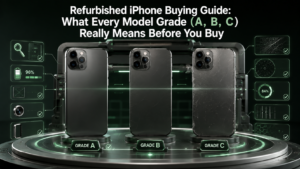
Just imagine, you are scrolling through listings. One says A Grade. Another says B Grade. A third just says “used.” You have no idea what any of that actually means for the phone you are about to buy.
Do not worry, you are not alone. Grading confuses almost everyone the first time they shop for a refurbished phone. So let’s clear it up completely, one grade at a time, so you know exactly what you are paying for.
Grading Exists to Protect You, Not Confuse You
Before diving into each grade, it helps to understand why this system exists in the first place. A used phone carries a story. Some were treated gently. Others lived a rougher life. Grading translates that story into something you can actually compare across different listings.
Without it, every seller would describe condition differently, and you would have no reliable way to know what “good condition” really means from one listing to the next. A proper grading system removes that guesswork entirely.
Grade A: The Closest You Can Get to New
Let’s start at the top. Grade A phones represent the best possible condition within the refurbished category. Think of this as the phone that barely shows it has ever been used.
Visually, you are looking at a device with no noticeable scratches or marks under normal lighting. The screen looks crisp and clean. The frame and back panel show no obvious wear. You would genuinely need to inspect it closely under bright light to spot any evidence of prior ownership.
Functionally, everything performs exactly as expected. Buttons respond immediately. Cameras capture sharp, clear photos. And importantly, battery health on A Grade units tends to sit comfortably above 85 percent, giving you strong daily performance right out of the box.
Who should choose this grade? Anyone who wants that satisfying, brand new feeling without paying full retail price. If appearance matters a lot to you, and you rarely use a case, A Grade delivers the closest experience to buying new, at a noticeably friendlier price. For Grade A phones like the iPhone 15, check it out right here.
Grade B: Small Marks, Full Performance
One step down sits B Grade, often labeled “Good” or “Very Good.” This is where a lot of smart shoppers actually land, and for good reason.
A B Grade phone shows visible signs of previous use, typically light scratches on the back panel or around the frame. These marks are noticeable under normal lighting, not hidden or subtle. However, the screen itself usually remains in strong shape, since most owners protect that area with a case or screen protector throughout ownership.
Here is the important part. Functionally, a B Grade phone works exactly like an A Grade phone. Every feature operates normally. The difference lives entirely on the surface, not underneath it.
This grade suits practical buyers extremely well. If you already plan to use a case, a small scratch on the back becomes completely irrelevant to your daily experience. Choosing B Grade here often means real savings for zero actual downside.
Grade C: Budget Friendly, Still Functional
Some sellers include a third tier, often labeled C Grade, Fair, or Acceptable. This represents more noticeable wear than what you see with A or B Grade phones.
At this level, expect more visible scratches, possibly even on the screen itself, along with more noticeable marks across the frame or back panel. Despite this cosmetic wear, reputable sellers still fully test these devices before selling them. A properly graded C phone still functions completely normally. It simply shows its age more openly.
This tier fits a specific type of buyer well. If your absolute priority is price, and cosmetic appearance genuinely does not bother you, C Grade phones offer the deepest discount within the refurbished category. Just make sure the seller confirms full functional testing before you commit, since this grade sits closest to the line where extra caution helps.
The One Thing Most Buyers Miss About Grading
Here is something that trips people up constantly. Grading almost always describes cosmetic condition, not internal performance or battery health.
This means a B Grade phone can easily have stronger battery health than an A Grade phone from a different listing. Cosmetic wear and battery performance simply do not move together predictably, since they depend on completely different aspects of how the previous owner used the device.
So do not stop at the letter grade alone. Always check the battery health percentage separately, and confirm the listing mentions functional testing, not just appearance. Once you understand this distinction, you shop far smarter than someone relying on the grade alone.
How to Actually Use This Information When Buying
Now that you understand each tier, here is how to apply it practically. Start by asking yourself an honest question. How much does cosmetic perfection actually matter to you day to day?
If you always use a case and rarely look at the back of your phone anyway, B Grade or even C Grade can offer serious value with essentially no real downside. That money saved could go toward more storage, a better trade-in on your old device, or simply stay in your pocket.
If you never use a case, or you simply enjoy your phone looking flawless, paying the extra amount for A Grade condition is a completely reasonable choice. Neither approach is wrong. The right grade is whichever one matches how you actually treat and use your phone.
Watch Out for Vague or Inconsistent Grading
Not every seller applies grading the same way, and this inconsistency creates real risk if you are not careful. Some listings use soft, undefined phrases like “good condition” without ever explaining what that phrase actually covers.
Always look for sellers who publish a clear, defined grading system, ideally with example photos showing what each tier actually looks like in practice. A transparent seller has nothing to hide, and they will happily show you the difference between grades before you buy anything.
Also confirm whether functional testing is mentioned alongside the cosmetic grade. A listing that only discusses appearance, without any mention of battery health or working condition, deserves a closer look before you proceed.
Where Trustworthy Grading Actually Matters Most
All of this information only helps if the seller behind it is being honest. This is exactly why platforms with clear, consistent grading standards make such a difference in the buying experience.
Trade.com.au applies exactly this kind of transparent system across its refurbished range, listing cosmetic grade and battery health separately on every device. That approach turns a confusing decision into a simple, confident comparison between listings. Please click here to visit the website
Final Thoughts
Finally, you know all about Grading. Basically, Grading is not there to trick you or dress up an old phone. It exists to give you an honest, comparable description of condition before you spend your money.
Understand what A Grade, B Grade, and C Grade actually represent, and always check battery health separately from cosmetic appearance. Once you know this, buying a refurbished iPhone stops feeling like a gamble and starts feeling like a genuinely smart, informed decision. That small bit of knowledge is often the difference between a purchase you regret and one you are happy with for years.