College assignments can look straightforward on the surface. Write the paper, check the references, submit it before the deadline. Yet students often lose marks because of small problems that are easy to miss during a rushed final review. Weak arguments, unclear sentences, poor organization, and unsupported claims can quietly pull down an otherwise solid paper.
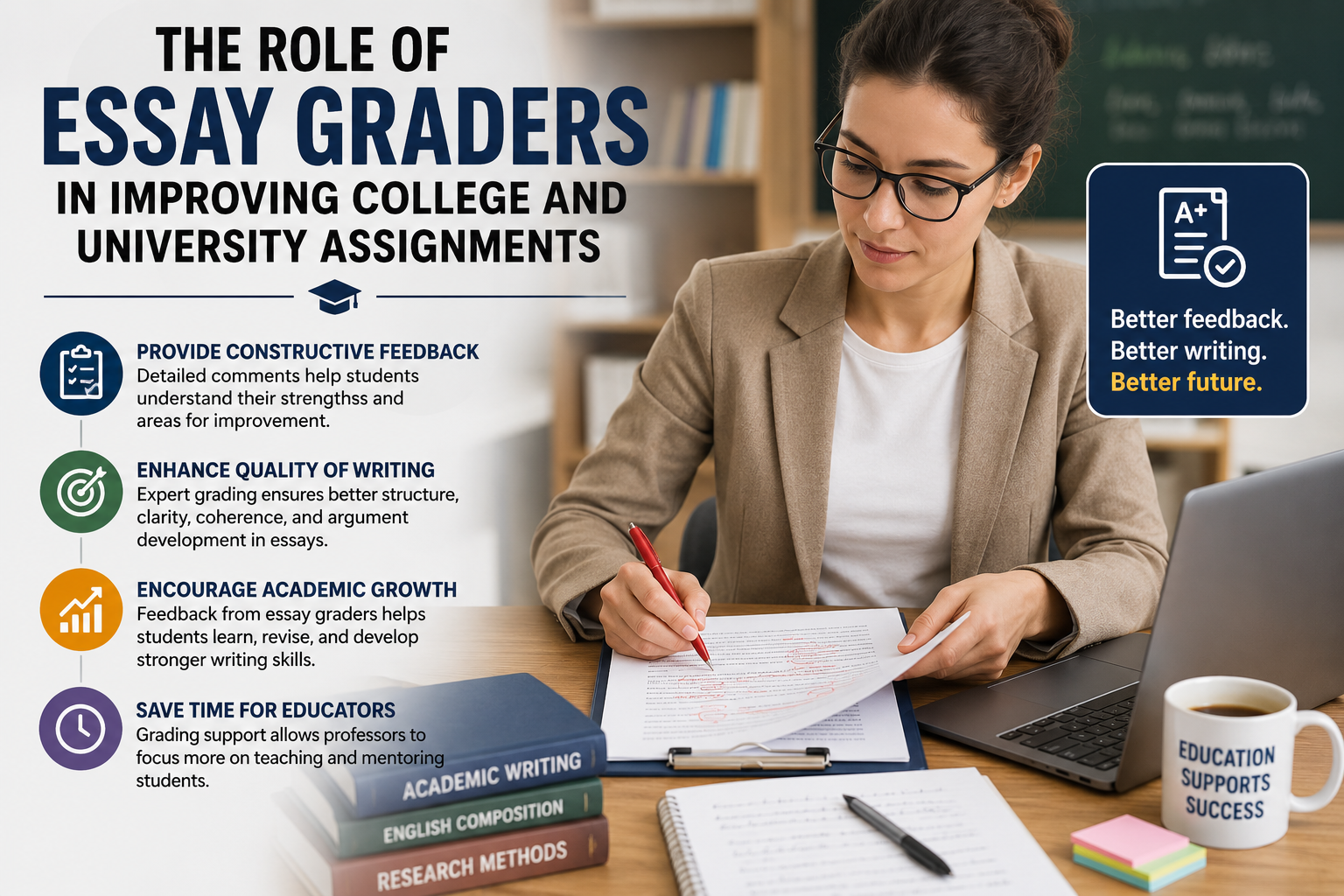
Essay graders give students a practical way to catch those problems before submission. They review written work against different criteria and provide feedback that can guide revisions. For students handling several assignments at once, that extra layer of checking can be a real time-saver.
How an AI essay grader Helps Students Review Their Work
An AI essay grader can examine an assignment within seconds and point out areas that might need attention. Depending on the tool, it may check grammar, sentence clarity, organization, word choice, and other writing elements.
This gives students a second set of eyes when a professor or classmate is not available. A student might read the same paragraph five times and still miss an awkward sentence. The software can flag it almost immediately.
That does not mean every suggestion should be accepted without thought. Students need to read the feedback, decide whether it fits their argument, then make the final call. The tool is there to support judgment, not replace it.
Finding Weak Arguments Before Submission
A good college essay needs more than correct grammar. The ideas have to make sense, and each major point should connect to the assignment question.
Essay graders can help students spot sections where an argument feels underdeveloped. Some tools assess whether a response addresses the given topic, identifies supporting evidence, or maintains a clear line of reasoning.
Imagine a student writing a history paper about a political movement. The introduction may sound convincing, but two body paragraphs could drift away from the main question. A grader can draw attention to that disconnect.
The student can then revise those sections before handing the paper to a professor. Small changes at this stage can make the entire assignment easier to follow.
Improving Grammar and Sentence Clarity
Grammar mistakes are common in university writing, especially when students are working under pressure. One missed comma is rarely a disaster, but repeated errors can make a paper harder to read.
Essay grading software can identify spelling mistakes, grammar issues, awkward wording, and sentences that need restructuring. Some tools also suggest clearer alternatives.
This is useful for students who know what they want to say but struggle to express it cleanly. Instead of spending an hour searching through grammar websites, they can review the feedback in one place.
Still, students should avoid turning every suggestion into an automatic edit. Academic writing needs to sound natural. A sentence can be grammatically correct and still feel wrong for the student’s intended meaning.
Building Better Assignment Structure
Professors often expect essays to follow a recognizable structure. The introduction should establish the subject and direction of the paper. Body paragraphs need clear points and supporting material. The ending should bring the discussion to a sensible close.
Essay graders can help students review whether these parts are working together.
For example, a tool may identify an introduction that is too long or a paragraph containing several unrelated ideas. It might also flag repeated points that could be combined or removed.
Students can use these suggestions during editing. Sometimes the fix is simple. Move a paragraph. Cut a sentence. Add evidence. Rewrite a confusing opening.
Those changes can make a paper feel much more organized without forcing the student to rewrite everything.
Helping Students Learn From Repeated Mistakes
One useful feature of essay graders is that students can use them repeatedly during their academic careers. Feedback from one assignment can influence the next one.
Suppose a student frequently receives suggestions about sentence fragments. After seeing the same issue several times, the student may start noticing fragments independently. The software becomes less of a correction tool and more of a learning aid.
According to our analysts, repeated feedback can be more useful when students actively review why a suggestion was made instead of simply accepting the correction.
That habit matters. University writing is a skill, and skills improve through practice.
Saving Time During the Editing Process
Students have limited time. Between lectures, reading, exams, group projects, and part-time work, editing a long paper can become exhausting.
Essay graders can reduce some of the manual checking involved in proofreading. A student can upload or paste an assignment, review the feedback, then focus attention on the areas that need the most work.
This is especially handy for lengthy research papers. Reading every sentence with equal attention is tiring. A grader can help identify possible trouble spots first.
The student still needs to review the complete paper, of course. Automated feedback can miss context, misunderstand an argument, or suggest a change that does not fit the writer’s intention.
Supporting Better Academic Writing Habits
Good writing rarely appears after one late-night editing session. Students improve when they develop habits around drafting, reviewing, and revising.
Essay graders can become part of that process. A student might write a first draft, run it through a grading tool, review the suggestions, and then revise the paper manually.
Over time, this process can make students more aware of their own writing habits. They may start spotting repetitive wording, weak topic sentences, or unsupported claims before using the software.
Maybe that is where the real value sits. The tool gives immediate feedback, but the student learns through repeated use.
Using Essay Graders Responsibly
Students should remember that automated grading is not the same as professor feedback. A software tool does not fully understand classroom discussions, assignment expectations, or the professor’s personal preferences.
It is also worth checking the tool’s scoring system before relying on its results. Different platforms may assess essays using different standards.
The safest approach is simple: use the grader as an editing assistant. Read every recommendation. Keep useful changes. Reject suggestions that alter the meaning of the paper.
A strong assignment should still represent the student’s own thinking and writing.
Better Feedback Can Lead to Better Assignments
Essay graders give college students another opportunity to inspect their work before submission. They can help find grammar problems, weak sections, unclear sentences, and structural issues that might otherwise slip through.
More importantly, students can learn from the feedback. A correction on one paper may prevent the same mistake on the next.
Professors will always have the final say when it comes to grades, but students do not have to submit their first finished draft blindly. A careful review, supported by the right tools, can make academic writing clearer and more polished before the deadline arrives.