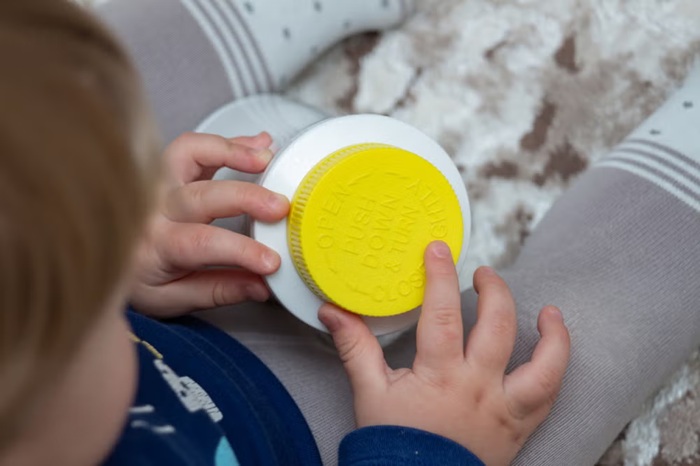
If your product falls under certain drug, chemical, or supplement categories in the United States, child-resistant packaging is not optional. It is a federal requirement, and the specific rule that defines how child-resistant closures must perform is found in 16 CFR 1700.20, part of the Poison Prevention Packaging Act. Getting this wrong can mean anything from a rejected shipment at a retail partner’s warehouse to a much more serious product liability issue if a child is actually harmed. This guide walks through what the rule actually requires, which products it typically applies to, and what brands should look for when sourcing compliant packaging.
What the Poison Prevention Packaging Act Actually Covers
The Poison Prevention Packaging Act was passed in 1970 in response to a sharp rise in accidental poisonings among young children who were able to easily open medicine bottles and household chemical containers left within reach, and it gave the Consumer Product Safety Commission authority to require special packaging for certain household substances. Since then, the list of products covered under the act has expanded well beyond its original scope, and today it includes many prescription drugs, a number of over the counter medications such as products containing aspirin or iron, certain household chemicals, and in many states, cannabis and hemp derived products as well.
The rule itself, 16 CFR 1700.20, does not describe a single approved design for a child-resistant cap. Instead, it sets out a testing method that any packaging design must pass in order to be considered compliant, which means brands have flexibility in choosing a closure style as long as it passes the required testing.
How Child-Resistant Testing Actually Works
The testing protocol described in 16 CFR 1700.20 uses two separate groups of test subjects, and it starts with a defined panel size rather than an open ended trial. The child test begins with a panel of 50 children between 42 and 51 months old, who are each given the packaging for a set period and observed to see whether they can open it, first without any instruction and then again after being shown how the mechanism works. For a package to pass, at least 80 percent of the children in the panel must fail to open it. If the initial results fall in a gray area rather than clearly passing or failing, testing continues with additional panels of 50 children at a time, up to a maximum of 200 children total, until a clear result is reached.
The second part of testing looks at real world usability for adults. A panel of 100 senior adults, generally between the ages of 50 and 70, is asked to open and properly reclose the same packaging within a set time limit. To pass, at least 90 percent of this senior adult panel must succeed. This part of the test exists to make sure the child-resistant mechanism does not become so difficult to use that it becomes a genuine burden for adults who need regular access to the product, which matters a great deal for medications taken daily by older adults.
A packaging design only passes if it clears both thresholds. A cap that children genuinely cannot open but that senior adults also cannot manage is not considered compliant, since the rule is meant to strike a workable balance rather than create packaging that is simply impossible to open for anyone.
Exceptions Brands Should Know About
The rule does allow for some flexibility. Manufacturers are generally permitted to offer one non child-resistant package size for a given product line, specifically for households without young children or for elderly and disabled users who have difficulty with standard child-resistant closures, provided this option is only shipped when specifically requested rather than sold as the default on store shelves. Certain product forms, such as some unit dose blister packaging where each individual dose is separately sealed, are also evaluated somewhat differently under the rule, since the packaging format itself already limits how much of a substance a child could access at one time. These exceptions are narrow and specific rather than general loopholes, so brands should not assume a product qualifies without confirming it directly against the relevant part of the regulation.
Common Closure Types Used for Compliance
Several closure styles are commonly used to meet child-resistant requirements, each using a different mechanism to prevent easy access. Push and turn child resistant caps require the user to push down while turning, a two step motion that is difficult for young children to coordinate but manageable for most adults with a bit of practice. Squeeze and turn closures work in a similar way, requiring inward pressure on specific points of the cap while turning, which again relies on a two handed action that is harder for small hands to replicate.
Some dropper bottles and tincture bottles use CRC droppers, which combine the standard dropper mechanism with a locking cap, a common choice for hemp derived tinctures and certain liquid medications that need both precise dosing and child-resistant protection.
What Brands Should Check When Sourcing Packaging
If your product falls into a category that requires child-resistant packaging, the closure itself needs to be sourced from a supplier that can confirm the specific design has actually passed 16 CFR 1700.20 testing, rather than simply looking child-resistant in appearance. A cap that merely appears difficult to open provides no legal protection if it has not been tested and certified against the actual standard, and test reports or certificates of conformity should be available from the manufacturer on request.
It is also worth remembering that compliance requirements can vary depending on the specific product category and the state your product is sold in, particularly for cannabis and hemp derived goods, where individual states often add their own packaging requirements on top of the federal standard. Because of this, brands should treat this guide as a starting point for understanding how child-resistant packaging works, and confirm the exact requirements that apply to their specific product with a regulatory compliance professional before finalizing packaging decisions.
Record Keeping and Ongoing Responsibility
Passing the initial test is not the end of a brand’s responsibility. Manufacturers and importers of child-resistant packaging are also expected to maintain records of testing results and to issue a General Certificate of Conformity under the Consumer Product Safety Improvement Act, confirming that the packaging meets the applicable requirements. If a packaging design changes in any meaningful way, including a change in material thickness, cap diameter, or closure mechanism, the design generally needs to be retested rather than relying on results from an earlier, different version of the packaging. Keeping this documentation organized matters not only for regulatory purposes but also because retailers and distribution partners will often ask to see proof of compliance before agreeing to carry a product.
Sourcing With Confidence
Choosing the right child-resistant closure protects your customers, keeps your brand on the right side of federal requirements, and avoids the costly problem of having to repackage or recall a product after the fact. Working with a packaging supplier that stocks tested and verified child-resistant caps and droppers from the start makes it far easier to launch a compliant product without last minute delays.