Commercial buildings generate and trap heat in ways that most people never think about until their utility bill arrives or their staff starts complaining about stuffy air. Warehouses, manufacturing plants, restaurants, and retail spaces all face the same basic challenge: keeping large volumes of air comfortable without spending a fortune on energy. Fresh-air cooling, most commonly delivered through commercial swamp coolers, offers a practical answer to this problem, especially in dry or moderate-humidity climates where traditional air conditioning can feel like overkill.
This article breaks down how fresh-air cooling works, why it matters for commercial spaces, and what business owners should know before investing in a system.
What Is Fresh-Air Cooling and How Does It Work?
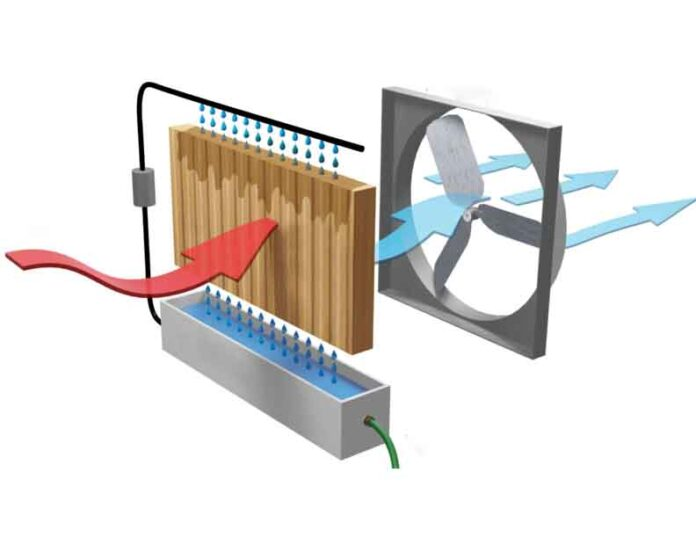
Fresh-air cooling, often called evaporative cooling, relies on a simple natural process: water absorbs heat as it evaporates. Commercial swamp coolers pull warm outside air through water-saturated pads. As the air passes through these pads, the water evaporates and pulls heat out of the air, which is then pushed into the building through a fan system. The result is a steady stream of cooler, fresher air without the need for refrigerants or compressors.
Unlike standard air conditioning units, which recycle the same indoor air repeatedly, evaporative systems constantly introduce new, cooled outdoor air. This continuous air exchange is one of the biggest advantages for commercial settings, particularly those with high occupancy or heat-generating equipment.
The process is mechanically straightforward, which also makes these systems easier to maintain compared to complex refrigeration-based units. There is no compressor to fail, no refrigerant to recharge, and far fewer components that require specialized technicians.
Why Commercial Spaces Struggle With Heat
Commercial buildings often deal with heat loads that residential properties never encounter. Large open floor plans, high ceilings, extensive glass windows, and dense equipment all contribute to indoor temperatures climbing well above what traditional HVAC systems were designed to handle efficiently.
Warehouses and manufacturing facilities are particularly vulnerable. Machinery generates heat continuously, loading docks let in outside air throughout the day, and insulation is often minimal compared to office buildings. Restaurants face a similar issue, with kitchen equipment pushing indoor temperatures far above comfortable levels, even when the outdoor climate is mild.
Retail spaces and gyms also contend with high foot traffic, meaning doors open and close constantly, letting hot air in during summer months. All of these factors combine to create an ongoing battle against heat that standard air conditioning struggles to win without driving energy costs sky-high.
This is where fresh-air cooling becomes an appealing alternative. Rather than fighting to cool and recool the same stagnant air, it continuously replaces it with cooler outside air, reducing the burden on the system and the building.
How Commercial Swamp Coolers Reduce Indoor Temperatures
Commercial swamp coolers are engineered to handle the scale that businesses require. Unlike residential units, which cool a single room or small home, commercial systems are built to move large volumes of air across warehouses, production floors, and open-concept retail spaces.
These systems typically connect to rooftop or wall-mounted units that distribute cooled air through ducting or open discharge into large spaces. Because they rely on evaporation rather than mechanical refrigeration, commercial swamp coolers use significantly less electricity, a critical advantage for businesses operating during peak summer months when energy costs spike.
Temperature reduction varies depending on climate, humidity, and airflow design, but many commercial properties see indoor temperatures drop by a noticeable margin compared to outdoor conditions, particularly in dry regions where evaporation is most effective. In places like the southwestern United States, where humidity levels stay low for much of the year, evaporative cooling can perform remarkably well.
Beyond lowering temperature, these systems also improve indoor air quality. Because fresh air is continuously drawn in and stale air is pushed out, dust, odors, and airborne particles are reduced more effectively than in a closed-loop air conditioning system.
The Cost Advantage of Fresh-Air Cooling
One of the primary reasons commercial property owners turn to fresh-air cooling is the cost savings. Traditional air conditioning systems use a significant amount of electricity to power compressors and refrigeration cycles. Commercial swamp coolers, by comparison, use a fraction of that energy since they rely primarily on fans and water pumps.
For businesses operating large facilities, this difference adds up quickly. A warehouse running an air conditioning system around the clock during summer can see utility costs climb into the thousands of dollars per month. Evaporative systems, especially in dry climates, can cut those costs substantially while still keeping employees and customers comfortable.
Installation costs also tend to be lower. Commercial swamp coolers are mechanically simpler, which often translates to a more affordable upfront investment, as well as reduced long-term maintenance expenses. Many business owners find that the combination of lower installation and operating costs leads to a faster return on investment compared to traditional cooling systems.
Where Fresh-Air Cooling Works Best
Climate plays a major role in determining how effective evaporative cooling will be for a specific property. These systems perform best in hot, dry environments where humidity levels remain low. States across the Southwest, including Arizona, Nevada, and parts of California and Texas, are well-suited for commercial swamp coolers due to their arid conditions.
In more humid regions, evaporative cooling becomes less effective because the air is already saturated with moisture, limiting how much additional evaporation can occur. Business owners in humid climates may still benefit from hybrid systems that combine evaporative cooling with traditional air conditioning for added versatility.
Industries that benefit most from fresh-air cooling include warehousing, manufacturing, agriculture, automotive service centers, restaurants, gyms, and large retail spaces. These industries typically involve high ceilings, heavy equipment, frequent door traffic, or open layouts, all of which align well with the strengths of evaporative systems.
Environmental Benefits Worth Considering
Beyond cost and comfort, fresh-air cooling offers environmental advantages that matter to an increasing number of businesses. Because evaporative systems use significantly less electricity, they produce a smaller carbon footprint compared to traditional refrigerant-based air conditioning.
Commercial swamp coolers also avoid the use of chemical refrigerants altogether. Many refrigerants used in standard HVAC systems carry environmental risks when they leak or are improperly disposed of. Evaporative cooling eliminates this concern entirely, relying only on water and airflow.
For companies working toward sustainability goals or seeking to reduce their environmental impact, switching to fresh-air cooling can be a meaningful step. It is a practical, lower-impact solution that still delivers real cooling performance, particularly in the right climate conditions.
Maintenance and Longevity of Commercial Systems
Maintenance requirements for commercial swamp coolers are generally more manageable than those of traditional HVAC systems. Because there is no compressor or refrigerant cycle, there are fewer parts that can break down unexpectedly. Routine maintenance mainly involves checking and replacing cooling pads, inspecting water lines for mineral buildup, and ensuring the fan motor operates smoothly.
Water quality can affect long-term performance, especially in areas with hard water, so some facilities invest in water treatment systems to reduce mineral deposits inside the unit. Regular cleaning and pad replacement, typically once or twice a year depending on usage, keep the system running efficiently.
With proper upkeep, commercial swamp coolers can last many years, often matching or exceeding the lifespan of traditional air conditioning units while requiring less specialized servicing. This makes them an attractive option for businesses looking to minimize long-term maintenance headaches.
Choosing the Right System for Your Business
Selecting the right fresh-air cooling setup depends on several factors, including the size of the space, the local climate, and the specific heat challenges a business faces. Facilities with high ceilings may require units designed to push air across greater distances, while smaller commercial spaces might only need a single rooftop unit.
It’s also worth evaluating airflow needs based on occupancy and equipment. A manufacturing facility with heavy machinery will have different cooling requirements than a retail storefront with frequent customer traffic. Working with an experienced HVAC provider who understands commercial swamp coolers can help ensure the system is properly sized and installed for maximum efficiency.
Business owners should also consider ventilation. Evaporative cooling systems work best when there is adequate airflow to push hot air out of the building as cooler air is introduced. Without proper exhaust points, such as vents or open bay doors, the cooling effect can be diminished.
Frequently Asked Questions
Do commercial swamp coolers work in humid climates?
They are far less effective in humid environments since the air is already saturated with moisture. They perform best in dry or arid regions.
How much can a business save by switching to fresh-air cooling?
Savings vary based on building size and climate, but many businesses see a significant reduction in energy costs compared to traditional air conditioning, especially during peak summer months.
Are commercial swamp coolers hard to maintain?
No. Maintenance is generally simpler than traditional HVAC systems. Common tasks include:
- Replacing cooling pads periodically
- Checking water lines for mineral buildup
- Inspecting fan motors for wear
- Flushing the system to prevent scale
Can fresh-air cooling be used alongside traditional air conditioning?
Yes. Many businesses in mixed climates use hybrid systems that combine evaporative cooling with standard air conditioning for flexibility throughout the year.
What types of businesses benefit most from this cooling method?
Warehouses, manufacturing plants, restaurants, gyms, agricultural facilities, and retail spaces with high ceilings or frequent door traffic tend to see the greatest benefit.
Is ventilation important for evaporative cooling systems to work properly?
Yes. Proper exhaust, such as vents or open doors, allows hot air to escape as cooler air enters, which keeps the system working efficiently.
Final Thoughts on Fresh-Air Cooling for Commercial Spaces
Fresh-air cooling offers a practical, cost-effective way for commercial properties to manage indoor heat without the high energy demands of traditional air conditioning. Commercial swamp coolers, in particular, provide a reliable solution for businesses operating in dry climates, delivering lower utility costs, simpler maintenance, and a reduced environmental footprint. For companies dealing with high heat loads, whether from machinery, kitchen equipment, or large open spaces, evaporative cooling is well worth considering as part of a long-term climate control strategy.