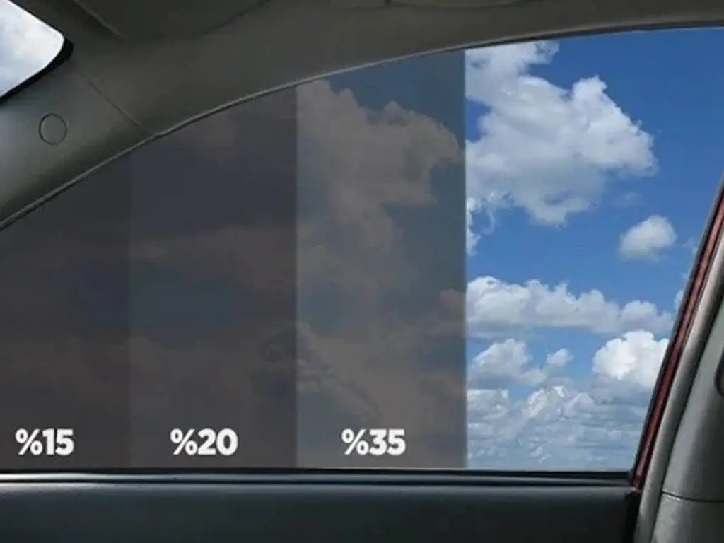
Window tint’s one of the most noticeable modifications a vehicle owner can make, but its whole purpose goes well beyond just changing how a car looks. Automotive window film can influence sunlight, glare, interior temperature, privacy, and how much visible light actually gets into the cabin. Among the many tint levels out there, 35% tends to get treated as a practical middle ground — darker than a very light film, but nowhere near the darkest shades available.
Understanding what 35% tint actually means, and how it behaves in different conditions, genuinely helps vehicle owners make a more informed call. The same film can also look pretty different depending on the vehicle’s original glass, the lighting conditions, how well it’s installed, and what type of film’s actually being used.
What Does 35% Window Tint Actually Mean?
Window tint percentages generally refer to Visible Light Transmission, commonly shortened to VLT. A 35% VLT film lets roughly 35% of visible light pass through the film and glass, while the rest gets reduced or blocked.
That makes 35% tint considerably darker than lightly tinted glass, but noticeably lighter than 20%, 15%, or 5% films. Thanks to that middle-range transmission level, it’s frequently the pick for drivers who want a visible change without going for an extremely dark look.
Worth remembering that the final appearance isn’t decided by the film alone. Factory privacy glass, the original color of the vehicle’s windows, interior upholstery, and the surrounding lighting can all shape how the finished tint actually looks once it’s on.
What Does 35 Tint Look Like During the Day?
In bright daylight, 35% tint usually produces a medium dark overall appearance. The windows appear tinted but you can still see into the interior from outside the car — not quite to the “can’t see a thing” level.
Drivers researching 35 window tint before and after installation might notice the difference is especially obvious on vehicles with clear factory glass to begin with. On cars that already have darker rear glass, though, a 35% film can create a noticeably different visual effect.
Daylight also makes it a lot easier to see the contrast between tinted and untinted areas. When the sun’s strong, the film can look darker since the surrounding glass reflects more light. Under cloudy conditions, that same exact film can look somewhat lighter by comparison.
The quality and color of the film matter here too. Two films with the exact same VLT rating won’t necessarily look identical, since their construction, color, reflectivity, and optical properties can genuinely differ from one product to the next.
How Does 35% Tint Affect Nighttime Visibility?
Nighttime visibility’s genuinely one of the most important things to think through before installing window film. Any film that reduces visible light’s going to change how much light gets into the cabin compared with completely untinted glass, no way around that.
At 35% VLT, though, that reduction’s moderate rather than extreme. Streetlights, headlights, road markings, and other vehicles stay visible, though the overall view can look darker than it would through clear glass.
The condition of the glass matters here too. Scratches, haze, contamination, poor installation, or aging film can all make nighttime visibility genuinely worse. That’s why optical clarity should get considered right alongside the tint percentage itself, not as an afterthought.
Drivers who frequently travel on unlit rural roads might have different priorities from those mainly driving through well-lit urban areas. Choosing a tint level should really factor in actual driving conditions rather than relying purely on how it looks in photos.
35 Tint on Car Windows: What Actually Changes?
When thinking through 35 tint on car windows, it’s worth looking at both the visual and functional effects together, not just one or the other.
A 35% film can cut down direct sunlight entering the cabin and might make bright daytime driving genuinely more comfortable. It also gives a moderate boost to privacy compared with clear glass.
Glare’s another thing worth considering. Sunlight bouncing off surrounding vehicles, buildings, or road surfaces can get genuinely uncomfortable, especially at certain times of day. A properly chosen window film can cut down the amount of visible glare actually reaching the occupants.
That said, window tint shouldn’t be treated as a substitute for safe driving practices. Sunglasses, clean glass, properly adjusted mirrors, and sensible speed all still matter, regardless of what tint level you’ve got installed.
Heat and UV Protection
Modern automotive films are built for a lot more than just darkness. Depending on how the film’s constructed, window tint can help cut down solar heat entering the cabin and provide serious ultraviolet protection on top of that.
Ceramic films are particularly notable here, since they can be engineered to reduce infrared energy while still keeping useful visible-light transmission intact. TERMINAX, for instance, offers several automotive window-film categories, including Ceramic-X™ IR, Ceramic-X™ Spectra, Ceramic IR, X-Dyed, and UltraCrystal-X™.
TERMINAX’s published specs show its X-Dyed range includes a 35% VLT option, and its Ceramic-X™ IR range offers a 35% variant too. Examples like these show why comparing films purely by VLT doesn’t give you the whole picture of how they actually perform.
Heat rejection, infrared reduction, ultraviolet protection, visible-light transmission, reflectivity, and optical clarity can all genuinely vary between different film types, even at the same VLT rating.
Ceramic Tint Compared With Traditional Films
Traditional dyed films mainly use dye to create their look and reduce visible light. They can work fine for certain applications, but their overall performance characteristics differ quite a bit from ceramic films.
Ceramic window films use ceramic-based materials specifically designed to manage solar energy without leaning primarily on a dark appearance to do the job. Depending on the product, they might provide infrared and ultraviolet protection while keeping outward visibility relatively clear.
Another category to be aware of is metalized films. They absorb or reflect solar energy by using metallic particles or layers. They can provide genuinely useful heat control, but remember that some metallic constructions can interfere with electronic signals.
The important thing to take away here’s that a 35% rating describes visible light transmission specifically, not the complete performance of the film overall. Two products with the exact same VLT can have very different heat-rejection and optical characteristics under the hood.
How Installation Quality Shapes the End Result
Even a genuinely high-quality film can look pretty bad if it’s installed incorrectly. Dust particles, trapped moisture, uneven edges, bubbles, creases, and contamination can all mess with the final appearance.
A professional installation usually involves cleaning the glass properly, measuring and cutting the film accurately, preparing the surface and laying the material down without introducing any unnecessary contaminants during the process.
The curing period after installation matters too. Some films might initially look a bit hazy or hold small amounts of moisture before the adhesive fully settles in. The appearance genuinely improves as the film cures over the following days.
Vehicle owners should follow whatever instructions the installer gives regarding window operation and cleaning right after installation, rather than treating it like normal glass immediately.
Tint Laws Should Be Checked Before Installation
Tint regulations vary considerably depending on where you actually live. Laws can specify different VLT requirements for front side windows, rear side windows, and windshields, and some jurisdictions also regulate reflectivity or restrict certain colors entirely.
A film that’s perfectly legal on rear windows might not be legal on front windows at all. Windshield regulations tend to be stricter, since excessive darkness there can genuinely interfere with visibility while driving.
That’s exactly why drivers should check the current regulations in their state, province, or country before picking a film. It’s also important to factor in the vehicle’s existing factory glass, since the final VLT can end up quite different from the film’s standalone rating once it’s layered on top.
Window Tint as Part of Overall Vehicle Protection
Window film’s really just one part of automotive surface protection overall. Paint protection film (PPF), for instance, is designed mainly to protect painted surfaces from road debris, scratches, and other physical wear. Windshield protection films serve a different purpose entirely, focusing specifically on the glass itself.
These technologies shouldn’t be treated as interchangeable, since they’re solving different problems. Window tint’s primarily about the vehicle’s glass, visible light, solar energy, and the cabin environment, while PPF’s focused on exterior painted or selected surfaces.
So a complete vehicle-protection strategy really depends on which areas actually need protecting and what environmental conditions the vehicle regularly deals with day to day.
Final Considerations
A 35% window tint offers a genuinely balanced level of visible-light reduction for drivers who want a noticeable change without going with one of the darkest shades available. How it actually looks can range from moderately shaded to fairly dark depending on the vehicle, the glass, the lighting, and the film’s construction.
Before choosing a tint, drivers should think through nighttime visibility, local regulations, heat and UV performance, privacy needs, film technology, and installation quality. Looking purely at the percentage printed on the film really doesn’t tell the whole story.
Understanding all these factors makes it a lot easier to compare different automotive window films objectively. Whether the priority’s comfort, glare reduction, appearance, UV protection, or maintaining genuinely useful visibility, the best choice ultimately comes down to whatever fits the vehicle, driving environment, legal requirements, and the owner’s actual practical needs.