Christian practice has long incorporated the crucifix as a personal object that declares faith while offering a steady private reference point. When the form appears in gold and rests against the chest, additional layers of significance emerge. The metal’s lasting quality combines with the image of Christ on the cross to create an object that stays near the physical heart. Placement in this spot reflects a conscious decision to hold the central Christian symbol of sacrifice and redemption in the body’s most intimate zone.
From Public Monuments to Personal Possession
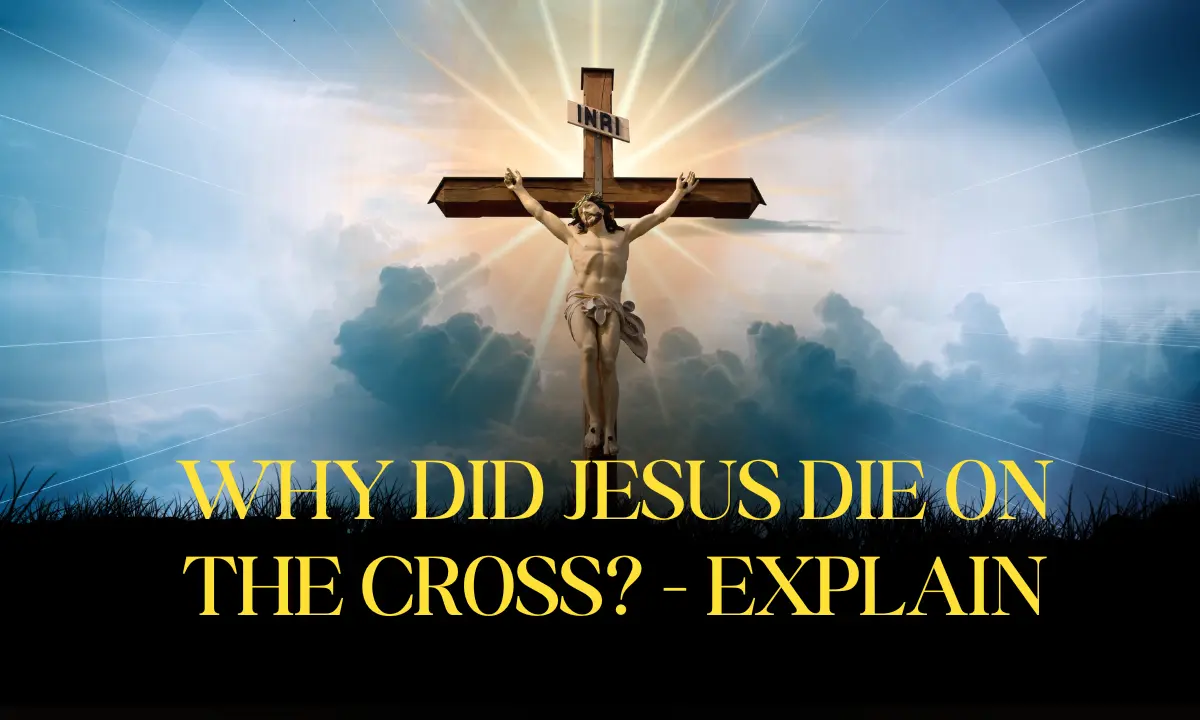
Tradition has never reduced the crucifix to a simple decorative outline. Early believers took up the cross that carries the body of Jesus to recall the Passion directly. The sequence of suffering, death, and resurrection stands as the religion’s central narrative. The image gradually moved from large public monuments and church interiors into personal items that people could carry. In the medieval period small crucifixes became widespread among those seeking ongoing contact with the story through the hours of ordinary life. Gold rose in preference for its resistance to corrosion and its links to lasting value. Metals prone to tarnish or breakage do not meet this standard. Gold retains its integrity, just as the cross’s meaning is held to persist without decline.
Aligning the Symbol with the Heart
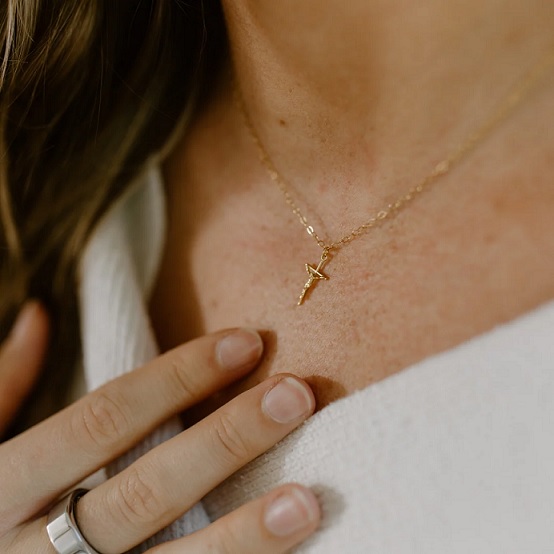
Suspending a gold crucifix from a chain so that it rests against the sternum brings the symbol within a short distance of the heart. Anatomically the heart sits at the center of the chest and sustains life through constant circulation. Religious language has long treated the heart as the seat of intention, affection, and moral direction. Aligning the object with this organ produces a quiet correspondence. Whenever the wearer registers the slight pressure of the pendant, attention can turn briefly to the events the crucifix recalls. The sensation arrives without drama or force. It arises naturally while walking, sitting, or speaking, and it opens repeated chances for interior recollection that do not demand formal prayer at every turn.
Practical and Symbolic Qualities of Gold
Gold supplies both practical and symbolic qualities that strengthen this effect. Density gives a men’s gold crucifix necklace a clear presence without adding unnecessary bulk. The warm tone stays consistent under varied light, so the piece does not fade into fabric or skin. Across many cultural settings gold also marks commitment. An object formed from this material is seldom regarded as temporary. The owner acquires it with the expectation that it will remain serviceable for years or even decades, accompanying shifts in circumstance and age. Such durability supports a view of faith as continuous rather than intermittent. The crucifix stays in place rather than appearing and disappearing with passing styles.
Personal Motivations in the Present Day
Present-day owners often choose gold crucifixes for reasons that mix family history with current circumstances. Some receive the jewelry from parents or grandparents and convert an inherited object into a personal possession. Others obtain a new piece after reflection or difficulty, selecting gold for its links to clarity and lasting worth. In both situations the simple act of closing the clasp each morning or evening functions as a modest ritual. The chain settles, the pendant comes to rest on the chest, and the hours ahead begin with the symbol already positioned. Over time the routine can influence patterns of thought. Moments of irritation, doubt, or gratitude meet the same physical presence, giving the wearer a chance to set immediate experience against a broader frame of meaning.
Specificity of the Crucifix Form
The specific form of the crucifix carries weight. A plain cross leaves the reference more abstract. The figure of Christ attached to the beams makes the reference concrete. Both wearers and observers recognize the scene of the Crucifixion rather than a geometric shape alone. This particularity keeps the historical detail of the faith visible. Gold does not mute that detail. It frames it. Light strikes the edges of the corpus and the arms of the cross, attracting notice even in everyday settings. The primary direction of the object, however, remains toward the wearer. The necklace faces the body first and the outer world second. Private awareness and public visibility therefore exist together in one item.
Responses in Social Settings
Surrounding social conditions affect how others respond to the necklace, yet the interior function stays steady. Where religious symbols appear often, a gold crucifix may draw little remark. In more secular surroundings it can invite questions or quiet observation. Either reaction leaves the wearer free to regard the object as a personal constant rather than a display for others. The heart itself remains private. What rests against it belongs first to the individual who decided to place it there. This emphasis on the private sphere does not reduce the communal side of faith. It simply recognizes that belief works through daily solitary awareness as fully as through shared worship.
Construction That Supports Continuous Wear
Quality of construction further enables the necklace’s purpose. A well-proportioned gold crucifix distributes weight so that it neither tugs uncomfortably nor disappears beneath clothing. Chain length is usually selected to set the pendant at the upper chest, near enough to the heart to register with ordinary motion. Links are formed for strength, lowering the risk of breakage during routine activity. These technical choices serve a larger aim: continuous proximity. When the object stays secure and comfortable, attention can shift from mechanical details to the meaning the piece carries.
Shared Practice Across Traditions
Different Christian communities show variation in design while the basic relationship among gold, crucifix, and heart remains the same. Some groups prefer more detailed figures. Others favor simpler lines. Thickness of metal, addition of stones, or treatment of the corpus may change, yet the choice to wear the finished piece near the center of the body unites the practices. The shared pattern indicates that the impulse reaches beyond any single period or region. People continue to look for a tangible means of keeping the cross near the organ that stands, in figurative terms, for desire and decision.
Minimal Care for Steady Presence
On a practical level the necklace needs little care. Gold retains its character without frequent polishing. Occasional cleaning can restore surface brightness when desired, yet the material itself withstands the deterioration that affects lesser alloys. Low maintenance matches the notion of steady presence. In this view faith gains from an object that simply continues in the same location day after day rather than from one that demands constant reinvention.
Quiet Integration with the Body
The result of such ongoing contact is a quiet form of integration. The crucifix becomes part of the wearer’s ordinary outline, as familiar as a watch or a ring, yet distinct in its purpose. Location near the heart prevents the symbol from being stored in a drawer or set on a distant shelf. Instead it moves with the rhythm of breath and pulse. When the body shifts the pendant shifts slightly. When the body is still the pendant rests with it. That physical partnership keeps the reference to the cross active without continuous deliberate focus.
Continuity Through the Years
Gold crucifixes appear across age groups and social settings. Younger adults may adopt them during years of personal formation as markers of identity. Older adults often maintain a practice begun much earlier, the same necklace having accompanied successive stages of life. The metal’s resistance to wear makes long association possible. A piece obtained in youth can still serve decades later, its surface showing only the soft traces of time rather than structural failure. In this respect the object itself records endurance and parallels the claim that the meaning of the cross outlasts changing individual conditions, consistent with thoughtful discussions of wearing Christian jewelry.
The Force of Proximity and Persistence
The gold crucifix necklace works through proximity and persistence. Resting against the chest, it places the most widely recognized emblem of Christian belief within the region of the heart. Selection of gold protects that placement from ordinary forces of wear and change. What starts as a decision to wear a particular item of jewelry grows into a sustained habit of keeping the cross near the center of personal life. The arrangement needs no elaborate defense. Its force rests in the direct correspondence among material, location, and meaning, renewed each time the necklace is fastened and carried through the hours that follow.