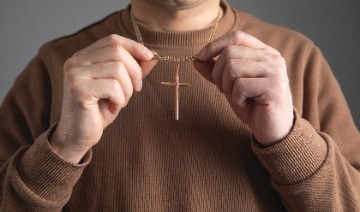
Every morning many believers reach first for their crucifix pendant to start the day. The chain slips through their fingers, the cross drops gently against the chest, and the day officially begins. That small, solid weight becomes part of their routine before the first cup of coffee.
For those who wear it, the crucifix is never merely jewelry. It is a quiet, constant companion that carries the full weight of Good Friday and the explosive hope of Easter Sunday in a single piece of metal.
The white gold crucifix has a special way of drawing the eye and the heart. Its soft, silvery brightness reflects light with a calm clarity that feels both elegant and sacred. Some wear a simple white gold crucifix every day. Others reserve a more substantial piece for special occasions or pass it down as a family treasure. In either case, it holds beauty without ever drifting into mere decoration.
The Cross That Conquered Death
Think back to that hill outside Jerusalem. The air thick with dust and finality. A man nailed between two thieves. The sky turned black in the middle of the day. Then came the words that seemed to close the book: “It is finished” (John 19:30). To everyone present, the story appeared over. It wasn’t.
Three days later the tomb was empty and everything had changed. Paul drove this point home to the Corinthian church with blunt honesty: if Christ has not been raised, your faith is worthless and you remain lost in your sins (1 Corinthians 15:17).
The crucifix we wear refuses to tell only half the story. It holds the suffering and the victory together. As it rests against your body through the hours, it quietly echoes Romans 6:4 — we are buried with Him so we can also rise and walk in new life. The cross has become the sign of conquest.
A Visible Declaration in an Unseen World
In a world that prefers faith kept private, wearing a crucifix pendant is a small but noticeable choice. It steps into daily life without shouting. Jesus instructed His followers to live so their light would be seen and the Father glorified (Matthew 5:16).
For many Christians across the centuries, the cross around the neck has served as exactly that kind of visible witness.
Early believers marked the sign of the cross on hidden walls when saying the name of Jesus could cost them everything. Today we wear it openly in offices, schools, airports, and grocery stores. Paul captured the heart of the matter when he wrote that he would boast in nothing except the cross of our Lord Jesus Christ (Galatians 6:14).
A white gold crucifix resting near your collarbone carries some of that same unashamed spirit. It is not about looking spiritual or stylish. It simply declares belonging. In conversations that turn serious or in moments of quiet waiting, it can open doors no planned speech ever could.
The Personal Theology of Wearing the Cross
There is also a deeply private side to this practice. The pendant sits directly over the heart — the very place the Bible calls the wellspring of life (Proverbs 4:23). When fear or doubt presses close, fingers often find their way to its familiar shape almost by instinct. In times of gratitude it becomes a silent point of thanks.
This daily habit connects to something very old. God once told Israel to keep His truth close to their hearts and before their eyes (Deuteronomy 6:8). Though we live in the freedom of the new covenant, the need to stay anchored has not disappeared.
The crucifix pendant does this work gently. It reminds us that our bodies are temples of the Holy Spirit (1 Corinthians 6:19) and that the sacrifice made for us deserves to shape how we live.
White gold deepens this reminder in its own quiet way. Its steady shine and resistance to tarnish bring to mind the refined gold Scripture speaks of — tested by fire (Revelation 3:18). The metal is not the main point. But it can point toward a hope that holds steady when life tries to wear it down.
Living the Resurrection Daily
Wearing the crucifix only matters if it changes something inside us. The real question is whether the cross we carry on our chest makes any difference in how we treat people, face pressure, or respond when life hurts. The resurrection is not just something we remember. It is power we are meant to live by.
These small pendants have traveled with believers through hospital corridors, tense family meals, difficult jobs, and lonely nights. They have brought comfort when words fell short and courage when fear felt stronger. Most of all, they keep repeating the same stubborn truth — death received its answer on that first Easter morning.
An Invitation to Wear Hope
In the end, a crucifix pendant is really a confession you carry rather than speak aloud. A sermon without sound. A prayer made visible. Whether the piece is plain or carefully crafted, silver or white gold, it keeps calling us to live as people of the resurrection in a world still hungry for real hope.
The next time you reach for that chain, pause for just a second. Feel its weight settle. Remember the blood-stained wood. Remember the stone rolled away. Then walk into your day carrying Easter with you.
Christ is risen.
Because He lives, we live too.
And that truth still changes everything.