Without a doubt, The Abomination of Desolation is a concept that is highly debated in Christianity. At the same time, it is one of the most significant prophetic expressions from the Bible. You must know that holy places can be desecrated spiritually. Abomination of Desolation describes a sacrilegious act which leads to the desecration of a holy place. The original concept specifically refers to The Temple of Jerusalem. This concept also highlights the destruction and devastation that follows after a holy place is desecrated.
The prophetic visions in the Book of Daniel mentioned this phrase for the first time. According to Matthew 24:15 and Mark 13:14, Jesus Christ directly refers to the concept of Abomination of Desolation. To be specific, he even warns his Christian followers about an event that will signal about times of danger and distress for humanity. It has been perceived in many different ways which leads to debate. Stay tuned if you wish to understand the true meaning of this concept. This guide blog covers “What is the Abomination of Desolation in Christianity?” and much more.
What Is The Abomination of Desolation?
In simple words, The Abomination of Desolation can be described as a biblical prophetic expression. It reflects a detestable act of idolatry or sacrilege which desecrates a holy place and brings devastation. When it comes to the Bible, this concept is deeply connected with the Jerusalem Temple. The interruption of the temple’s sacrifices and the actions of rules who are against the worship of God are highlighted.
In his teachings, Jesus Christ used the expression “Abomination of Desolation” while addressing his followers. He was teaching them about future suffering and the destruction of Jerusalem. He even refers to it in the Matthew 24:15 Bible verse to warn people of Judea to respond when they see the signal. The exact meaning of Abomination of Desolation is disputed because of different Christian perceptions. What it means depends on how you understand the original prophecy of Daniel and Jesus’ warning.
Meaning of The Words “Abomination” & “Desolation”
Both of the words Abomination and Desolation are important to understand how serious the prophecy actually was. Abomination basically means something that is offensive, especially when said in a religious or moral context. In the Biblical context, it often refers to the worship of false gods, an idolatrous practice, or violating the worship of true God. On the other hand, desolation portrays a condition where everything is devastated, ruined, or abandoned.
When it comes to the prophecy, it points toward the harsh consequences of a sacrilegious act. Abomination of Desolation is much bigger than an ordinary offense. They highlight serious violations against something that is sacred. There is a strong emphasis on the following judgement and devastation. The Book of Daniel connects it with the profanation of the Jerusalem Temple and regular sacrifices being removed. When the holy place of God is desecrated, Jerusalem faces destruction.
Where Is It Mentioned In The Bible About The Abomination of Desolation?
| S. No | Gospel | Bible Verse |
|---|---|---|
| 1. | Daniel 9:27 | “On the wing of abominations shall come one who makes desolate, until the decreed end is poured out on the desolator.” |
| 2. | Daniel 11:31 | “Forces from him shall appear and profane the temple and fortress, and shall take away the regular burnt offering. And they shall set up the abomination that makes desolate.” |
| 3. | Daniel 12:11 | “And from the time that the regular burnt offering is taken away and the abomination that makes desolate is set up, there shall be 1,290 days.” |
| 4. | Matthew 24:15 | “So when you see the abomination of desolation spoken of by the prophet Daniel, standing in the holy place, then let those who are in Judea flee to the mountains.” |
| 5. | Mark 13:14 | “But when you see the abomination of desolation standing where he ought not to be (let the reader understand), then let those who are in Judea flee to the mountains.” |
Historical Background – What Is The Abomination of Desolation?
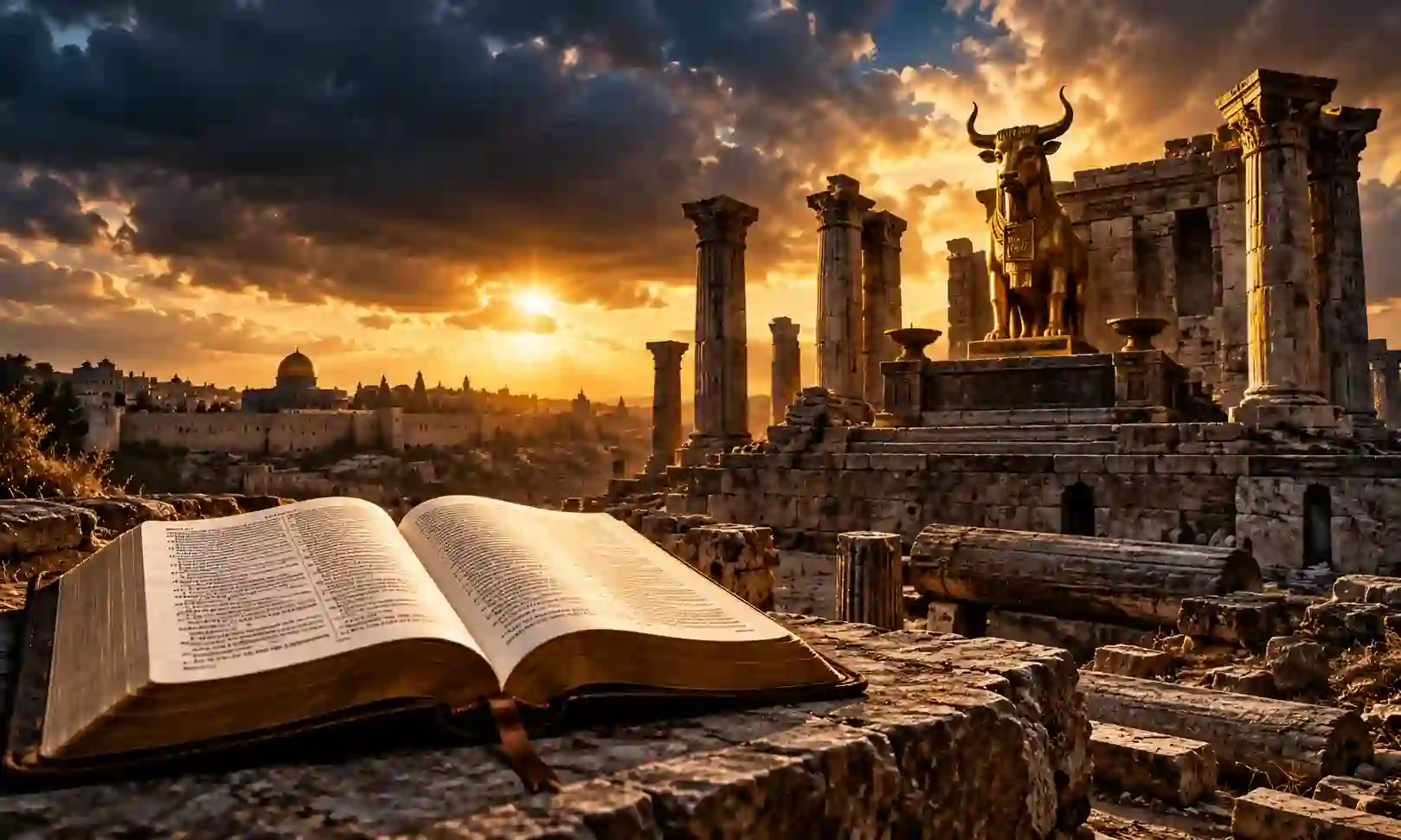
Temple Desecration Under Antiochus IV Epiphanes: Antiochus IV Epiphanes used to rule the Seleucid Empire. Due to his policies, there was severe religious persecution and conflict. He even imposed several restrictions on the religious practices of Jews. At some point, Antiochus desecrated the Temple in Jerusalem, used profanities, and set up an altar for Olympian Zeus. The imposed pagan worship even included Swine’s Flesh.
All of these events have been described in Daniel 11: 31. From the sanctuary being desecrated to removal of daily service and establishment of an abomination, everything is part of this event. All of this led to a Jewish uprising and contributed to the Maccabean Revolt. Judas and his followers managed to take control of the Temple in 164 BC. Thereafter, they removed the pagan altar/idol and restored the sanctuary.
Roman Destruction of Jerusalem: This is the second major historical event associated with the Abomination of Desolation. Roman destruction of Jerusalem and its Temple occurred in AD 70. Roman fought against Jewish Rebels and captured Jerusalem. At the time, Roman forces were led by Tutus. The Second Temple serving as the core of Jewish worship was destroyed. It negatively transformed the Jewish religious life. According to Christians, this connected with the warning of Jesus Christ in Matthew 24, Mark 13, and Luke 21. Many Christians debate whether the Second Temple’s destruction will lead to a fulfillment of prophecy in the future.
What Teachings Does The Abomination of Desolation Provide For Christians?
Daniel’s prophecy highlights the serious consequences of destroying holy places or establishing false idols. That is considered to be a direct act against the worship of God. Christianity also learned about the dangers associated with religious oppression. And, the rule of Antiochus IV is a perfect example as Jewish religious practices were restricted.
Furthermore, it reflects how judgement will fall upon those who try to destroy Christian faith. The prophecy of Daniel even talks about the importance of paying attention to holy scriptures. While people are suffering, their endurance and faith is tested. Daniel and the Gospels teach followers to hold on to their faith instead of fair.
Conclusion
In conclusion, the Abomination of Desolation is an important prophecy for Christians. It revolves around how desecrating a holy place or suppressing religious worship has harsh consequences. Many Christians connect this prophecy with the Roman destruction of Jerusalem and desecration of Jerusalem Temple under the oppressive rule of Antiochus IV. Despite the varying interpretations, this prophecy has left behind many valuable teachings for the followers of Christianity.
FAQs
Why did Jesus use Daniel’s prophecy?
He tried to warn his followers about a crisis and devastation with the help of Daniel’s prophecy. This warning is described in Matthew 24:15 and Mark 13:14.
Does the Revelation ever mention Abomination of Desolation?
No, the Abomination of Desolation concept has never been a part of Revelation. However Christian scholars have highlighted indirect descriptions of false worship and its consequences.
Has the Abomination of Desolation already been fulfilled?
Many Christians believe that the destruction of Jerusalem and Roman siege in AD 70 was devastation and fulfillment of Jesus’s warning instead of desecration.
Also, Read: What Religion Is Savannah Guthrie? | What Religion Was Charlie Kirk?