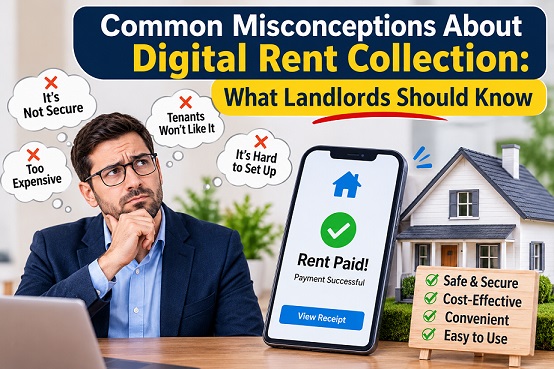
Digital payments have transformed how consumers handle everyday transactions. The same shift is happening in rental property management, yet many landlords remain hesitant to adopt online rent collection methods. Much of this reluctance stems from outdated assumptions rather than current reality.
Understanding what’s true and what’s myth about rent payment platforms can help property owners make informed decisions about modernizing their operations.
Cost Concerns Are Often Overstated
Many landlords assume accepting digital payments means paying steep processing fees. While credit card transactions do carry higher costs (typically 2.5% to 3.5%), ACH transfers offer a more affordable alternative. ACH fees generally range from $0.20 to $3 per transaction, or 0.5% to 1.5% as a percentage. Some rent payment platforms even cover these costs entirely for landlords, shifting fees to tenants who choose convenience payments. The key is comparing different services and understanding their fee structures before committing.
Security Standards Have Improved Dramatically
Data security worries often top the list of landlord concerns about digital payments. Modern rent payment platforms operate under strict regulatory requirements that mandate robust protection measures. Encryption technology scrambles sensitive information so only authorized parties can access it. Account numbers, routing numbers, and personal details all receive this protection during transmission and storage. Reputable platforms also employ SSL certificates, firewalls, and regular security audits. While no system offers absolute guarantees, online rent collection now provides security levels comparable to or exceeding traditional banking.
Most Tenants Already Use Digital Payments
Some property owners worry their tenants lack the technical knowledge to pay rent online. This concern doesn’t match current usage patterns. More than half of all bills are now paid digitally, and that percentage continues growing. Tenants routinely handle online transactions for utilities, subscriptions, and purchases. The skills needed to rent pay online are identical to those used for other digital payments. Even less tech-savvy tenants typically adapt quickly when platforms feature intuitive interfaces and clear instructions.
Setup Is Simpler Than Expected
The variety of available options can make getting started feel overwhelming. Landlords can choose from bank-based solutions, peer-to-peer apps, or dedicated rent payment platforms. The selection process becomes manageable when you identify your specific needs first. Consider factors like property portfolio size, desired automation level, and integration with existing systems. Once you’ve chosen a platform, implementation usually involves straightforward steps with support resources available. Most services design their onboarding process to be accessible even for users with limited technical experience.
Digital Options Don’t Eliminate Traditional Methods
Adopting online rent collection doesn’t force landlords to refuse cash or checks. Offering digital payments simply adds another option for tenants who prefer that method. Many property owners maintain multiple payment channels, allowing tenants to choose what works best for their situation. Some rent payment platforms even let landlords record offline payments manually within the same system, keeping all records in one place. This flexibility helps serve diverse tenant populations while still gaining efficiency benefits from digital payments.
Transaction Security Protects Both Parties
Tenants sometimes express concerns about transaction safety when they pay rent online. Actual fraud rates for digital transactions remain quite low, especially when basic precautions are followed. Secure internet connections matter more than many people realize. Public WiFi should be avoided for financial transactions unless a VPN adds protection. Choosing established rent payment platforms with clear security policies provides another layer of safety. Credit cards offer better fraud protection than debit cards for tenants who prefer card payments over bank transfers.
Small Portfolios Benefit Too
Some landlords believe online rent collection only makes sense for large property management companies. Small-scale landlords actually gain significant advantages from digital systems. Automated payment processing reduces time spent on manual tasks like deposit trips and ledger updates. Late payments often decrease when tenants can set up automatic transfers. Record-keeping becomes simpler when transaction histories are stored digitally. These benefits scale down effectively, making rent payment platforms practical even for landlords managing just a few units.
Final Thoughts
The hesitation many landlords feel about online rent collection often stems from misconceptions rather than genuine limitations. Modern rent payment platforms offer affordable, secure, and user-friendly solutions that complement rather than replace traditional methods. As digital transactions become standard across all business sectors, property owners who adopt these tools position themselves to meet tenant expectations while streamlining their own operations. The transition is typically smoother than anticipated, with support resources available to address any challenges that arise.