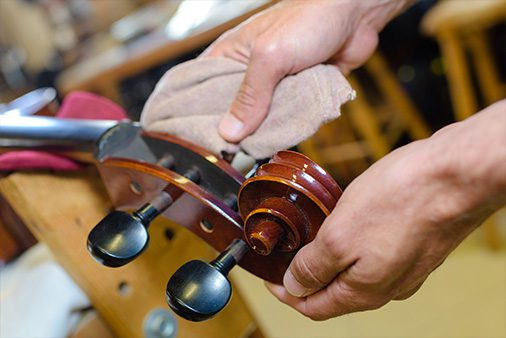
A cello case beside the stairs, three guitars on wall hangers, a keyboard under the window, and a drum kit in the spare bedroom can make a home feel like a rehearsal studio. They also change how the room needs to be cleaned. A vacuum hose can catch a cable, a damp cloth can touch an exposed instrument, and a carefully positioned stand can be knocked out of balance while someone reaches behind it.
The safest approach begins by separating the instruments from the room around them. A musician may be comfortable cleaning their own gear but prefer to leave floors, windowsills, and ordinary furniture to cleaning services. That division is useful because the materials used to make instruments often need care that differs from household furniture.
For example, a resident arranging a visit with Yall Maid Austin Cleaning Services could identify the instruments that must remain untouched, rather than assuming every object in the room should be dusted. A short explanation of the layout gives everyone a better idea of which surfaces are safe to reach and what should be moved by the owner beforehand.
Decide What Stays in Place
Before cleaning, look at how each instrument is supported. A guitar on a floor stand may be stable when nobody is moving around it, yet easy to tip when a vacuum head passes nearby. A cello case may have wheels or latches that could catch on furniture. Drum hardware can protrude into narrow walkways at knee height.
The owner should decide which instruments can be put in their cases and which need to remain set up. Never lift an instrument by its neck, tuning pegs, strings, or cables to make space. If a heavy keyboard or piano cannot be moved safely, clean only the accessible floor around it rather than pulling it away from the wall.
Make a Route Before Bringing in Equipment
Walk from the doorway to the areas that need attention. Keep cases, microphones, spare stands, and loose sheet music out of the route. A cleaner carrying supplies needs enough room to turn without brushing against a guitar headstock or catching a boom stand with an elbow.
A person comparing cleaning services should ask whether the planned work involves moving furniture or equipment. In a music room, “clean behind everything” is not a practical instruction unless the owner has already cleared and secured the area.
Treat Instrument Care as a Separate Job
An acoustic guitar, a brass trumpet, and an electronic synthesizer cannot be wiped down in the same way. Wood finishes may be sensitive to moisture or cleaning agents. Brass instruments have valves, lubricants, and finishes that require specific care. Electronic instruments have switches, keys, connectors, and openings where liquid should never be sprayed.
Follow the instrument maker’s instructions, or ask a qualified repair technician when its finish or condition is uncertain. Avoid household polish, disinfectant sprays, and wet cloths on instruments unless the manufacturer explicitly approves them. Valuable or older instruments may require specialist conservation rather than routine cleaning.
This distinction can be made clear when discussing the room with Yall Maid Austin Cleaning Services: ordinary furniture and exposed floor areas can be considered for residential cleaning, while the musician remains responsible for the collection itself. It is more useful to define that boundary than to request a vague “deep clean” of the entire studio.
Watch the Floor Around Stands and Pedals
The floor in a music room collects more than ordinary dust. Guitar picks disappear beneath furniture. Drumstick tips chip. Rosin dust may settle near a string player’s chair, and small pieces of tape can stick beside cable runs. Some of these items are belongings, not rubbish.
Pick up loose accessories before vacuuming. For a visit by Yall Maid Austin Cleaning Services, the owner can first put picks, capos, drum keys, and hardware into a labelled tray so nothing valuable gets thrown away. Use a suitable floor attachment and avoid pulling cables with the vacuum. If a cable crosses the cleaning route, ask its owner to disconnect and coil it rather than tugging it free.
Keep Rosin and Other Residues in Perspective
Rosin from bowed string instruments can leave a fine deposit around a practice area. It is not the same as ordinary household dust, and cleaning it from an instrument’s varnish requires particular care. On a nearby washable table or intact floor, gentle removal may be appropriate if the material and cleaner are compatible. Avoid vigorous brushing that sends loose particles into the air.
When requesting cleaning services for a music room, mention any unusual residue and its source. That is more helpful than simply reporting a dirty floor, because it gives the cleaner a chance to decide whether the task fits ordinary residential work.
Protect Cases, Fabric Covers, and Sheet Music
Hard cases, soft gig bags, padded benches, and cloth equipment covers can collect dust even when their contents are protected. But fabric can also hold delicate fittings, stitched labels, or coatings that should not be soaked. Check care labels before vacuuming or wiping a case, and never assume a closed case is empty.
Loose sheet music deserves similar caution. Pages can be arranged in a particular performance order, marked with handwritten instructions, or stored with fragile older scores. Stack them safely before cleaning the table. Do not straighten or discard papers without permission. Music books on a stand should be treated as working materials, not clutter to reorganize.
If an owner is booking Yall Maid Austin Cleaning Services, they can make a useful distinction between wiping an empty music stand and handling the sheet music on it. This keeps a simple household task from becoming an accidental rearrangement of rehearsal materials.
Be Careful Around Outlets, Amplifiers, and Cables
Amplifiers and powered speakers may have ventilation openings that collect debris. The solution is not to spray liquid into the grille or push a vacuum attachment into electrical components. Switch equipment off where appropriate, allow it to cool, and leave internal cleaning to the manufacturer’s instructions or a qualified technician.
Keep moisture away from extension leads and power strips. Avoid unplugging an unfamiliar setup just to gain access behind a desk; recording equipment may be wired in a particular order. The owner should shut down and secure any devices that need to be moved. If a cable looks damaged or an outlet is loose, stop and arrange for appropriate repair rather than working around the defect.
Think About Humidity Before Washing the Room
Many wooden instruments respond to changing humidity. Excessive moisture and prolonged dryness can affect wood and, in some cases, tuning or structural stability. That does not mean normal floor cleaning is forbidden, but it is a reason to avoid saturating surfaces or leaving wet clothes near cases and stands.
Use only the amount of water appropriate for the floor and allow it to dry before putting cases back. If the room has a humidifier, the owner should maintain it according to its instructions; a cleaner should not adjust humidity controls or add treatments without agreement. Persistent dampness, condensation, or visible mold needs attention beyond surface wiping.
Regular cleaning services may be helpful for keeping walkways, shelves, and adjacent living areas under control, but the instrument collection needs its own maintenance routine. The two jobs support each other without being interchangeable.
Keep the Final Checklist Short and Specific
A practical cleaning plan can name the floor sections that are clear, the tables that have been emptied, and the shelves that can safely be reached. It should also identify stands, instruments, cases, electrical gear, and sheet music that are off limits. After the visit, the musician can check the setup before the next rehearsal rather than discovering that a cable or accessory has been misplaced mid-performance.
A homeowner coordinating with Yall Maid Austin Cleaning Services can use that checklist to agree on ordinary room upkeep without handing over responsibility for specialist equipment. The same clarity helps when selecting cleaning services for future visits: the goal is a comfortable, usable room, not a spotless appearance achieved by moving or treating things that should have been left alone.