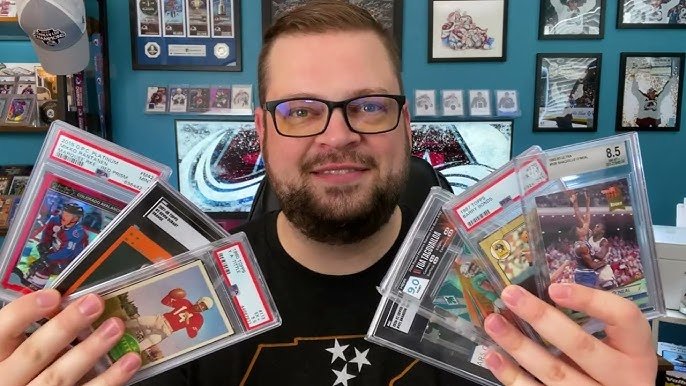
The cost of one mis-handled card can quickly add up to several hundred dollars in a matter of seconds for a serious collector. They will have to think long and hard about the best way to protect their valuable collection whilst still being able to play with them, balancing the need for accessibility with the need for protection.
Basic Card Sleeves For Trading Card Protection.
The first layer of protection for a card would be to place it in a card sleeve. Many players do not realize the importance of choosing a card sleeve for their cards. The cost of a sleeve in comparison to the amount of additional protection that a sleeve offers to a card is very important to consider. Penny sleeves are the cheapest type of card sleeve. The penny sleeve is designed to be very inexpensive. They are meant to be used once and then thrown away. The penny sleeve offers very little additional protection to a bare card. However, the penny sleeve does offer some protection to a card against shuffling wear. For cards of very little value to a collector, the penny sleeve is a good option for the player.
Double-sleeving is also common practice with trading cards. This practice involves placing a single card into two individual sleeves, each being the proper size for the card. For example, a collector would first place the card into a ‘perfect-fit’ sleeve, and then place that individual sleeve into a standard penny sleeve. This form of protection from moisture and oils from a player’s hands is amongst the best, and also helps to greatly absorb the normal wear and tear of a card throughout play.
However, the cards do become quite thick and can pose quite a problem as to how to store them in deck boxes as well as storing them in binders.
As with many items on the market, the quality can vary greatly from one manufacturer to the next. Japanese-made sleeves for example, tend to be of higher quality and have more consistent sizes, but can be quite pricey. There are many affordable options available for the collector who doesn’t want to break the bank, but in some cases, the cheaper sleeves can split while being used, which can be a huge problem for a collector of rare cards. The collector must weigh the amount of protection the card will receive versus the playability of the card. The collector must also consider if they plan on entering into tournaments with the card, as some sleeves are better suited for this than others.
Deck storage systems
A good deck case will have to protect cards from impact, i.e. from being bent. And as with a deck box it is important to store the cards in an organized fashion so that they can be retrieved fast. The harder the plastic case is made of, the better it will protect the cards. However, a very hard case can also break if it is dropped from a great height.
Modern deck storage come in many different shapes, sizes and are now designed with magnetic closure systems, eliminating the stress points on the case that the old snap closure systems had created. These new deck box designs provide a much more durable storage case for your trading card collection and are able to provide the necessary protection to your cards during transport. Some of the higher end deck storage have even been filled with individual pieces of foam that allow you to place the foam inserts in the deck box in any configuration to best hold the decks in the case.
Professional play surfaces and their protective value
Scratches and abrasions to cards can occur when dirt and oils from human hands are left on table tops. The worst type of scratch to have on a card are the ones that have been made while trying to remove marks from the card. Scratches made by dirt and oils can be very difficult to remove and in many cases may be permanent. This is why most professionals recommend the use of fabric playmats on tables where anime trading card games are played.
A very popular Playmat used for Anime Trading Card Games has a smooth surface which causes cards to slide onto it when placed upon it. It also has a backing which is heavily cushioned and protects the card(s) from scratches when they fall to the ground and hit a hard surface. This makes for a safe way to play with cards which are prone to scratching.
As the cards pass back and forth between the players, dirt and oils from their fingers transfer to the surface of the playing table. If the table surface is rough, the card backs will become scratched as they are placed down upon the table. A good quality fabric playmat will have a cushioned backing to protect your cards from scratches, and a smooth, low friction surface to allow the cards to glide smoothly across its surface. Many collectors invest in high-quality anime TCG playmats to ensure their valuable cards remain in pristine condition during gameplay. The surface of the
Long-term storage strategies for active collections
In order to store their active deck of cards, there are a number of different types of storage binders that collectors can look at. In terms of the pages, it is suggested that the collector use the top-loading binder pages for trading card storage as opposed to the side-loading binder pages. The reason for this is that when a collector removes a card from storage and puts it into their active deck of cards for playing, it is more likely to be placed face up and thus these types of pages are better for the protection of the card. In terms of the pages within the binder itself, many of the binders that are used for the storage of trading cards have acid-free pages. These pages are very important because if a collector were to store their cards in a binder that contains pages that are not acid-free then the cards could potentially turn yellow or become brittle over time. Thus, the collector must be very aware of this when selecting a storage binder for their active deck of trading cards.
Some storage binders also can pose a huge threat to your cards as well. Many have rings in them, D-rings or O-rings, that can cause cards to bend. These are especially bad as the more you put in the binder the more pressure is put on the card causing more severe bends as time goes on. The O-rings distribute the pressure more evenly than the D-rings but the amount of space between the rings can vary greatly from manufacturer to another. It’s always best to avoid using binders with rings altogether to protect your valuable cards.
Environmental factors and their hidden costs
Many collectors are not aware of how temperature and humidity can effect their trading cards. Cards can absorb moisture causing them to swell, potentially even warping the card irreversibly.
Like other items, UV light from fluorescent lighting can cause colors to fade. By storing your valuable trading card collection in a climate-controlled storage space you can be assured that your collection will maintain its value.
Protecting your cards with a few hundred dollars of protection can save you thousands of dollars in losses due to damage. In the end, protection beats repair.