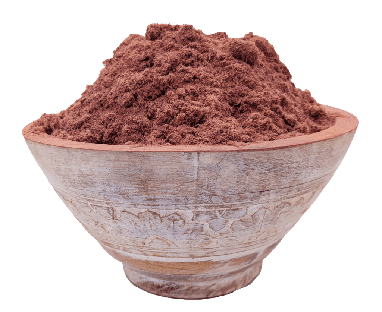
Mimosa hostilis root bark starts as a natural, fibrous plant material. In its original form, the bark has an irregular shape, visible fibers, and varying thickness. Through drying and mechanical processing, it can be transformed into a much finer botanical powder.
This change is mainly physical. Larger pieces are gradually reduced into smaller particles until the desired texture is reached. The final appearance can depend on the original bark, drying conditions, processing method, and storage environment.
Understanding this process helps explain why powdered root bark can look very different from whole or shredded bark, even when the material comes from the same botanical source.
From Natural Bark to Processed Material
Root bark has a naturally rough and fibrous structure. Fresh material also contains moisture, which makes it unsuitable for long-term storage in its fresh state.
Drying reduces this moisture and changes the physical properties of the bark. As the material becomes drier, it generally becomes firmer and more brittle.
This makes the dried bark easier to divide into smaller pieces through mechanical processing.
The bark may first be separated into manageable sections before being reduced further. At this stage, the material can still retain much of its original appearance.
The transformation into a fine powder happens later as the particle size becomes progressively smaller.
Why Drying Comes Before Grinding
Moisture has a strong influence on how plant material behaves during physical processing.
Fresh or damp bark tends to be flexible. It may bend or compress rather than break cleanly.
Dried bark is more brittle. This makes it easier for mechanical force to break the material into smaller fragments.
Drying also improves storage stability by reducing excess moisture.
However, completely dry material can absorb moisture again if exposed to humid air. This is particularly relevant after grinding because fine particles can respond differently to environmental humidity.
Keeping dried botanical material protected from moisture helps preserve its physical characteristics.
Breaking the Bark Into Smaller Pieces
Large pieces are not normally treated as fine powder immediately. The material can first be reduced into smaller sections or fragments.
This intermediate stage makes the overall structure easier to process.
Shredded bark usually contains pieces of different lengths and thicknesses. Natural fibers do not always break in exactly the same way, so some variation is expected.
At this point, the bark still looks recognizably like plant material.
The smaller fragments provide a more manageable starting point for further mechanical size reduction.
The Role of Mechanical Grinding
Grinding is the stage that creates the powder-like form.
Mechanical force breaks the dried bark into progressively smaller particles. The exact result depends on the processing equipment and the characteristics of the starting material.
Some particles may remain relatively coarse, while others become much finer.
Repeated processing generally produces a more uniform particle distribution, although natural botanical material is unlikely to consist of particles that are all exactly identical.
The final product may therefore contain a mixture of very small particles and occasional slightly larger fragments.
What Determines How Fine the Powder Becomes?
Several factors can influence the final particle size.
The original dryness of the bark matters because moisture can make plant fibers more flexible.
The structure of the bark also matters. Some parts may break more easily than others.
Processing equipment and the way material moves through the equipment can influence the final consistency.
A coarse botanical powder can contain visible particles, while a finer powder generally has a smoother and more uniform appearance.
For this reason, the term “powdered” does not necessarily mean that every sample has exactly the same particle size.
Changes in Texture During Processing
The texture changes significantly as the bark moves through different processing stages.
Large bark pieces tend to feel firm and fibrous. Shredded material feels rough and coarse because larger fragments remain intact.
As the particles become smaller, the texture becomes progressively finer.
A finely processed sample can have a soft, powder-like feel. However, small fibrous particles may still be present because the original material is plant tissue.
This is one reason powdered root bark can retain subtle differences in texture between batches.
Why the Color May Look More Uniform
Processing can also change how the material appears visually.
Whole bark pieces may show different shades across their surfaces. Some areas can appear darker, lighter, or more textured.
Grinding breaks these pieces apart and mixes the particles together.
As a result, the final powder can appear more uniform than the original bark.
This does not mean that every particle has exactly the same color. Small differences can still be present, but they are less obvious when the material is finely divided.
Lighting can also influence the perceived shade of botanical powders.
Particle Size Affects Density
One interesting result of grinding is a change in how the material occupies space.
Large bark pieces leave air gaps between them. Shredded pieces create smaller gaps, while fine particles can settle into many of the available spaces.
This means a fine powder can appear more compact than larger pieces of the same weight.
For example, a quantity described as Powdered mimosa hostilis 1kg can have a different visible volume depending on particle size and how tightly it has settled.
The weight remains a measurement of mass. The amount of space occupied is affected by density and packing.
What Happens During Settling?
Fine particles can shift during transportation and handling.
Movement causes individual particles to rearrange. Over time, they may settle more closely together.
A container that initially looks loosely filled may therefore appear more compact later.
This does not necessarily indicate that material has been removed.
The same principle can be seen with many common powders. Flour, grain, and other dry materials can settle after being moved.
Therefore, visible volume should not be treated as an exact measurement of quantity.
Protecting Powder After Processing
Once bark has been processed into a fine powder, storage becomes important.
Fine particles have a large combined surface area. This can make them more sensitive to environmental moisture.
Exposure to humid air can cause particles to stick together. A loose powder may gradually become compact or form small clumps.
A clean, dry, sealed container can help limit unnecessary exposure to moisture and airborne contaminants.
The storage area should also be reasonably stable and protected from excessive heat.
Packaging Fine Botanical Powder
Packaging needs to match the physical characteristics of the material.
Fine powders can move through very small openings, so containers should close securely.
A suitable container also helps protect the material from dust and environmental moisture.
Clear labeling can make storage easier. Useful information may include the botanical name, plant part, processing form, measured weight, and date of packaging.
For online botanical references, a domain such as mimosahostilis.shop may use the plant’s common scientific terminology as part of its website name. However, a website name alone does not establish botanical identity or product characteristics.
Why Natural Variation Remains
Even after careful processing, powdered bark is not necessarily perfectly uniform.
The starting material may come from roots with different sizes, ages, and natural structures.
Different areas of the bark can also have different fiber characteristics.
When these materials are combined and ground, the resulting powder reflects some of that natural variation.
This is an important difference between botanical powders and highly standardized manufactured materials.
Natural variation should therefore be considered when describing color, texture, and particle size.
Powdered Bark Versus Shredded Bark
The main distinction between these two forms is particle size.
Shredded bark contains recognizable strips and fragments. Its fibrous structure remains visible.
Powdered bark contains much smaller particles. The original structure becomes difficult to see.
The two forms can also behave differently during storage.
Shredded material generally has more open spaces between pieces. Fine powder can settle more tightly and may be more affected by humidity.
These physical differences explain why the same botanical material can have several distinct forms.
How to Describe the Finished Powder
A useful description should focus on observable characteristics.
Important details can include:
- Botanical name
- Plant part
- Dried or fresh condition
- Processing form
- Approximate particle size
- Color and texture
- Measured weight
- Storage conditions
This provides a clearer description than simply calling the material “powder.”
It also makes comparisons between different batches easier.
Common Misunderstandings About Powder Processing
One common misconception is that all powdered root bark has an identical texture. In reality, particle size can vary.
Another is that a more compact container necessarily contains more material. Packing density can create major differences in visible volume.
It is also easy to assume that color alone identifies the material. Natural variation and lighting can both affect appearance.
Finally, powder should not be confused with a chemically standardized substance. Physical grinding changes particle size, but it does not by itself establish chemical composition.
Frequently Asked Questions
How does root bark become a powder?
Dried bark is mechanically reduced from larger pieces into progressively smaller particles.
Why is bark dried before mechanical processing?
Dry material is generally more brittle and easier to reduce into smaller particles.
Is all powdered root bark the same particle size?
No. Processing methods can produce different particle-size distributions.
Why can powdered bark contain small visible pieces?
Natural fibers may not break into identical particles during mechanical processing.
Does grinding change the color?
It can make natural color variations appear more evenly distributed.
Why does powder become compact after transportation?
Movement and vibration can cause fine particles to settle closer together.
Can humidity affect powdered bark?
Yes. Moisture can cause fine particles to stick together and form clumps.
Does one kilogram always occupy the same amount of space?
No. Particle size and packing density affect the volume of a given weight.
Final Thoughts
Turning Mimosa hostilis root bark into a fine powder is primarily a physical process. Drying changes the bark’s moisture level and makes it more suitable for mechanical size reduction. Cutting and shredding can then reduce larger pieces before further grinding creates smaller particles.
The final texture depends on the original bark, its dryness, processing conditions, and particle-size distribution. Color may also appear more uniform after grinding because material from different pieces becomes mixed together.
After processing, storage becomes an important consideration. Humidity, heat, handling, and packaging can all influence the powder’s physical condition.
Understanding these stages provides a clearer picture of how natural root bark changes from irregular pieces into a fine botanical powder.