Introduction: Canadian Inventory Control Demands
Canadian warehouses require accurate weight verification for shipping, receiving, and inventory management. Separate weighing stations add handling steps and reduce throughput. A scale pallet jack truck integrates weighing directly into material movement. Canadian logistics centers use these units to verify load weights without interrupting workflow. This equipment serves facilities needing weight confirmation during pallet transport.
Technical Overview and Weighing Applications
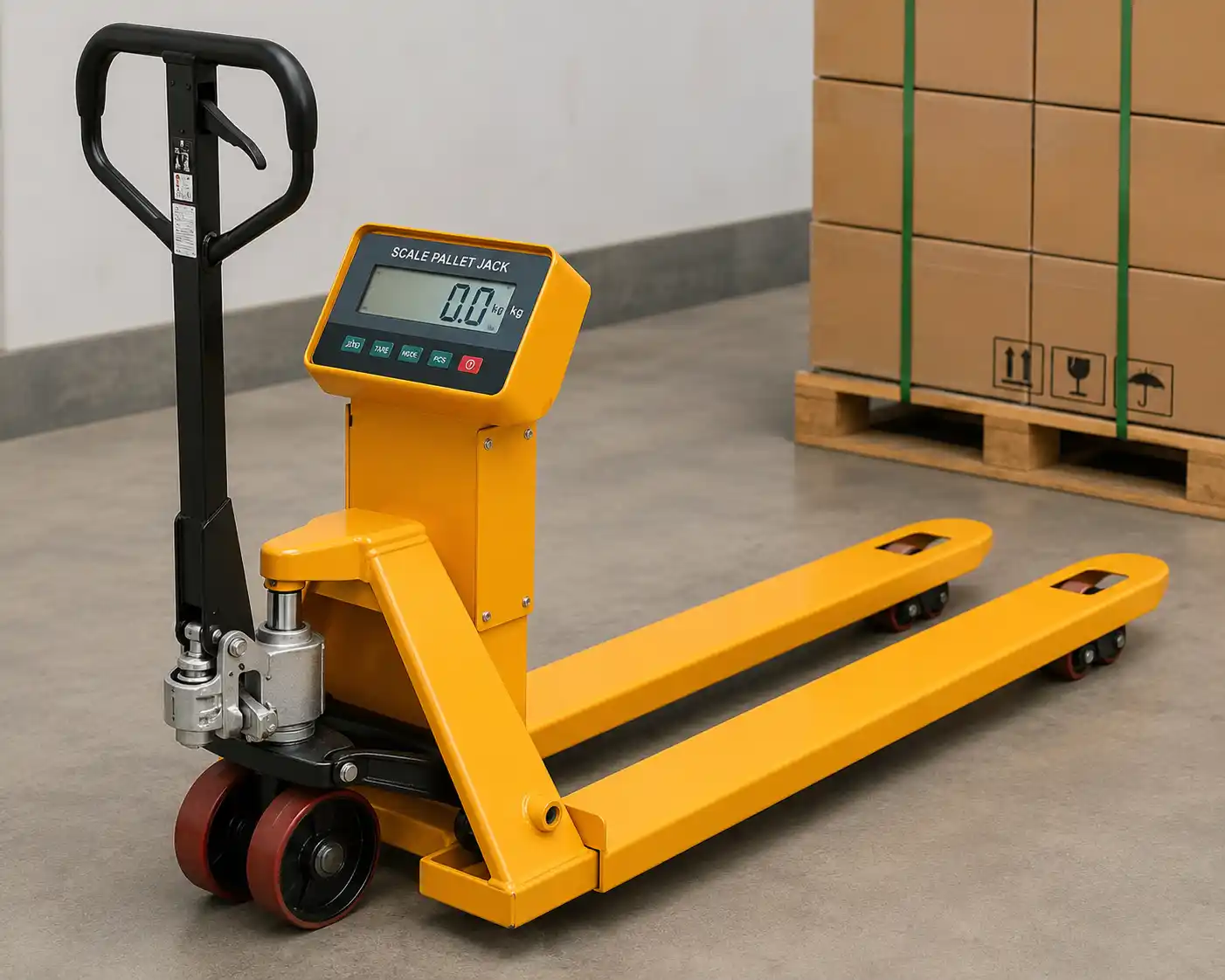
The pallet jack has 6600 pound lifting capacity. Forks measure 48 inches in length. Steering angle reaches 210 degrees for tight maneuverability. Integrated scale displays weight on handle-mounted indicator. Load cells built into fork frame measure weight during lifting. The unit operates as a standard pallet jack when weighing is not required. Polyurethane wheels provide smooth rolling on warehouse floors.
Industrial uses include outbound shipping weight verification, inbound receiving quality control, batch ingredient weighing for production, inventory cycle counting, and load distribution monitoring for truck loading.
Efficiency and Safety Contributions
Weighing during transport eliminates separate trips to floor scales. Each pallet weight is verified in under 10 seconds. Sixty-six hundred pound capacity handles standard pallet loads. Two hundred ten degree steering allows maneuvering in narrow aisles. Scale accuracy within 0.1 percent ensures shipping compliance.
Integrated scale prevents overloading beyond capacity. Load cells provide individual wheel weight distribution data. Handle-mounted display keeps operator vision forward during weighing. Emergency brake system stops movement on inclines. Non-marking wheels maintain floor surface integrity.
Technical Specifications
Capacity: 6600 pounds. Fork length: 48 inches. Steering angle: 210 degrees. Scale accuracy: plus or minus 0.1 percent of load. Display type: digital with backlight. Power source: rechargeable battery. Wheel material: polyurethane. Lowered fork height: 3.5 inches. Raised fork height: 7.5 inches.
Performance Factors
Battery provides 40 hours of continuous operation between charges. Scale calibration recommended every six months. Weighing accuracy maintained within temperature range of 32 to 104 degrees Fahrenheit. Load cells compensate for off-center pallet placement.
Calibrate scale using certified test weights monthly. Clean load cell areas of debris weekly. Inspect wheels for wear every 100 operating hours. Recharge battery after each shift. Test display function before first use daily.
Safety Best Practices
- Never exceed 6600 pound capacity
- Verify load stability before moving
- Keep hands clear of pinch points
- Use on level floors only
- Lower forks fully when parked
Do not use scale function on inclines. Keep display protected from impact. Stop immediately if load cell error appears. Lower load before moving long distances. Train operators on weight indicator interpretation.
Equipment Types and Accessories
Pallet trucks range from manual to electric powered. This manual scale-equipped model suits general warehouse use. Accessories include spare battery pack for continuous operation. Calibration weight set for verification. Protective cover for display during transport. Wheel replacement kit for worn polyurethane. Fork extension adapters for oversized pallets.
Advantages and Limitations
Advantages:
- 6600 pound capacity
- Integrated digital scale
- 210 degree steering angle
- 48 inch forks
- Rechargeable battery
- Polyurethane wheels
- 0.1 percent accuracy
Limitations:
- Not for outdoor use
- Calibration required regularly
- Battery must be charged
- Display not submersible
- Higher cost than standard units
Real-World Canadian Case
A Canadian warehouse in Ontario processed 500 outbound pallets daily. Separate weighing station required lifting each pallet onto a floor scale, adding 45 seconds per pallet. Management purchased a scale pallet jack truck. Operators weighed pallets while transporting to shipping doors, eliminating the extra handling step. Daily processing time decreased by 5 hours. Scale accuracy was confirmed by transport carrier weight checks. The warehouse reduced labour costs and improved shipping documentation accuracy.
Conclusion and Future Industry Trends
Canadian warehouses need efficient weight verification for shipping accuracy. Integrated scale pallet jacks combine transport and weighing into one operation. Future designs may include wireless data transmission to warehouse management systems. Bluetooth connectivity could send weight readings directly to shipping documents. Solar charging might extend battery life. Facility managers should evaluate scale pallet jacks for any warehouse with high-volume outbound shipping. The combination of 6600 pound capacity and integrated weighing makes this pallet truck suitable for diverse Canadian warehouse applications.