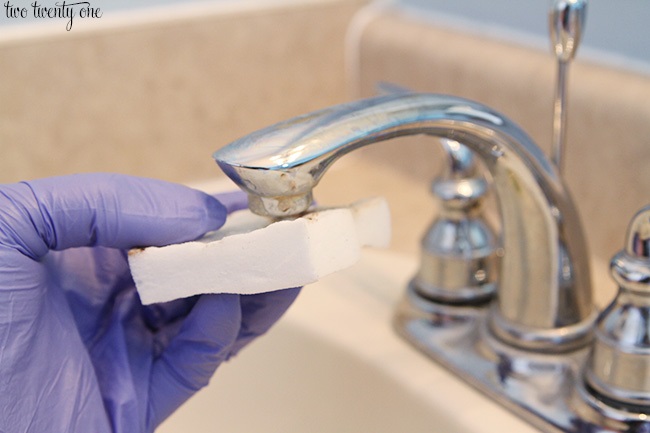
Bathroom fixtures can look dull even in a room that is cleaned often. White rings appear around faucets, shower glass loses clarity, and dark metal finishes begin showing pale spots that seem to return almost as soon as they are wiped away.
Those marks are often left by minerals in water. Each splash dries, but the dissolved material in that droplet stays behind. Repeated wetting and drying gradually creates a chalky layer that clings more firmly than ordinary dust or soap.
Removing it safely depends on two things: what the deposit is made of and what lies underneath it. A product that works well on plain glass may be too harsh for coated metal, natural stone, or a specialty finish.
Water Leaves More Behind Than Moisture
A fresh droplet looks harmless because most of it disappears.
As the water evaporates, dissolved minerals remain on the fixture. One drying cycle may leave only a faint spot, but hundreds of cycles can build a visible ring or cloudy film.
The heaviest deposits often form where water lingers longest: around faucet bases, beneath handles, along shower-door edges, and near the lower part of glass panels.
That is why two parts of the same fixture can age very differently even though they are cleaned on the same schedule.
Finish Type Changes the Cleaning Approach
Chrome, brushed nickel, matte black, brass, stainless steel, and decorative coatings do not respond the same way to cleaners or scrubbing.
A rough pad that seems harmless on one fixture may leave fine scratches on another. Acidic products can also alter certain coatings.
Bathrooms with mixed finishes deserve a little planning before stronger products come out. GlennMo Home Services can work more consistently when the room is treated as a collection of different finishes, not one group of identical metal parts.
A quick note about coated glass, dark fixtures, or stone around the sink can prevent accidental over-cleaning.
Faucet Bases Hold Water Longer Than the Rest of the Fixture
The base of a faucet often develops a pale ring before the spout looks noticeably dirty.
Water collects in the seam where metal meets the sink or counter, then dries slowly.
Begin with a soft cloth and remove anything loose. If a chalky ring remains, work with a product that is compatible with both the faucet finish and the surrounding material.
Avoid digging at the deposit with metal tools.
Even a small scratch can become more noticeable than the original mineral mark once light reflects across the fixture.
Shower Glass Often Carries More Than One Kind of Film
Cloudy shower glass may contain mineral spots, soap, body oils, and product residue all at once.
That mixture explains why a single wipe sometimes improves the panel without making it clear.
Soap film tends to feel smoother and slightly greasy. Mineral deposits often feel rougher or appear as pale dots and cloudy patches.
Work on one section at a time and reassess after the first layer is removed.
Some glass panels also have protective coatings, so aggressive acids or abrasive pads can create permanent damage that resembles stubborn staining.
Showerheads Reveal Buildup Through the Spray
Mineral scale is easy to see around showerhead nozzles, but appearance is not the only clue.
A spray pattern that becomes uneven may indicate that individual openings are partly coated.
Flexible nozzles can sometimes release light deposits with gentle rubbing. Metal openings require more caution.
Sharp objects should not be pushed into spray holes.
If water flow remains poor after the accessible exterior is cleaned, the problem may be inside the fixture or elsewhere in the plumbing. At that point, more scrubbing will not solve it.
Follow the Evaporation Line
Mineral marks often trace the exact places where water repeatedly stops and dries.
A white crescent around a faucet base shows where droplets collect. Vertical streaks on shower glass mark the route water takes downward. Pale specks beneath a showerhead often reveal where overspray lands day after day.
Reading those drying lines can guide cleaning services las vegas toward the sections carrying the heaviest mineral load without turning every shiny object in the bathroom into the same task.
The marks themselves show where evaporation is doing the most work.
Sink Rims Can Hide a Mixed Deposit
The ring around a sink drain may look like pure mineral scale, but toothpaste, soap, lotion, and skin oils can dry there too.
Clear away ordinary grime first.
Once that layer is gone, the remaining white or rough deposit is easier to identify.
The sink material also changes what can be used safely. Porcelain, composite, stainless steel, and natural stone each have different tolerances.
Stone deserves special care because products that dissolve mineral scale may also dull or etch the surrounding finish.
Heavy Scrubbing Can Make the Fixture Look Worse
Mineral deposits tempt people to increase pressure when the first pass does not work.
That can backfire.
Scouring powders, rough sponges, and sharp tools may scratch polished metal, dull coated finishes, or leave faint lines across glass.
A gentler product allowed to work for the recommended time is often more successful than hard scrubbing.
If the deposit has formed over months, it may take more than one careful treatment. Removing it gradually is safer than trying to erase the entire layer in one pass.
Acidic Cleaners Need Restraint
Many mineral-removal products rely on acids because acids can dissolve certain deposits.
That does not make them universally safe.
Natural stone, some grout, specialty coatings, and decorative metals can react badly. Even familiar household acids can cause damage when they sit too long or contact the wrong material.
Never combine cleaning products to make a stronger mixture.
If the fixture finish or nearby stone is uncertain, identify it before applying anything aggressive.
Drying Small Water Pockets Makes a Noticeable Difference
The easiest place to slow new mineral marks is around the spots that stay wet longest.
Faucet seams, shower-door tracks, soap dishes, and flat ledges can hold water after the rest of the bathroom looks dry.
A quick wipe with a clean microfiber cloth removes much of that moisture before it evaporates.
Shower glass benefits from a squeegee for the same reason.
These habits do not eliminate minerals from the water. They simply reduce how much is left behind on the fixture every day.
Some White Marks Are No Longer Deposits
After the chalky layer is gone, a fixture may still look dull.
That does not always mean cleaner is needed.
Chrome can become pitted, dark coatings can fade, and glass can develop etching. Natural stone may lose polish after repeated chemical exposure.
At that stage, the visible change belongs to the material itself.
GlennMo Home Services should have that distinction documented clearly so a permanently altered finish is not repeatedly worked as though it were ordinary scale.
Knowing when to stop protects the remaining finish.
Water That Keeps Pooling May Point to Another Issue
A small amount of water around a faucet is normal.
A section that stays wet for an unusually long time deserves more attention.
Poor drainage around a ledge, failed caulk, a slow leak, or the shape of the fixture may keep moisture trapped in the same place.
Cleaning can remove the mineral ring that develops there, but the ring will return quickly if the water continues collecting.
That repeated wet spot is a useful clue that maintenance may be needed.
Light Deposits Are Easier to Manage Than Crust
The mineral scale becomes harder to remove as layers accumulate.
A faint white spot may come away with gentle cleaning. A thick, rough ring can require more time and much greater care.
Occasional drying and small touch-ups keep the problem from reaching that stage.
There is no need to polish every faucet daily. Concentrate on the places where water sits, especially around seams, lower glass edges, and frequently splashed hardware.
Those are the locations where a small amount of attention saves the most effort later.
Keep the Finish, Not Just the Shine
A bright bathroom fixture is not truly improved if the cleaning process scratches, dulls, or strips its finish.
Mineral buildup is a normal result of repeated wetting and drying, and it can usually be managed without aggressive scrubbing.
Pay attention to where water lingers, separate soap film from chalky scale, match the cleaner to the fixture, and stop when the remaining mark is clearly part of the material itself.
That approach keeps faucets, shower glass, and metal hardware looking cared for without trading one cosmetic problem for another.