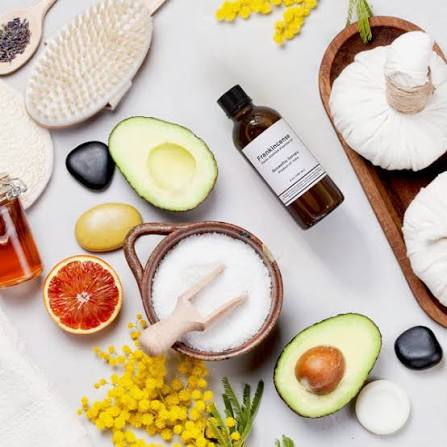
There is no single answer to which essential oil smells best. Some people prefer soft floral aromas, while others want something crisp, citrusy, earthy, or woody.
The easiest way to find a scent you actually enjoy is to start with the fragrance profile. Once you know whether you prefer fresh, sweet, floral, or deeper aromas, choosing individual oils becomes much easier.
Best Smelling Essential Oils: 8 Scents to Consider
These essential oils cover a range of fragrance profiles, so there is something for different preferences. Think of the list as a starting point rather than a strict ranking.
Lavender
Lavender has a soft floral scent with herbal and slightly earthy notes. It is one of the easiest essential oils to enjoy on its own because the aroma is noticeable without being particularly sharp. It also blends well with citrus, mint, and woody oils, making it a useful choice if you want to experiment with combinations.
Peppermint
Peppermint has a cool, crisp, minty aroma that is much sharper than floral oils. It works well for people who prefer fresh scents that immediately fill a room. Because the aroma can be intense, start with a small amount when diffusing it. Peppermint can also pair nicely with softer citrus or herbal scents.
Sweet Orange
Sweet orange has a bright, juicy citrus aroma with a naturally sweet character. It is a good choice if you want something cheerful and fresh without the sharper quality of some other citrus oils. It can be used on its own or combined with floral and woody oils for a more rounded scent.
Eucalyptus
Eucalyptus has a clean, fresh aroma with a distinctly sharp, cooling quality. Its scent is often associated with spas, steam rooms, and other spaces where a crisp fragrance is welcome. It can be quite strong on its own, so pairing it with a softer oil can create a more balanced aroma.
Ylang Ylang
For individuals who favor striking floral fragrances, ylang ylang offers a sweet, rich aroma that feels more pronounced and substantial than lavender. Due to its powerful scent profile, using just a small quantity is highly effective for diffusion or blending purposes.
Frankincense
Frankincense has a warm, resinous aroma with subtle woody notes. Compared with citrus and mint oils, it has a deeper and more subdued fragrance. It works well for people who prefer earthy scents and can be blended with floral or citrus oils to soften its heavier character.
Cedarwood
Cedarwood has a dry, warm, woody aroma with an earthy quality. It is a natural choice for anyone who prefers forest-like scents over sweet or floral fragrances. Cedarwood also works well as a base note in blends, helping lighter citrus or floral aromas feel more grounded.
Bergamot
Bergamot combines a bright citrus character with softer floral notes. Its aroma sits somewhere between a sharp citrus oil and a richer floral fragrance. It is a useful choice when you want something fresh without the intensity of peppermint or the sweetness of orange.
How to Choose the Best Smelling Essential Oils for You
Your preferred scent family is a good place to start. If you like fresh aromas, peppermint, eucalyptus, and citrus oils are worth exploring. Floral fans may prefer lavender, while people who enjoy deeper scents may gravitate toward frankincense or cedarwood.
You can also think about where you plan to use the oil. A strong mint or eucalyptus scent may suit a larger, well-ventilated space, while softer floral or citrus aromas can work well in smaller rooms.
If you are still comparing different fragrance profiles, we recommend browsing Wholesale Botanics’ essential oil collection. It will make it easier for you to see the range of scents available before choosing a favorite.
How to Make Essential Oil Scents Last Longer
Proper storage can help preserve an oil’s aroma. Keep bottles tightly closed and away from excessive heat and direct sunlight.
When blending oils, combining different fragrance types can also create a more balanced scent. Lighter citrus and herbal aromas tend to make an immediate impression, while deeper woody or resinous scents can remain noticeable longer.
Start with small amounts when experimenting. It is much easier to add another drop than to rescue a blend that has become overpowering.
Best Smelling Essential Oils: Find Your Scent Profile
Finding a favorite essential oil often takes a little experimentation. Try one scent at a time before combining oils, especially if you are still figuring out what works for you.
Pay attention to how the aroma develops after several minutes, since some fragrances can feel very different once they have been diffusing for a while. Once you find a scent you genuinely enjoy, you can adjust the amount or experiment with complementary oils.