Inspecting the inside of a narrow tube, compact mechanical component, or enclosed cavity can be difficult when the area cannot be viewed directly. Taking equipment apart simply to investigate a suspected problem may require considerable time and labor. Modern visual inspection technology provides another option by allowing technicians to look inside confined areas without extensive disassembly.
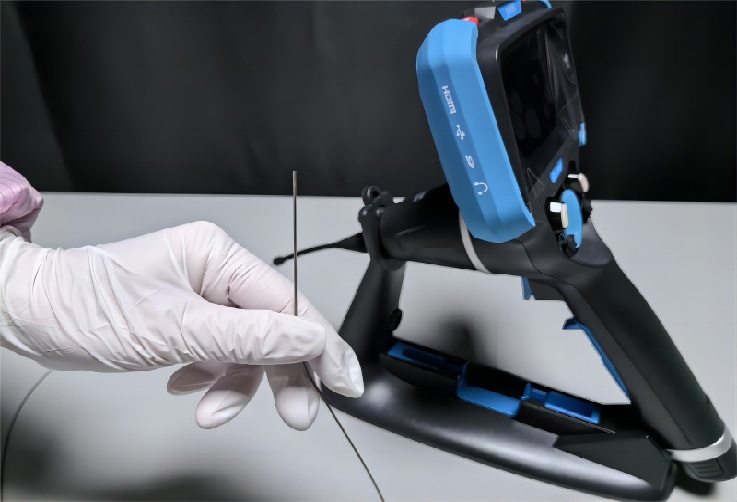
The smallest borescope technology is particularly useful when standard inspection cameras are simply too large for the available opening. With extremely narrow probes and specialized optical systems, these instruments can provide visual access to spaces that would otherwise remain hidden.
Why Probe Size Matters In Visual Inspection?
Borescopes are designed to provide a view inside equipment, components, and cavities that are difficult to examine from the outside. However, not every inspection point offers enough room for a conventional probe.
A very small access hole may be found in precision components, miniature assemblies, narrow tubing, cast parts, or complex machinery. Trying to use an oversized inspection instrument may be ineffective and could potentially interfere with delicate components.
Small diameter borescopes address this challenge. Their compact probes can enter narrow passages while allowing the operator to examine internal surfaces. This makes probe diameter an important consideration when choosing inspection equipment for applications where physical access is severely restricted.
Fiberscope Technology For Narrow Areas
Fiberscopes are particularly valuable for applications involving confined or difficult access areas. Instead of relying on a large camera positioned at the tip, a fiberscope uses fiber optic technology to transmit an image from the inspection area to the viewing system.
One advantage is the ability to manufacture probes with exceptionally small diameters. Some microfiberscopes are designed with diameters well below one millimeter, opening possibilities for inspections that would be impossible with many conventional visual inspection devices.
Flexibility can also be useful. Depending on the instrument design, the probe may be able to navigate passages where a straight line of sight is unavailable. This combination of small size and visual capability makes fiberscope technology suitable for highly specialized inspection work.
Supporting Non-Destructive Inspection
One of the greatest advantages of small borescopes is their role in non-destructive inspection. Traditionally, reaching an internal component could mean removing panels, disconnecting parts, or dismantling an assembly.
A sufficiently small probe can sometimes be inserted through an existing access point instead. Technicians can then look for cracks, corrosion, contamination, wear, foreign material, surface irregularities, or other visible conditions while leaving much of the equipment intact.
Reducing unnecessary disassembly can make inspections more efficient. It may also reduce the possibility of introducing problems during dismantling and reassembly, particularly when dealing with complicated or sensitive equipment.
Applications Across Technical Industries
Small diameter inspection technology can support a wide range of industries. Aerospace professionals may need to inspect confined areas inside components where access is extremely limited. Manufacturing teams can use visual inspection equipment when checking internal surfaces or evaluating precision parts during quality control processes.
Automotive and mechanical applications can also involve narrow passages, internal engine areas, and enclosed assemblies. Similar technology can be valuable for turbines, specialized tubing, research equipment, and other systems where direct visual access is difficult.
The usefulness of the technology ultimately comes from its ability to bring the technician’s view closer to the inspection point without requiring enough space for the technician to physically access it.
Selecting The Appropriate Borescope
Choosing the smallest available probe is not automatically the best solution for every inspection. The instrument should match the actual requirements of the job.
Probe diameter is important, but technicians should also consider working length, viewing direction, flexibility, illumination, image quality, field of view, and the characteristics of the inspection environment. A probe needs to be narrow enough to enter the required space while still providing useful visual information.
Durability should also be considered. Extremely small inspection instruments may be used around delicate or complex surfaces, making careful handling and proper operating procedures essential.
Improving Inspection Efficiency
Visual inspection is most useful when technicians can obtain meaningful information quickly and with minimal disruption. The smallest borescope options can expand the range of areas that can be inspected, particularly when access openings are measured in only a few millimeters or less.
Instead of automatically dismantling a system, an inspector may first perform a visual examination through a suitable opening. The information gathered can help determine whether further maintenance, repair, cleaning, or disassembly is actually necessary.
This approach can support better maintenance planning while giving teams valuable visual evidence before committing resources to more extensive work.
A Smaller Tool For Bigger Inspection Challenges
Modern machinery and precision components continue to become more compact and complex. Inspection technology must be capable of reaching the increasingly confined spaces found within these systems.
Small-diameter borescope and fiberscope technology provides an effective way to meet that challenge. By combining miniature probes with specialized optics and illumination, these instruments allow technicians to explore areas that once required extensive disassembly or could not be inspected visually at all.
For industries where accessibility, precision, and equipment integrity matter, the smallest borescope technology demonstrates that an inspection tool does not need to be large to provide valuable insight.