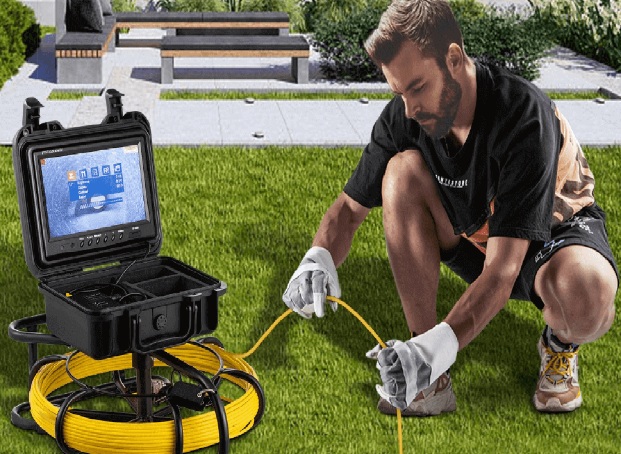
Plumbing problems are often difficult to diagnose because much of a home’s drainage system is hidden behind walls, beneath floors, or underground. Although a slow drain may appear to be a small annoyance, the underlying issue may be caused by debris buildup, broken pipes, invasive roots, or another impediment. Sewer inspection cameras give homeowners an opportunity to see what is happening inside certain pipes without immediately relying on invasive investigation.
For people considering purchasing their own inspection equipment, a common question is what is the best sewer camera for a homeowner? There is no single answer that works for every property. The right choice depends on pipe dimensions, inspection distance, camera visibility, cable construction, recording requirements, and how frequently the equipment is likely to be used.
Understand What A Sewer Inspection Camera Does
A sewer inspection camera typically consists of a small camera head attached to a flexible push cable. The camera is guided through a pipe while transmitting images to a monitor. This allows the operator to examine areas that would otherwise be difficult or impossible to see.
For homeowners, this technology can be useful when investigating recurring drainage issues, checking accessible sewer lines, or examining pipes before deciding whether professional repairs may be necessary. Being able to visually inspect a line can provide considerably more information than simply knowing that water is draining slowly.
However, a camera is primarily an inspection tool. It identifies visible conditions but does not automatically solve the problem it discovers.
Consider The Pipes You Plan To Inspect
Before purchasing a camera, think about where it will actually be used. Residential plumbing systems contain pipes of different sizes, configurations, and lengths. Equipment suitable for inspecting a relatively wide sewer line might not work effectively in a smaller or sharply curved pipe.
Camera head diameter is therefore an important consideration. A compact head can provide greater flexibility in certain residential applications, while larger camera assemblies may be better suited to bigger lines.
The length of the push cable also matters. Buying an extremely long cable may be unnecessary when inspections will only cover short residential runs. On the other hand, insufficient cable length can prevent the camera from reaching the suspected problem.
Look Closely At Image Quality And Lighting
Since visibility is a sewer camera’s primary function, image quality needs to be carefully considered. A clear display can make it easier to distinguish between ordinary buildup and potentially significant pipe damage.
Lighting is equally important because sewer and drain lines naturally provide no usable ambient light. Camera heads generally incorporate LED lighting to illuminate the surrounding pipe. Adjustable lighting can be particularly useful because conditions vary as the camera travels through a line.
A good display should also be easy to view while working around plumbing access points. Screen size, brightness, and general usability can affect the overall inspection experience.
Evaluate The Push Cable
The push cable has to perform two competing jobs. It needs enough rigidity to move the camera through a pipe while remaining flexible enough to navigate bends.
Homeowners should consider both cable construction and storage. A well-organized reel can make the system easier to transport, deploy, and put away after an inspection. An inspection that should be rather simple can become needlessly difficult due to poor cable management.
Durability is another consideration, especially if the camera will be used repeatedly. Drain environments can expose equipment to moisture, dirt, and demanding working conditions.
Think About Recording Capabilities
Some homeowners only need to watch a live inspection, while others may benefit from recording video or saving images. Recording capabilities can be useful when a problem needs to be reviewed later or shown to a plumber.
For example, footage of a suspicious section of pipe may help provide context when discussing possible next steps with a professional. Buyers interested in this feature should check how footage is stored and how easily files can be transferred or reviewed.
Understand The Value Of A Locator
Finding a problem visually is helpful, but determining where that problem sits beneath the property can be equally important. Some sewer camera systems include or support locating technology that can help identify the camera head’s position from above ground.
This capability can become valuable when an inspection reveals damage or an obstruction that may require targeted access. Rather than relying entirely on estimates about where the camera has traveled, locating equipment can provide additional information for planning further investigation.
Consider Frequency Of Use
Price should be considered in relation to expected use rather than viewed in isolation. A homeowner who expects to perform occasional basic inspections may have very different requirements from someone managing several properties or regularly carrying out maintenance work.
An inexpensive camera with limited capabilities could be adequate for simple tasks. Conversely, investing in better construction, a longer cable, recording functionality, or locating features may make sense when the equipment will see frequent use.
The goal should be to purchase capabilities that have a realistic purpose rather than simply selecting the system with the longest feature list.
Know When Professional Help Is Appropriate
Owning a sewer inspection camera does not eliminate the need for professional plumbing expertise. Interpreting what appears on screen can sometimes be challenging. Deposits, joints, shadows, roots, cracks, and other conditions may not always be obvious to an inexperienced viewer.
There are also situations where pushing equipment farther into a damaged or heavily obstructed pipe could be unwise. If an inspection suggests serious structural damage, repeated backups, major root intrusion, or another substantial issue, professional evaluation may be the safer next step.
Making A Practical Buying Decision
A sewer camera can be a useful addition to a homeowner’s maintenance equipment when selected for realistic residential needs. Instead of focusing solely on price or technical specifications, consider the complete inspection experience.
Camera head size, cable length and flexibility, lighting, display quality, recording options, locating capabilities, and overall durability all deserve attention. Matching these features to the home’s plumbing system and expected frequency of use can help homeowners choose equipment that provides genuinely useful information when drainage problems appear.
Ultimately, a sewer inspection camera is most valuable when it reduces uncertainty. The ability to look inside an accessible line can help homeowners better understand a problem and make a more informed decision about whether simple maintenance or professional plumbing assistance should come next.