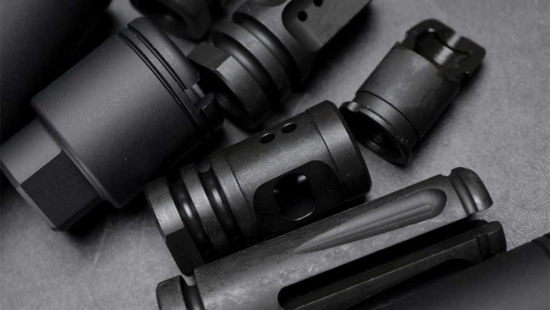
Every time a rifle fires, hot gas leaves the barrel at high speed, and what happens at that moment shapes how the rifle feels and how it looks. A muzzle device is a small component threaded onto the end of the barrel that changes how those gases are released. For AR-15 owners, choosing the right one can mean flatter shooting, faster follow-up shots, and less blinding fireball at dusk. This guide explains how muzzle devices work, how they influence recoil and flash signature, and what to consider when comparing top-rated AR-15 muzzle devices.
What a Muzzle Device Actually Does
When a bullet exits the barrel, it is followed by a burst of high-pressure gas and unburned powder. Without any device, that gas expands in all directions almost immediately. A muzzle device interrupts and redirects it. Depending on its design, it can push gas sideways, upward, or forward, and it can slow the gas down or spread it out. The three jobs a muzzle device typically performs are:
- Redirecting gas to counter recoil or muzzle rise
- Dispersing or burning off gas to reduce visible flash
- Protecting the barrel crown and serving as a mounting point for other accessories
No single design does all three perfectly. Each one trades something for something else, which is why understanding the physics helps you choose well.
Understanding Recoil in an AR-15
Recoil comes in two main forms. The first is rearward push, which is the straight-back impulse that follows Newton’s third law. The second is muzzle rise, the upward rotation of the barrel caused by the rifle’s bore sitting above the line of your shoulder. The AR-15 platform is known for mild recoil in 5.56 NATO, but even a light impulse matters when you are shooting fast strings, competing, or training a new shooter. Muzzle devices influence recoil in two ways:
- They redirect gas to create forces that oppose the rearward push or the upward rotation
- They change how long and how forcefully the gas acts on the rifle after the bullet leaves
The gas leaving the barrel is a meaningful portion of the total recoil energy, so controlling it has a noticeable effect.
Muzzle Brakes and How They Tame Recoil
A muzzle brake uses ports or baffles to redirect gas outward and sometimes slightly rearward. When gas strikes the baffles, it pushes the device forward, which offsets part of the recoil impulse. Well-designed brakes can cut perceived recoil significantly, especially in larger calibers. In 5.56, the benefit is smaller in absolute terms, but it is still real and can help with sight tracking between shots. The tradeoffs are worth knowing:
- Increased blast and concussion directed toward the sides, which can be unpleasant for the shooter and anyone nearby
- Louder perceived report for the shooter
- Greater dust and debris kick-up when shooting from prone
- Often more visible flash than a dedicated flash hider
Brakes are popular in competition and on the range, where reducing recoil matters more than managing signature. For shooting next to other people, such as at a covered bench or in a shooting bay, the sideways blast can be a real consideration.
Compensators and Muzzle Rise Control
A compensator is closely related to a brake, but it focuses on directing gas upward to counter muzzle rise. Most of the gas escapes through ports on the top of the device, pushing the muzzle down as the rifle fires. This helps the sights settle back on target faster, which is what shooters mean when they say a rifle “stays flat.” Many products are labeled “brake” or “compensator” interchangeably, so it helps to look at the port layout. Top-heavy porting generally means more muzzle rise control, while symmetrical side porting generally means more rearward recoil reduction. Compensators are a favorite for three-gun, practical rifle matches, and home defense setups where fast, accurate follow-up shots matter. Like brakes, they tend to increase the blast felt by the shooter and bystanders and may not do much to hide flash.
Flash Hiders and Flash Signature
Muzzle flash is the bright burst of light created when burning gases and unburned powder meet oxygen at the muzzle. It is most noticeable in low light, where it can temporarily impair your night vision and reveal your position. A flash hider reduces this effect by breaking up and cooling the gas as it exits. The classic design uses prongs or slots, often called a birdcage or three-prong, that let gas escape radially while limiting the bright central fireball. Key points about flash hiders include:
- They primarily reduce the visible size and brightness of the flash rather than eliminating it
- They generally offer only a modest recoil benefit compared with a brake or compensator
- Their effectiveness depends heavily on ammunition, barrel length, and powder type
- Shorter barrels produce more flash because more powder is still burning at the muzzle
Flash signature also depends on the load you shoot. Some powders burn cleaner and produce far less flash than others, which is why two shooters with the same device can see very different results. If low-light use is your priority, a good flash hider paired with a clean-burning load will outperform almost any other combination.
Hybrid and Linear Compensator Designs
Manufacturers have developed hybrids that try to balance recoil control and flash reduction. Some use a stepped or multi-chamber design that vents gas in a controlled way. Others use a linear compensator, which directs gas forward rather than to the sides, slowing it in a series of chambers. This approach can offer a pleasant blend of benefits:
- Moderate recoil and muzzle rise reduction
- Less side blast than a traditional brake
- Reduced flash compared with an open brake
- A shape that suits a wide variety of uses
Hybrids rarely beat a purpose-built device at its specialty, but they are an excellent choice for a general-purpose rifle. Many of the top-rated AR-15 muzzle devices fall into this category because most owners want a bit of everything rather than extreme performance in one area.
How Barrel Length and Caliber Change the Results
The same muzzle device can behave very differently depending on the rifle it is mounted on. A short barrel, such as a 10.5 or 11.5-inch barrel, produces higher muzzle pressure and more flash, and it benefits from a device built to manage both. A standard 16-inch barrel is more forgiving, and a longer 18- or 20-inch barrel produces less flash and a more mellow gas release. Caliber matters as well. Most muzzle devices for the AR-15 are designed around 5.56 NATO and .223 Remington, which share the same standard 1/2×28 thread pattern. Other chamberings, such as .300 Blackout, 6.5 Grendel, or .350 Legend, may use different thread patterns or require devices designed for their pressure and bore size. Always match the device to the caliber and thread pitch, and confirm compatibility before buying.
Choosing Among the Top-Rated AR-15 Muzzle Devices
With so many options on the market, it helps to define what you need before comparing models. Ask yourself how you will use the rifle, who will be shooting next to you, and what conditions you will face. Then use these criteria to compare top-rated AR-15 muzzle devices:
- Primary purpose: recoil reduction, muzzle rise control, flash reduction, or a balance
- Blast direction: how much pressure is vented to the sides and toward the shooter
- Materials and finish: heat-treated steel with a nitride or phosphate finish tends to hold up best
- Weight: heavier devices can change handling and balance, especially on lightweight builds
- Thread pitch and caliber: confirm 1/2×28 for standard 5.56 barrels
- Timing method: crush washers, shims, or peel washers are used to orient ported devices correctly
- Accessory compatibility: some devices accept suppressor mounts or quick-attach adapters
Reading independent reviews, watching side-by-side testing videos, and looking at warranty terms can help you separate marketing from real performance. Good products usually come with clear installation instructions and consistent manufacturing tolerances.
Installation and Safety Considerations
A muzzle device is only as good as its installation. Because it sits at the muzzle, a poorly installed device can affect accuracy or, in the worst case, cause a baffle strike if the bore and device are misaligned. Follow these basic practices:
- Make sure the rifle is unloaded and the chamber is clear before any work begins
- Confirm the thread pitch matches your barrel
- Use the right torque and the correct crush washer or shim for timing
- Check bore alignment with a rod or alignment tool, especially on baffled designs
- Test fire a small number of rounds from a safe position before regular use
If you are not comfortable doing the work yourself, a qualified gunsmith can install and time the device quickly and affordably. It is also worth checking that your device is legal where you live, since some states and localities restrict certain muzzle devices or require specific configurations. Federal, state, and local rules vary, so verify the requirements that apply to you before purchasing.
Frequently Asked Questions
Does a muzzle brake reduce felt recoil on a 5.56 AR-15?
Yes, but the change is modest because 5.56 has a light recoil impulse to begin with. Most shooters notice flatter tracking and quicker sight recovery more than a dramatic drop in felt push.
What is the difference between a flash hider and a muzzle brake?
A flash hider is designed to reduce the visible flash at the muzzle, while a muzzle brake is designed to redirect gas to reduce recoil. Some products attempt to do both, but each usually favors one goal.
Will a muzzle device make my rifle louder?
Ported brakes and compensators often make the blast feel louder and more intense for the shooter and anyone beside them. Flash hiders tend to have less effect on perceived loudness.
Can a flash hider completely eliminate muzzle flash?
No. It reduces the size and brightness of the flash, but some flash will remain, especially with short barrels or ammunition that burns less cleanly.
Do I need to time my muzzle device?
Ported brakes and compensators must be oriented correctly so the ports face the intended direction. Simple flash hiders usually do not need precise timing, though many are still indexed for appearance.
Are muzzle devices interchangeable between calibers?
Not always. Many fit the standard 1/2×28 thread used on 5.56 and .223 barrels, but other calibers may use different threads or bore sizes, so check compatibility first.
Will a muzzle device affect accuracy?
A properly installed, well-made device should not hurt accuracy. Problems usually come from poor alignment, loose installation, or low-quality manufacturing.
Are the top-rated AR-15 muzzle devices worth the higher price?
Often, yes. Better materials, tighter tolerances, and tested designs usually translate into more consistent performance and longer service life.
Are muzzle devices legal everywhere?
Not necessarily. Rules vary by state and locality, so confirm what is allowed in your area before buying or installing one.
Final Thoughts
Muzzle devices are one of the simplest upgrades you can make to an AR-15, and they have a surprisingly large effect on how the rifle feels and looks when it fires. Brakes and compensators help control recoil and muzzle rise, flash hiders protect your night vision and reduce your visible signature, and hybrids offer a balanced middle ground. The best choice depends on your barrel length, your ammunition, and the way you plan to shoot. Take time to define your priorities, compare top-rated AR-15 muzzle devices against your needs, install your choice carefully, and test it on the range. Do that, and you will end up with a rifle that is easier to control, more comfortable to shoot, and better suited to the job you ask of it.