Why Event Signage Deserves More Attention
You can book the perfect venue, secure a dazzling lineup, and curate every last detail of the menu, but if guests cannot find the entrance, locate the registration desk, or understand where to go next, the experience suffers. Signage is the quiet host of every event. It greets people, answers questions before they are asked, and sets the tone from the moment guests arrive.
The problem is that signage is often treated as an afterthought, ordered late and placed hastily. The result is signs that blend into the background, get ignored, or confuse more than they help. This guide walks through how to plan signage that gets noticed, gets read, and genuinely improves your event. Whether you are managing a corporate conference, a wedding, a festival, or a product launch, these principles will help you create signage that works.
Start With the Guest Journey
The most effective signage plans begin with a simple exercise: walk through your event as a guest. Picture the entire path, from the parking lot or drop-off zone to the final goodbye. At each step, ask what a first-time attendee would need to know.
Map out these key moments:
- Arrival: Where do guests park, drop off, or enter the property?
- Entry: How do they know they have reached the right place?
- Check-in: Where do they register, pick up badges, or receive tickets?
- Orientation: How do they find restrooms, coat check, food, and main spaces?
- Activities: How do they locate sessions, booths, stages, or experiences?
- Departure: How do they find exits, shuttles, and rideshare pickup?
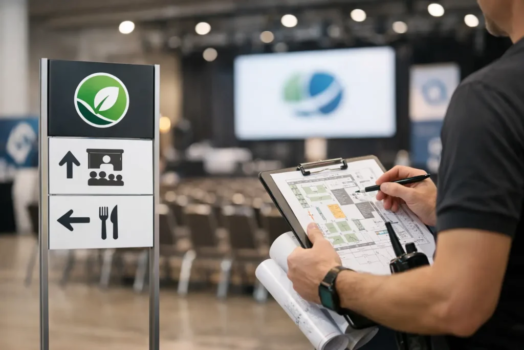
Every point where guests might hesitate is a place where signage can help. Marking those decision points on a floor plan gives you a clear blueprint for what to order and where to place it.
Know the Main Types of Event Signs
Different goals call for different formats. A strong signage plan usually combines several types:
- Directional signs: Arrows and short messages that guide guests through the venue.
- Identification signs: Mark specific rooms, stages, booths, or stations.
- Welcome signs: Set the tone at the entrance with your event name, theme, or message.
- Informational signs: Share schedules, rules, menus, maps, or Wi-Fi details.
- Banners and backdrops: Create photo opportunities and brand presence.
- Sponsor signage: Recognize partners and deliver value to those who support the event.
- Floor graphics: Direct foot traffic, mark queue lines, or reinforce branding.
- Window and door graphics: Announce the event to passersby and welcome arrivals.
- Digital displays: Offer live schedules, social feeds, or changing messages.
- Hanging and overhead signs: Stay visible above crowds in busy spaces.
Choosing the right mix keeps guests informed without cluttering the space.
Design Rules for Signs People Actually Read
Even a perfectly placed sign fails if no one can read it. Good design makes information easy to absorb in seconds. Keep these principles in mind:
- Use fewer words. Guests are moving, often in groups, and have little time. Short messages win.
- Choose high contrast. Dark text on a light background, or the reverse, improves legibility, especially in dim venues.
- Pick readable fonts. Clean, bold typefaces work best at a distance. Save decorative styles for headlines or small accents.
- Size for distance. The farther away the viewer, the larger the text must be. Test by standing where guests will stand.
- Use arrows and icons. Simple symbols cross language barriers and speed comprehension.
- Keep branding consistent. Repeating colors, fonts, and logos builds a cohesive look.
- Limit clutter. White space helps the key message stand out.
A helpful test is the three-second rule. If a guest cannot understand your sign in about three seconds, simplify it.
Placement Makes the Difference
Great design can be wasted by poor placement. Where you put a sign often matters more than how it looks. Follow these placement guidelines:
- Place signs at natural decision points, such as intersections, doorways, and stairwells.
- Mount signs at eye level where possible, and use overhead signs for crowded areas.
- Avoid blocking sightlines, exits, or accessible routes.
- Repeat key directions at intervals so guests are never left wondering if they are on the right path.
- Account for lighting, glare, and shadows at the time of day your event will happen.
- Keep signs away from visual distractions like busy decor or large screens.
- Plan for crowds. A sign that is visible in an empty room may disappear once guests fill the space.
Walk the venue before the event with your signage plan in hand, and adjust placement based on real sightlines.
Match Signage to Your Event Type
Different events have different needs. Tailor your approach accordingly.
Corporate events and conferences:
- Clear registration and badge pickup signage
- Session and room identification
- Sponsor recognition and branded backdrops
- Digital schedules and updates
Weddings and private celebrations:
- Elegant welcome signs and seating charts
- Directional signs for ceremony and reception areas
- Personalized bar menus and custom details
- Photo backdrops that reflect the couple’s style
Festivals and outdoor events:
- Large, durable, weather-resistant signs
- Stage and vendor identification
- Safety and emergency information
- Parking, shuttle, and entrance wayfinding
Trade shows and expos:
- Booth branding and hanging banners
- Floor graphics that draw visitors in
- Directory maps and category signs
Fundraisers and galas:
- Silent auction displays and bid information
- Table numbers and sponsor acknowledgments
- Refined, upscale finishes
Understanding your audience and setting helps you choose the right materials, scale, and tone.
Materials and Formats to Consider
The materials you choose affect appearance, durability, and cost. Common options include:
- Foam board and rigid panels: Lightweight and affordable, ideal for indoor use.
- Acrylic: Polished and modern, great for upscale events.
- Vinyl banners: Durable and versatile, suitable for indoor and outdoor placement.
- Fabric signs and backdrops: Soft in appearance and easy to transport and store.
- Metal and aluminum signs: Sturdy and weather-resistant for longer-term or outdoor use.
- Wood signs: Warm and rustic, popular for weddings and boutique events.
- Standees and stands: Freestanding options that are easy to reposition.
- LED and digital screens: Dynamic and attention-grabbing, perfect for changing content.
Think about whether you need reusable signage for recurring events or one-time pieces. Investing in higher quality materials can make sense if you plan to reuse your signs.
Plan for Accessibility and Safety
Inclusive signage ensures every guest can navigate your event comfortably. Consider the following:
- Provide clear signage for accessible entrances, restrooms, and seating.
- Use high-contrast colors and large text for visibility.
- Ensure signs do not obstruct pathways or create tripping hazards.
- Mark emergency exits and safety information clearly.
- Consider multilingual signs if your audience is diverse.
- Keep floor graphics slip-resistant and safely adhered.
Working with the venue to understand fire codes and capacity rules helps keep your signage compliant and your guests safe.
Build a Realistic Timeline and Budget
Signage often takes longer than planners expect. Design, proofing, production, and delivery all require time, and last-minute changes can cause delays. As a general rule, begin planning signage well in advance, then build in cushions for revisions and shipping.
A simple timeline might look like this:
- Eight to ten weeks out: Define your signage needs and gather brand assets.
- Six to eight weeks out: Finalize designs and request quotes.
- Four to six weeks out: Approve proofs and place orders.
- Two weeks out: Receive and inspect signage.
- Event week: Install, adjust, and prepare backups.
When budgeting, account for design, printing or fabrication, delivery, installation, storage, and possible rush fees. Ask for itemized quotes so you can compare options accurately. Setting aside a small contingency fund helps cover surprises, like a misspelled name or a last-minute sponsor addition.
Choosing the Right Partner
The right vendor can save you time, stress, and money. If you are searching for an event signage company in Los Angeles, evaluate potential partners carefully. Look for the following qualities:
- Experience with events: Familiarity with tight deadlines, load-in schedules, and venue rules.
- Design support: The ability to refine your ideas and ensure print-ready files.
- Range of products: Banners, rigid signs, backdrops, floor graphics, and more under one roof.
- Quality materials: Durable, vibrant, and suited to your setting.
- Installation services: Help with setup and teardown when needed.
- Fast turnaround: Flexibility for rush orders and last-minute updates.
- Clear communication: Responsive service and transparent pricing.
- Local knowledge: Understanding of area venues, permit needs, and logistics.
Ask to see samples or past work, and read reviews from other event professionals.
Proofing, Installation, and Backup Plans
Mistakes on signage are surprisingly common and highly visible. Build a proofing process to catch errors before they reach print:
- Check spelling, names, dates, times, and addresses.
- Confirm logo placement, colors, and sizes.
- Have a second person review every proof.
- Verify that file resolution is high enough for large formats.
On event day, assign someone to oversee installation and walk the space from a guest’s perspective. Bring a toolkit with tape, zip ties, clips, scissors, and extra hardware. Keep spare printouts or backup signs for unexpected needs, such as a changed room or a late schedule shift. Having a plan B keeps small problems from becoming big ones.
Common Signage Mistakes to Avoid
Learn from the errors that trip up many planners:
- Ordering too late and paying rush fees
- Using too much text or tiny fonts
- Ignoring venue rules about mounting methods
- Forgetting to account for weather at outdoor events
- Placing signs where crowds will block them
- Skipping proofing and printing errors
- Neglecting directional signage in favor of decorative pieces
- Failing to plan for teardown and storage
A little foresight helps you avoid these headaches.
Frequently Asked Questions
How far in advance should I order event signage?
Aim for at least four to six weeks before your event. Complex or custom pieces may require more time.
What types of signs are most essential?
Entrance, registration, directional, and restroom signs are typically the highest priority, followed by schedules and sponsor displays.
How big should my signs be?
Size depends on viewing distance. Larger text and graphics are needed for signs viewed from afar, so test visibility on site.
Can I reuse event signs?
Yes, if they are made from durable materials and designed without date-specific details. Modular designs make reuse easier.
What is the best material for outdoor events?
Weather-resistant options like vinyl banners, aluminum, and coroplast work well. Ask your provider about UV and water resistance.
How do I make sure my signs get noticed?
Use bold contrast, simple messages, strategic placement, and consistent branding. Position signs at decision points and eye level.
Do I need permission to hang signs at a venue?
Often, yes. Check with the venue about mounting rules, approved materials, and any permit requirements.
What should I look for in an event signage company in Los Angeles?
Seek event experience, quality materials, design support, fast turnaround, and clear communication. Reviewing past projects helps confirm fit.
Final Thoughts: Signage That Guides, Delights, and Gets Remembered
Great event signage is rarely noticed for the wrong reasons. It simply makes everything feel smoother, from the first arrival to the final farewell. By mapping the guest journey, designing for quick reading, placing signs with intention, and planning your timeline carefully, you can create an experience that feels polished and welcoming.
Choosing the right partner makes the process even easier. Working with an experienced event signage company in Los Angeles gives you access to expert design guidance, quality production, and reliable support when schedules get tight. Invest the time up front, and your signs will do exactly what they should: guide your guests, reinforce your brand, and leave a lasting impression long after the event ends.