There is an old idea, found across many traditions, that how we steward the things entrusted to us reveals something essential about character. In an age of disposability — where objects are designed to be replaced rather than maintained — it is easy to forget this. But there is a different way of thinking about ownership: one that treats the things we possess not as temporary conveniences but as small, ongoing reflections of who we actually are.
Cars are one of the most honest mirrors of this principle. The way a person approaches their vehicle — whether they treat it as a tool to be worn out or as something worth caring for and refining — says quite a bit about their relationship to quality and effort. For Tesla owners, this tension is especially visible. The car itself is already a deliberate choice. Taking that deliberateness further means thinking carefully about what you add to it — and why.
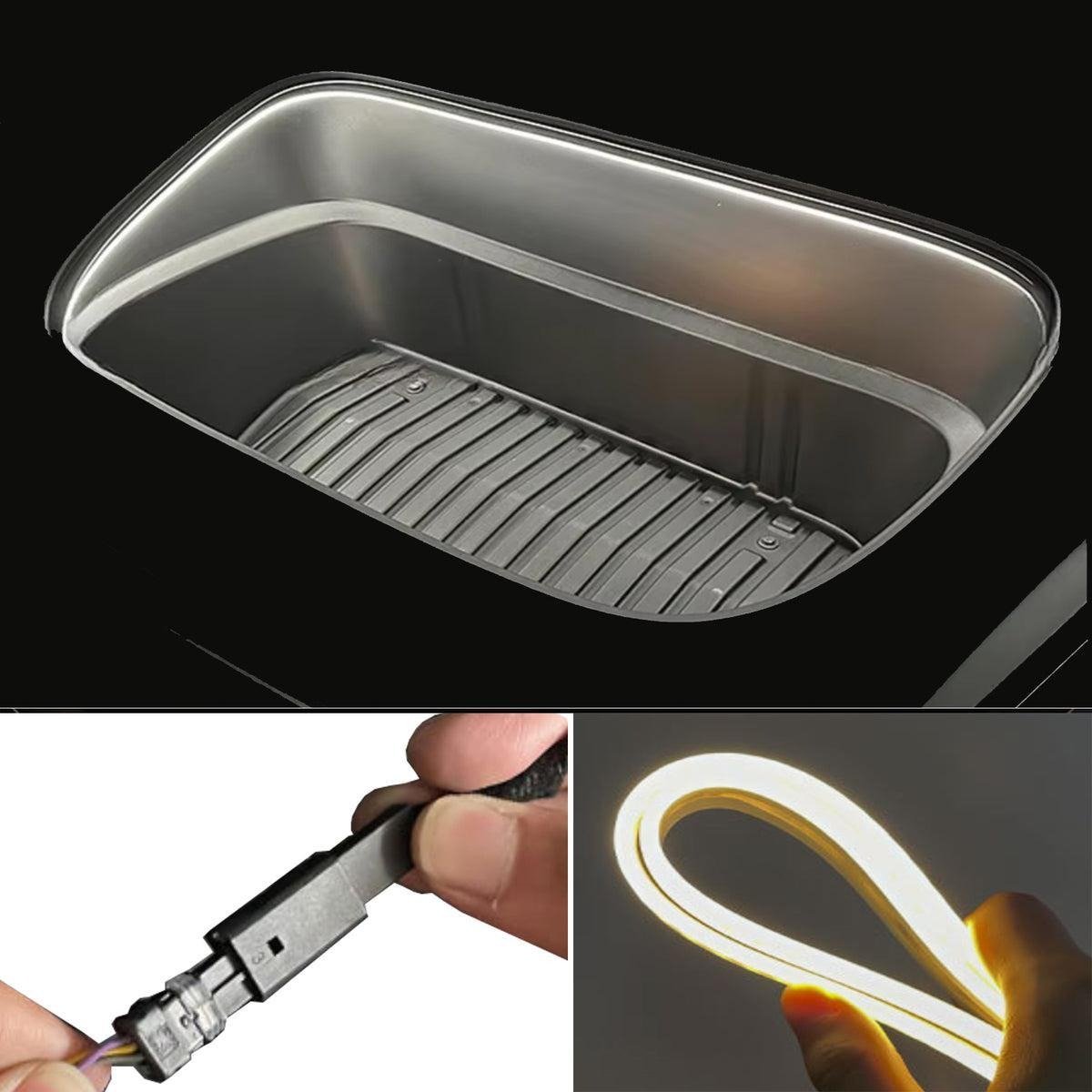
The Tesla gear collection from GRUNDIG is built for exactly that kind of owner. A physical control hub that lets you adjust temperature and fan speed without looking away from the road. A soft-close frunk lock that makes the car feel like it was designed with the attention it deserves. An LED ambient strip that responds to music and mood. These are small things, but considered ones — the product of someone asking whether the experience could be better, and then doing something about it.
That willingness to look closely and refine rather than simply accept is not accidental. It reflects a brand philosophy that goes back to 1945, when Max Grundig founded the company in Nuremberg, Germany, in the aftermath of the Second World War. In conditions of reconstruction and scarcity, things built poorly simply did not survive. Grundig grew on the strength of products that worked — first radio receivers, then consumer electronics — becoming one of the most recognized names in European manufacturing through the 1950s and 1960s on a reputation built entirely around precision and durability.
The automotive chapter opened in 1951 with the Autosuper 248, one of Europe’s first purpose-built in-car audio systems. From there the brand expanded steadily: car audio, vehicle lighting, infotainment, and eventually the full-spectrum auto parts catalog that carries that same engineering standard today. For drivers who want to improve their car’s power and efficiency, the Grundig Auto range covers EGR delete kits for diesel platforms, blow-off valves matched to specific boost levels, diagnostics tools, and Tesla-specific accessories — all built to the same baseline expectation that has defined the brand since 1945: it has to work, and it has to last.
That baseline expectation is rarer than it sounds. The accessories market is full of products that look adequate and perform adequately for a short time before revealing the cost of corners cut to hit a lower price point. The difference between those products and something built to a genuine standard becomes visible in use, over time — in the way a mechanism still operates cleanly two years after installation, in the way a housing has not warped from heat cycling, in the way a seal still holds under pressure. Small differences that compound into a large one.
There is something worth saying about the relationship between how we treat our possessions and how we treat everything else. Carelessness tends not to be compartmentalized. The opposite is also true. Taking something seriously enough to maintain it, refine it, and make deliberate choices about what goes into it — this is a form of attention that transfers. It is not really about cars. It is about the habit of caring about the quality of the decisions you make. The car is simply one place where that habit becomes visible.
It is worth being specific about what “caring about quality” actually requires in practice, because the concept is easy to agree with and hard to act on. It does not mean spending more money for its own sake. It means paying attention to the question of what something is actually made of, how it was designed, and whether the people who made it were thinking about the person who would eventually use it — or simply about the cost of production.
In the case of automotive accessories, that distinction shows up in concrete ways. A soft-close lock engineered from PA66-GF30 — a glass-fiber reinforced polyamide rated for extreme temperature stability — behaves differently over three years of daily use than one housed in standard ABS plastic that softens above 80°C. A silicone-encased LED strip that absorbs vibration and resists moisture infiltration outlasts a rigid PCB alternative by a significant margin. These are not marketing claims. They are material realities, and they are the kind of detail that a company with eighty years of engineering discipline tends to get right not because it is trying to impress anyone, but because it has been building things seriously long enough to know what matters.
That is what a brand that started in 1945 and is still producing relevant, vehicle-specific products in 2026 actually looks like from the inside. Not flashy. Just thorough.