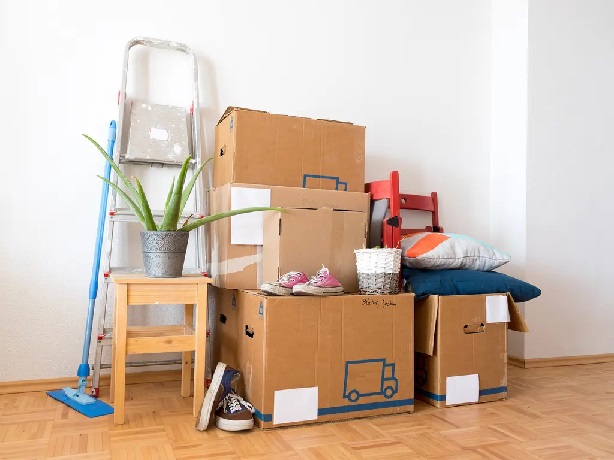
There is a short stage during a move when the home is still mostly empty but the cleaning priorities are already clear. Large furniture has not arrived, closets are unfilled, and the floors have not yet been divided into permanent walking paths and covered areas.
The useful question is not simply, “What can I clean while the house is empty?”
A better question is, “Which tasks will become inconvenient, disruptive, or impossible to handle properly after furniture delivery?”
That distinction keeps the move-in clean focused. Some surfaces need attention before beds, sofas, dressers, shelving units, and dining furniture arrive. Others can wait without creating extra work.
Treat furniture delivery as a deadline for the jobs that depend on open access.
Mark the Future Furniture Footprints First
Before cleaning, identify where the largest pieces will probably sit.
You do not need a finished decorating plan. Approximate locations are enough.
Mark the likely positions of:
- Beds
- Sofas
- Dressers
- Bookcases
- Desks
- Dining furniture
- Entertainment units
Those footprints deserve closer inspection because the surfaces underneath and behind them may become inconvenient to reach once the room is furnished.
If a bed will cover most of one wall, inspect that wall, the floor edge, and the baseboard now.
If a large bookcase will fill a corner, clean the corner before the unit arrives.
This gives the cleaning plan a reasoned order instead of treating every empty wall equally.
Decide Which Rooms Must Be Finished First
Furniture rarely arrives in every room at exactly the same time.
A bedroom set may be delivered before the living-room sofa. Dining furniture may arrive days later.
Use that sequence.
Finish the rooms that will lose access first.
If Puget Sound Cleaners is part of the move-in cleaning plan, the delivery schedule can help determine which rooms should be ready first instead of trying to treat the entire empty property as one undifferentiated job.
The priority is not the room that looks dirtiest. It is the room that will become harder to clean soonest.
Inspect the Floors While You Can See Them Edge to Edge
An empty floor tells you more than a furnished one.
Look for:
- Fine grit
- Dust lines
- Hair
- Adhesive residue
- Old furniture outlines
- Carpet compression
- Scuffs
- Marks near walls
Vacuum carpet thoroughly, including the perimeter.
On hard flooring, remove loose debris before using the cleaning method recommended for the material.
Use the open floor to identify condition as well as dirt.
A darker area beneath former furniture may be residue, but it may also be fading, wear, or finish variation.
If ordinary cleaning does not change it, do not keep escalating the treatment without understanding what the mark is.
The empty stage is useful because the whole surface can be compared at once.
Clean the Baseboards That Will Actually Be Blocked
Furniture can hide long stretches of trim, but there is no need to turn that fact into an automatic whole-house baseboard project.
Focus on the sections that will soon sit behind large pieces.
Remove loose dust and hair from the top edge and floor line.
If marks remain, use a method suitable for the finish.
Corners behind future beds, sofas, and cabinets deserve particular attention because they are likely to become low-access areas.
This makes baseboard cleaning targeted rather than repetitive.
Accessible trim that will remain open can stay on the normal household cleaning schedule.
Check Walls for Dirt, Damage, and Furniture Marks
Empty walls often reveal marks that were hidden during the previous layout.
Look behind the places where headboards, sofas, shelving, or desks used to sit.
Start by removing dry dust.
Then identify what remains.
A light scuff may respond to gentle cleaning.
A chipped area, dent, nail hole, faded patch, or damaged paint finish belongs in a different category.
Avoid treating every wall mark as stubborn dirt.
Flat and matte paint can change sheen if scrubbed too aggressively, so surface-safe methods matter.
This is one reason move-in cleaning and minor repair work should remain separate.
Handle Built-In Storage Before Unpacking Begins
Built-in cabinets, drawers, shelving, and wardrobes create a different deadline from furniture delivery.
Their deadline is unpacking.
Once dishes, linens, clothing, books, or household supplies fill them, cleaning the interior becomes a two-step job.
Work through these areas while they are empty.
Vacuum loose debris.
Inspect shelf edges and corners.
Clean surfaces according to their material.
Allow damp-cleaned storage to dry before anything is placed inside.
There is no need to dismantle drawer hardware or shelf systems simply to reach small hidden areas.
The goal is to prepare normal-use surfaces before they are filled.
Give Closets a Full Pre-Unpacking Check
Closets often fill quickly during the first day of a move.
Inspect them from top to bottom before clothing and boxes arrive.
Check:
- Upper shelves
- Hanging rods
- Built-in organizers
- Baseboards
- Wall corners
- Door trim
- Closet floors
Fine fibers and dust can remain on rods and shelves even when the space looks empty.
Vacuum the floor before shoes or storage containers are placed there.
If shelves need damp cleaning, allow them to dry first.
A closet only needs this empty-space treatment once. After it is filled, it can move onto a normal maintenance schedule.
Use Window Access Before the Layout Changes
Furniture placement can change how easily windows are reached.
A bed may sit beneath one.
A desk can occupy the sill area.
A sofa may make the lower frame difficult to access.
Before that happens, inspect the parts of the window that are currently easy to reach.
Dust the sill and frame.
Vacuum loose debris from accessible tracks.
Clean suitable blinds or window coverings if they are already installed.
Avoid flooding tracks with water.
This is a good example of a task that may be simple before delivery and awkward afterward.
Check Vents Against the Planned Furniture Layout
Floor and wall vents deserve attention for two separate reasons.
First, accessible exterior dust can be removed before furniture complicates access.
Second, the planned layout should not unintentionally interfere with airflow where the home’s system requires open clearance.
Clean the grille surface using an appropriate method.
Do not insert tools deep into ductwork.
If the intended furniture position sits directly over or against a vent, reconsider the placement according to the home’s heating and cooling requirements.
Cleaning the vent is useful, but keeping it functional matters more.
Make Furniture Delivery the Cutoff for Certain Cleaning Tasks
Some move-in jobs can be postponed without much consequence. Others become much more disruptive after delivery because furniture has to be shifted again just to reach the surface.
That creates a simple deadline.
Before the delivery truck arrives, finish the floors beneath future furniture, blocked baseboards, low wall sections, closet interiors, built-in storage, and other surfaces that depend on open access. Tasks that will remain reachable can stay on the normal cleaning list.
This is also a practical way to think about professional deep cleaning services seattle before a move. The useful scope is not “clean everything because the house is empty.” It is “finish the obstruction-sensitive work before furniture turns those tasks into moving projects.”
That keeps the cleaning tied to the move schedule rather than the appearance of an empty room.
Give Bathrooms a Pre-Use Inspection
Bathrooms usually become active immediately, even before furniture arrives.
Inspect the parts that will matter from the first day:
- Sink and faucet
- Vanity surface
- Toilet exterior
- Shower or tub
- Floor corners
- Accessible cabinet interiors
- Areas around fixtures
Look beneath the vanity where practical.
If there is active moisture, loose hardware, failed caulk, or another maintenance concern, deal with that separately.
The bathroom does not need to be cleaned simply because it is empty. It needs to be ready for immediate daily use.
That makes functionality the priority.
Clean Kitchen Spaces Before Appliances and Storage Close Them Off
The kitchen has several access points that may disappear quickly.
Check cabinet interiors, pantry shelving, toe-kicks, floor edges, and any empty appliance spaces.
If a future refrigerator or freestanding appliance will occupy an open section, clean the floor and wall there before installation.
Do not move connected appliances casually.
Gas, water, electrical connections, venting, and fixed cabinetry can make appliance movement a maintenance issue rather than a cleaning task.
Use the empty kitchen to address accessible surfaces without creating risk.
Prepare the Delivery Route Separately
The path furniture takes through the home has a different purpose from the rooms where it will stay.
Walk from the main entrance to the bedrooms and living spaces.
Remove loose grit, debris, and obvious obstacles from:
- Entry floors
- Hallways
- Stair landings
- Doorways
- Main traffic turns
This is not the final floor cleaning.
It is delivery preparation.
A clear route reduces the chance that movers carry grit into cleaned rooms or have to step around objects while handling large pieces.
Keeping this step separate prevents the entry and hallways from being overcleaned too early.
Save the Final Floor Pass for the Right Moment
The detailed cleaning of shelves, trim, windows, and walls should happen before the final floor work.
Those jobs can release dust downward.
Once the upper and vertical surfaces are finished, complete the main floor cleaning before furniture arrives.
Vacuum carpets carefully.
On hard floors, remove remaining dry debris and use a method appropriate for the material.
Allow the floor to dry before heavy furniture is placed.
This final pass is about establishing a clean baseline under the future layout, not repeatedly cleaning the same floor throughout move-in preparation.
Photograph or Note Problems Before They Become Hidden
An empty home makes surface condition easier to document.
If you notice a scratched floor, damaged baseboard, stained carpet, wall dent, loose transition strip, or other issue, make a note before furniture covers it.
This is particularly useful when the property has just changed occupancy.
Cleaning can reveal defects that were less obvious while dust or belongings were present.
Keeping a record also prevents a damaged area from being mistaken later for something caused during furniture delivery.
The cleaning stage can therefore double as a condition check without turning repair work into part of the housekeeping job.
Expect Delivery Day to Create Fresh Debris
Even a thoroughly cleaned home will not remain untouched while furniture is carried inside.
Shoes cross the entry repeatedly.
Packaging appears.
Cardboard sheds fibers.
Small debris may fall from furniture or protective materials.
That does not mean the pre-delivery cleaning was wasted.
The goal of the earlier work was to clean surfaces that would become blocked.
After delivery, the household can handle the fresh, accessible mess without needing to move the new furniture again.
This distinction keeps expectations realistic.
Do a Short Post-Delivery Check Instead of Recleaning Everything
After the large pieces are in place, inspect the main traffic route and exposed floor.
Look for:
- Cardboard fragments
- Fresh grit
- Packaging
- Footprints
- Dust from furniture movement
Touch up those areas as needed.
Do not automatically repeat the full move-in clean.
The blocked surfaces were handled before delivery, and the remaining cleanup should focus only on what the delivery process introduced.
This prevents the move from creating unnecessary duplicate work.
Keep the Cleaning-to-Delivery Handoff Clear
Timing works best when the cleaning stage actually ends before furniture placement begins.
If Puget Sound Cleaners is involved, leaving a clear gap between completed cleaning and the arrival of large pieces helps prevent workers, boxes, and furniture from competing for the same rooms at the same time.
Once the open-access tasks are finished, the house can move into the next phase.
Furniture arrives, final traffic debris is removed, and routine household cleaning begins from there.
That sequence is simpler than trying to deep clean around newly delivered furniture that could have arrived a few hours later.
Use the Empty Home as a Deadline, Not a Reason to Clean Everything
The value of cleaning before furniture arrives is not that every empty surface deserves equal attention.
The value is timing.
Some jobs become inconvenient the moment large pieces enter the room. Others remain easy to handle later.
Prioritize the surfaces beneath and behind future furniture, storage that will soon be filled, closets, blocked window areas, appliance spaces, key bathroom surfaces, and the delivery route.
Then finish the main floor cleaning before the furniture arrives.
Once the large pieces are in place, switch from pre-move cleaning to normal maintenance.
That approach uses the empty stage for the work that truly depends on it, without turning the move into an unnecessary attempt to polish every accessible surface simply because nothing is in the way yet.