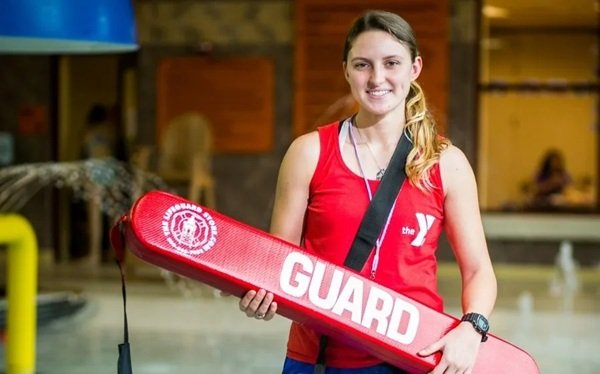
Whenever summer comes, crowds of people flock to Florida beaches. But have you ever thought about how big a responsibility lies behind that peace? If you are searching for “Lifeguard Class Near Me” on Google, you are not just looking for a certificate, but you are preparing to become a life-saver. In 2026, lifeguarding is no longer just a name for swimming, but it has become a high-pressure job where one decision of yours can save someone’s life.
Florida News: The Dangerous End of Budget Cuts
Recently, a strange debate is going on in Brevard County, Florida. There is talk of removing ocean rescue services (lifeguards) in the name of reducing the budget. American Lifeguard Association (ALA) has given a strong warning on this. They say lifeguards are not “wasteful,” but rather, they are the ones who stand between life and death.
Brevard County is complaining about budget cuts at the state level, but can a human life be put at a price? Florida beaches are already notorious for their rip currents and sudden changes in weather. If trained professionals are removed from there, the number of accidents will increase. This news teaches us why it is important to take a good Lifeguard Class—because when the system is weak, only trained guards like you are the last resort for people.
Closest class vs. best class: How to choose?
Queen, people often go to any ordinary pool that is cheap or close in the circle of “Near Me”. But remember, the value of not every certificate is the same. When you go to a big resort or government beach (like Brevard County) for a job, they will decide based on your certificate.
ALA classes are the best because they follow federal rules from the Department of Labor (DOL). You want training that is respected nationwide, not limited to a small pool in your area.
The Modern Training Style of 2026: Blended Learning
Gone are the days when you had to sit in a boring classroom all week. ALA has made it “Smart” according to 2026. Their Blended Learning means that you complete the theory and videos online from the comfort of your own home. This saves you time and you don’t get bored. Then when you meet with the instructor, the focus is solely on the practical.
Tourism and Secrecy: The Real Truth About Florida
Florida’s economy runs on tourism. If tourists feel that beaches are unsafe because there are no lifeguards, they will stop coming. The Brevard County News also made the same point that removing safety infrastructure is actually hurting tourism.
When you search for lifeguard class near me and join ALA, you are actually becoming a strong pillar of this industry. Employers always give first priority to people who know how to handle pressure.
What will you learn in class? (The real deal)
In a professional class, you not only learn to swim, but you also learn:
Scanning Techniques: Identifying a person in trouble in a crowd before they start drowning.
Rip Current Rescue: How to fight Florida waves and rescue people.
Advanced CPR & AED: Using life-saving machines according to new medical protocols of 2026.
Panic Management: How to keep your cool when people are screaming in the water.
Careers Beyond the Chair: Not Just a Summer Job
A lifeguarding certificate is a gateway. Many people become firefighters, paramedics, or professional divers after taking an ALA class. The discipline and ability to handle pressure you learn here is a shining star on your resume.
Brevard County’s budget cuts have proven that the demand for qualified people in this field will never go away. No matter what the system does, the beaches will always need lifeguards.
The Growing Shortage: A Call for More Certified Professionals
One of the most alarming takeaways from the Florida incident was the location: a mile away from the nearest lifeguard tower. Brevard County Ocean Rescue has pointed out a critical gap—a shortage of at least 45 trained lifeguards in the region.
This is exactly why high-quality Lifeguard Training is more than just a job requirement; it’s a public service. Unmanned towers during peak seasons create “dead zones” where response times are delayed. For aspiring lifeguards, this means the demand for your skills has never been higher.
The Future of Rescue: Merging Human Skill with Smart Tech
Beyond physical training, the industry is moving toward smarter emergency systems. Imagine a scenario where a public rescue throw ring is equipped with automatic 911 notifications and GPS. The moment a bystander grabs the equipment, professional teams are instantly dispatched.
While technology like this is the future, the human element remains the foundation. As we see in the tragic Cocoa Beach report, rip currents can overwhelm anyone. The safest way to enjoy the water is through a combination of:
- Public Awareness: Knowing how to spot a rip current.
- Professional Presence: Having enough certified lifeguards on duty.
- Elite Training: Ensuring responders have the rigorous preparation provided by the ALA.
Frequently Asked Questions (FAQ)
Can I complete the lifeguard classes online? Yes, our lifeguard certification and classes can be completed online through our video-led instructions and comprehensive manuals. This allows you to train at your own pace without waiting for a group class. Our national blended program is designed to enable employers to assess your skills while promoting continuous practice and improvement through in-service training. By combining the convenience of online instruction with practical application overseen by employers, our approach ensures candidates gain real-world experience under the guidance of experienced professionals. We mandate both pre-service and in-service training evaluations by employers in line with the CDC Model Aquatic Health Code (MAHC). This ensures our program meets national standards, providing candidates with top-tier education and preparation for aquatic emergency prevention and response.
How long is my lifeguard certification valid? Once you complete the lifeguard certification, it is valid for two years.
Is lifeguarding just about being a fast swimmer? Honestly, no. Being a strong swimmer is just the entry ticket. The real job is about observation and staying calm. You could be the fastest swimmer in the world, but if you can’t spot a struggling swimmer in a crowded pool or keep your cool during a medical emergency, the speed won’t matter. Lifeguard training focuses heavily on “scanning” and mental toughness for this very reason.