If you’ve ever stepped into a kitchen, workshop, or studio, you’ve likely seen someone wearing an apron. But what is an apron exactly, and why has it remained such an essential garment across different professions and lifestyles?
An apron is more than just a protective layer. It is a functional and practical garment designed to shield clothing, improve efficiency, and support different types of work. For example, a leather butcher apron is commonly used by professionals who need durability and protection in demanding environments.
Understanding the Basic Definition of an Apron
At its core, an apron is a garment worn over the front of the body to protect clothing from spills, stains, heat, and debris. It is usually secured with ties or straps around the waist and neck, depending on the design.
Historically, aprons have been used across cultures for both practical and symbolic purposes. Over time, they have evolved into specialized gear suited for various industries such as cooking, crafting, and industrial work.
Why Do People Use Aprons?
Aprons serve several important functions in both professional and everyday settings:
- Protection from stains, grease, and dirt
- Maintenance of hygiene, especially in kitchens
- Convenience through pockets and tool access
- Identification of roles in workplaces
Whether used at home or in a professional setting, aprons improve both safety and efficiency.
Different Types of Aprons
Aprons come in different styles, each designed for specific uses:
Bib Aprons
These cover the chest and extend down to the knees. They are commonly used in kitchens and workshops.
Waist Aprons
Worn around the waist, these are popular among servers and baristas due to their flexibility.
Cross-Back Aprons
These provide better weight distribution across the shoulders, making them comfortable for extended use.
Cobbler Aprons
They offer front and back coverage and are often used in cleaning or healthcare environments.
Leather Aprons
Leather aprons are known for their durability and resistance to heat and wear. They are widely used by butchers, blacksmiths, and craftsmen.
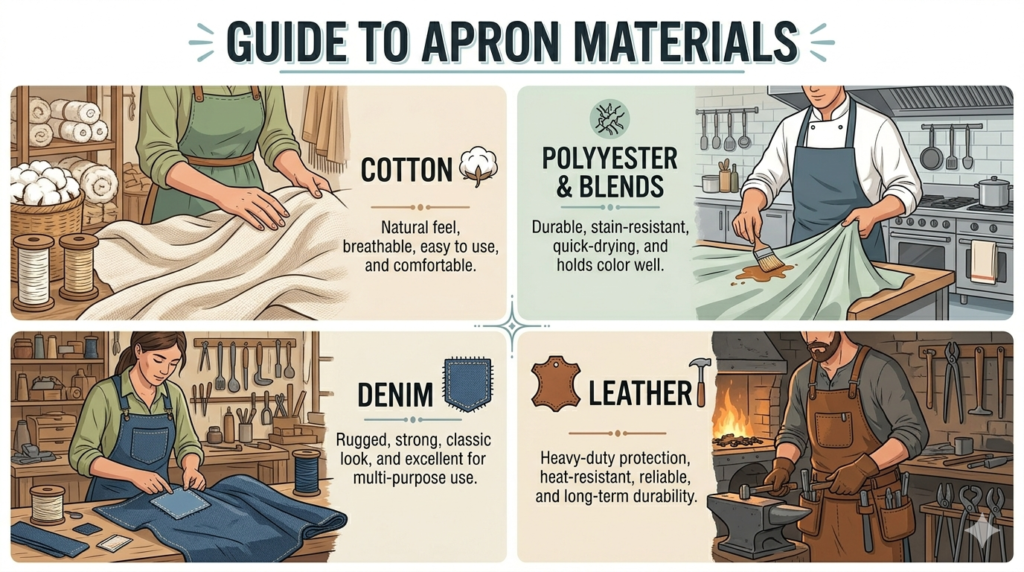
Materials Used in Aprons
The choice of material directly affects the performance and comfort of an apron:
- Cotton offers breathability and ease of use
- Polyester provides durability and easy cleaning
- Denim combines strength with style
- Leather delivers heavy-duty protection and long-term reliability
Each material serves a different purpose depending on the working environment.
How to Choose the Right Apron
Selecting the right apron depends on your specific needs:
- Identify the purpose, such as cooking, serving, or industrial work
- Choose a suitable material based on durability requirements
- Look for adjustable straps to ensure a proper fit
- Consider designs with pockets for added convenience
A well-chosen apron enhances both comfort and productivity.
Benefits of Using Leather Aprons
Leather aprons are preferred in demanding environments because of their strength and performance. They provide:
- Resistance to heat and sharp tools
- Long-lasting durability
- Reliable protection in heavy-duty tasks
- A professional and rugged appearance
These qualities make leather aprons suitable for professionals who require consistent protection.
Understanding Modern Apron Preferences
In modern settings, aprons are valued not only for protection but also for comfort and design. Users now look for features such as ergonomic fit, durable stitching, and practical storage options.
The demand for quality leather aprons reflects this shift toward combining functionality with long-term usability. People prefer aprons that can handle daily wear while maintaining their structure and appearance over time.
Final Thoughts
So, what is an apron? It is a versatile garment that plays a key role in protecting clothing, improving workflow, and supporting various professional tasks.
From simple kitchen use to heavy-duty industrial work, aprons continue to be an essential part of everyday life. Understanding their types, materials, and benefits helps you choose the right option based on your needs while ensuring comfort and protection.